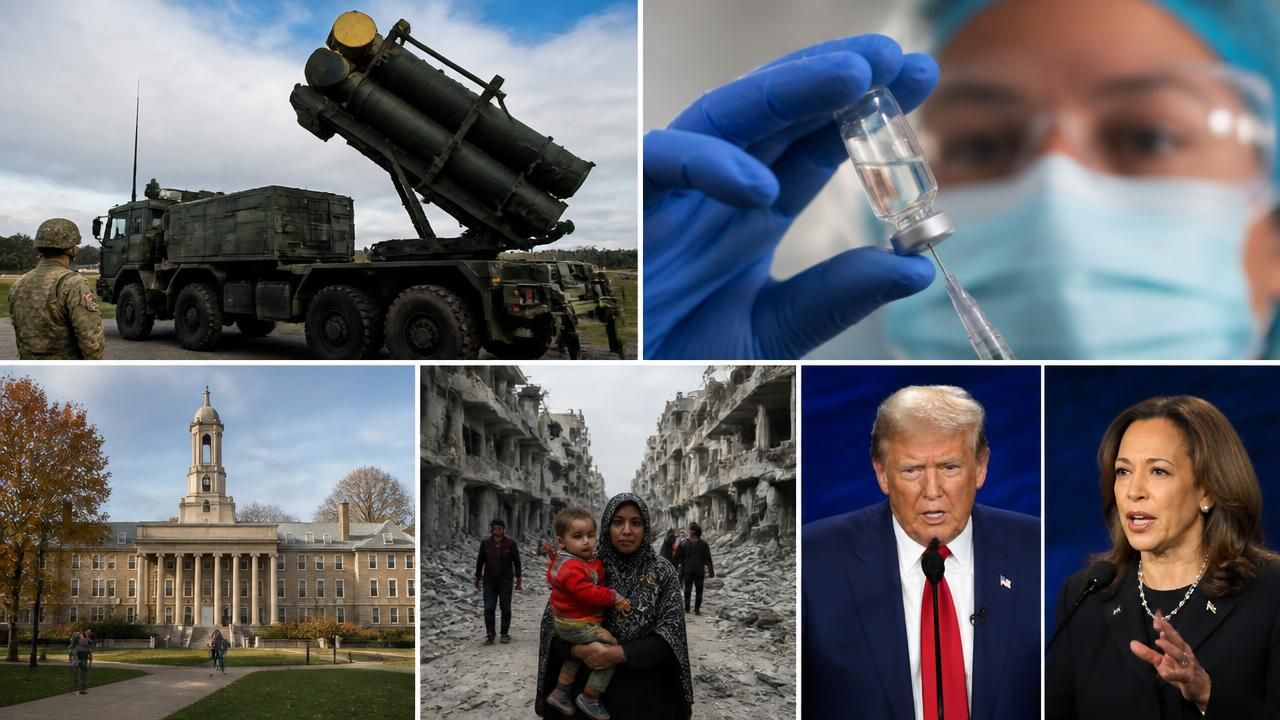
In a diverse set of reports from NPR and WVIA, Wednesday's news cycle spans national security, public health, higher education, international humanitarian crises, and the 2024 campaign trail. From dwindling U.S. missile reserves to the promise of mRNA flu vaccines, from Penn State campus consolidations to a poet's lament for Gaza, these stories offer a snapshot of America's current challenges and debates.
U.S. Missile Stockpiles Dwindle: A Looming Defense Crisis
NPR reports that the U.S. Army's missile stockpile is dangerously low, and replenishing it could take years. The shortage affects key munitions, including precision-guided rockets and interceptors, raising concerns about military readiness in an era of heightened global tensions. According to defense analysts, the combination of sustained support for Ukraine, increased Indo-Pacific deployments, and aging production lines has strained inventories to critical levels.
The Pentagon has requested supplemental funding to accelerate production, but experts note that new facilities and supply chains cannot be built overnight. “We are living on a razor's edge,” said one former Army logistics officer in the NPR report. “If a major conflict broke out tomorrow, we would run out of critical munitions within weeks.” This story underscores the broader debate about defense industrial capacity and the strategic risks of underinvestment.
FDA Weighs mRNA Flu Shots, and Smallpox Offers Lessons
In health news, the Food and Drug Administration is considering approval of a flu vaccine using messenger RNA (mRNA) technology — the same platform that proved pivotal in COVID-19 vaccines. The potential approval could mark a turning point in influenza prevention, offering faster production and better efficacy against ever-mutating strains. NPR notes that clinical trials have shown strong immune responses, and regulators are weighing the benefits against the need for rigorous safety monitoring.
Parallel coverage from VPM.org revisits the improbable victory over smallpox, a disease that was declared eradicated in 1980. The story highlights how global cooperation, surveillance, and targeted vaccination campaigns — rather than universal mass vaccination — won the day. Public health experts argue this historical example offers crucial lessons for addressing modern threats like flu, COVID-19, and future pandemics. “Smallpox was defeated by science, persistence, and a shared commitment to equity,” the report notes. “Those same tools are still our best defense.”
Penn State Consolidates: Unique Programs Move to Altoona
In education news, WVIA reports that Penn State University will close its DuBois and Mont Alto campuses, relocating unique programs to the larger Altoona campus. The decision affects students enrolled in specialized fields such as wildlife technology and nursing, which will now be offered in Altoona. University officials cite declining enrollment, budget pressures, and shifting student demand as factors.
Faculty and students have expressed mixed reactions. Some worry about the disruption to small-campus communities, while others see opportunity in the expanded resources at Altoona. Penn State has promised to provide transition support, including advising, transportation, and housing assistance. The move reflects a broader trend in American higher education where smaller regional campuses are consolidating to achieve financial sustainability.
A Poet's Lament: Living and Losing in Gaza
WVIA also amplifies a powerful voice from Gaza: a poet who says, “My losses started the day I was born.” The feature offers a deeply personal perspective on life under blockade and war, as the poet describes the cumulative grief of displacement, destruction, and the ongoing humanitarian crisis. Poetry becomes a means of bearing witness, preserving memory, and asserting humanity against overwhelming odds.
The piece connects personal narrative to the broader geopolitical context, reminding readers that behind the statistics of conflict are individuals with dreams and histories. It also highlights the role of art in conflict zones, where creative expression can challenge brutality and offer a semblance of dignity. As international calls for a ceasefire grow, such voices underscore the urgent need for a political solution.
Trump's Omissions on Mass Shootings and Domestic Terrorism
Turning to politics, WVIA analyzes former President Trump's recent remarks on mass shootings and domestic terrorism, noting what was left unsaid. The report points out that Trump did not directly address the rise in gun violence or the FBI's warning that domestic terrorism is an elevated threat. Instead, his comments focused on mental health and the need to secure schools, avoiding references to his own previous statements that were criticized as inflammatory.
Critics argue that the former president's framing sidelines evidence-based policies such as universal background checks and red flag laws. Supporters counter that his focus aligns with Second Amendment rights and personal responsibility. The piece emphasizes how political rhetoric shapes public understanding and policy possibilities, especially in the aftermath of tragedies.
Six Takeaways from the Fourth Democratic Debate
Finally, WVIA distills six key takeaways from the fourth Democratic presidential primary debate. Candidates clashed over healthcare, climate change, economic inequality, and foreign policy. Notable moments included a heated exchange on Medicare-for-All, diverging views on how to combat climate change, and a unified call for protecting democracy from authoritarian threats.
One central theme was the generational divide: younger candidates pushed for transformative change while more established figures advocated for pragmatic incrementalism. The debate also revealed shifting alliances and potential breakout moments for lesser-known contenders. As the primary season advances, these takeaways provide a lens on the party's direction and the issues likely to define the general election.
Conclusion: A Nation in Flux
Together, these stories illustrate a nation confronting multifaceted challenges — from military preparedness to public health innovation, from educational transformations to deeply human crises abroad and at home. The coverage from NPR and WVIA demonstrates the vital role of journalism in illuminating both the systemic and the personal, offering context, analysis, and the voices that matter.