In a landmark proof of concept, NASA's PUNCH (Polarimeter to Unify the Corona and Heliosphere) mission has successfully predicted the near-Earth arrival of a solar eruption to within 30 minutes, a feat that scientists say could fundamentally transform space weather forecasting. The results were presented Tuesday at the Committee on Space Research (COSPAR) Scientific Meeting and are currently under review at the journal Space Weather.
"We thought PUNCH would be good at this, but it's a stunning result," said Craig DeForest, principal investigator for PUNCH at Southwest Research Institute's Solar System Science and Exploration Division in Boulder, Colorado. "To put it in perspective, this could be the space weather equivalent of going from a steam engine to a modern internal combustion engine."
The Challenge of Tracking Solar Storms
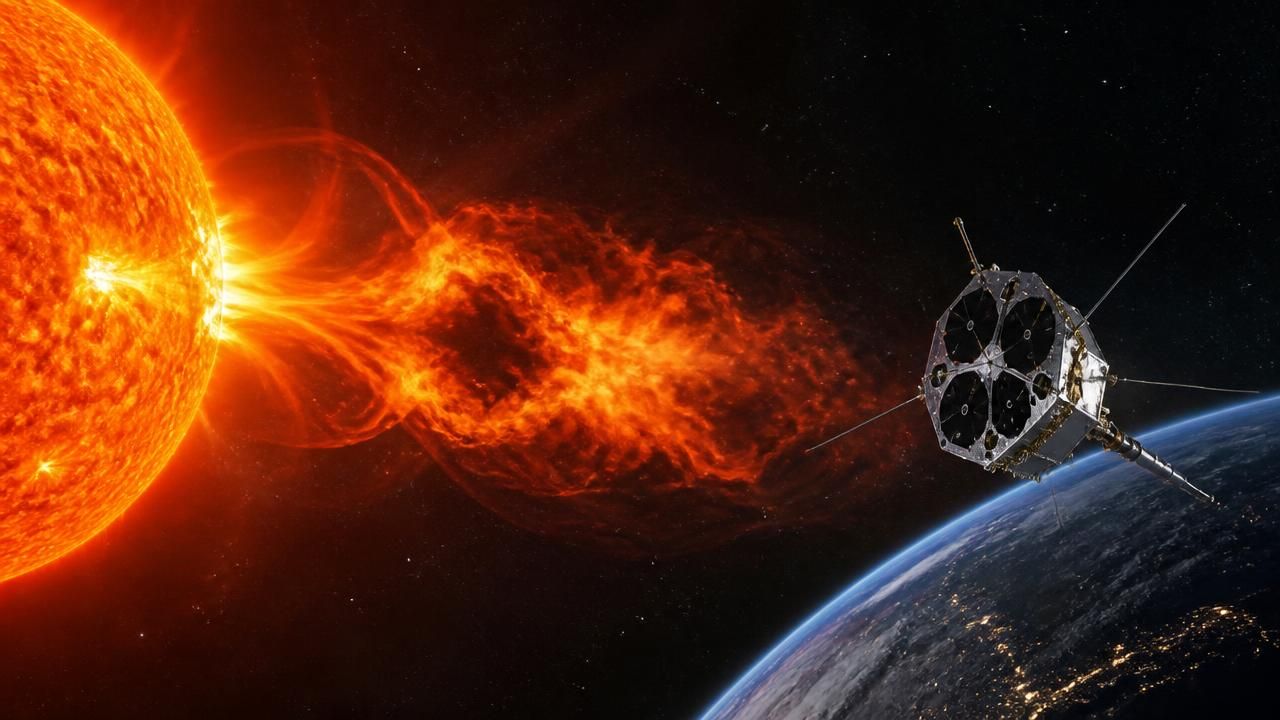
Solar storms originate from colossal explosions on the Sun known as coronal mass ejections (CMEs), which hurl billions of tons of magnetized plasma into space. When these clouds of charged particles reach Earth, they can disrupt power grids, degrade satellite operations, and pose serious risks to astronauts in orbit. Forecasting precisely when a CME will arrive is critical for protecting vital infrastructure and human life.
Until recently, however, observers could only track CMEs during the first one-fifth of their journey from the Sun to Earth. Beyond that, the faint emissions from the expanding plasma become too diffuse to detect with conventional instruments, leaving forecasters to rely on models and educated guesswork for the remaining millions of kilometers.
How PUNCH Changes the Game
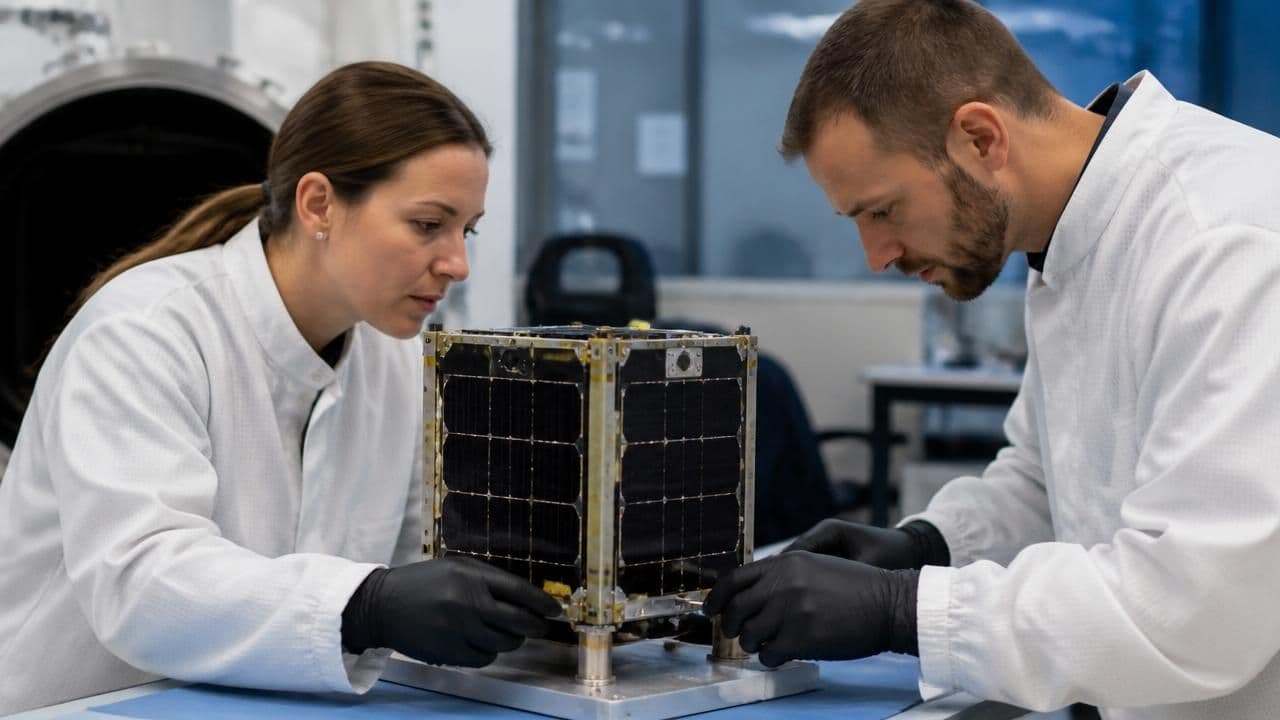
Launched in 2025, the PUNCH mission consists of four small spacecraft in low Earth orbit, working in concert to create continuous, three-dimensional views of the inner solar system. Unlike earlier solar observatories, PUNCH is specifically designed to track solar wind structures and CMEs all the way from the Sun to Earth's vicinity. This persistent coverage allows scientists to observe the evolution of an eruption over its entire transit, removing a longstanding blind spot in heliophysics.
In this first validation test, the PUNCH team demonstrated that data from the constellation could be used to predict a CME's arrival time with remarkable accuracy—within half an hour. According to the researchers, this level of precision would have been unthinkable with previous technology.
The "Steam Engine to Combustion Engine" Leap
DeForest's analogy captures the magnitude of the advance. Traditional CME forecasting is akin to a steam engine: functional but sluggish and imprecise, relying on indirect measurements and statistical models. PUNCH, in contrast, offers direct, continuous tracking that resembles the responsiveness of a modern internal combustion engine—providing real-time situational awareness of storms as they barrel through space.
"We thought PUNCH would be good at this, but it's a stunning result. To put it in perspective, this could be the space weather equivalent of going from a steam engine to a modern internal combustion engine."
Implications for Space Weather Preparedness
The implications are far-reaching. With a 30-minute warning, operators of power grids can implement protective measures to avoid surges or blackouts. Satellite operators can put spacecraft into safe mode or adjust orbits to avoid the worst of the charged particle onslaught. Astronauts on spacewalks could be called back to shelter, and airlines flying polar routes could reroute to minimize radiation exposure.
- Power grids: Prevent voltage collapse and transformer damage from geomagnetically induced currents.
- Satellites: Shield electronics and maintain attitude control during intense solar wind.
- Human spaceflight: Reduce radiation risk for crew in orbit and on potential lunar or Mars missions.
- Aviation: Avoid communication and navigation disruptions on high-latitude routes.
The test results also underscore the value of persistent, dedicated heliophysics observations. As solar activity ramps toward its next maximum, expected around 2026, tools like PUNCH will become increasingly vital for safeguarding a technologically dependent society.
Media Coverage and Scientific Validation
The announcement generated immediate interest across the science media landscape. Outlets such as MSN highlighted the "steam to combustion engine" framing, while others focused on the mission's headline prediction capability. The consistent thread in all reports is the sense of a major leap forward in our ability to anticipate space weather.
It is important to note that the study is still under peer review at the journal Space Weather. The presented results represent a proof of concept, not yet an operational capability. But the team behind PUNCH is optimistic that continued refinement will lead to routine, operational space weather forecasts with unprecedented lead times and accuracy.
Next Steps for PUNCH
Over the coming months, the PUNCH team will analyze additional CME events to validate the technique more broadly. They also plan to integrate PUNCH data with existing forecasting models, potentially enabling agencies like NOAA's Space Weather Prediction Center to adopt the new methodology in real time.
"This is just the beginning," DeForest said. "We've shown that continuous tracking works. Now we have to make it a tool that forecasters can rely on every day."
The success of PUNCH, a relatively low-cost mission in NASA's Explorers program, carries a broader lesson: sometimes revolutionary advancements come not from grander instruments, but from the right vantage point—watching the whole road, not just the first mile.