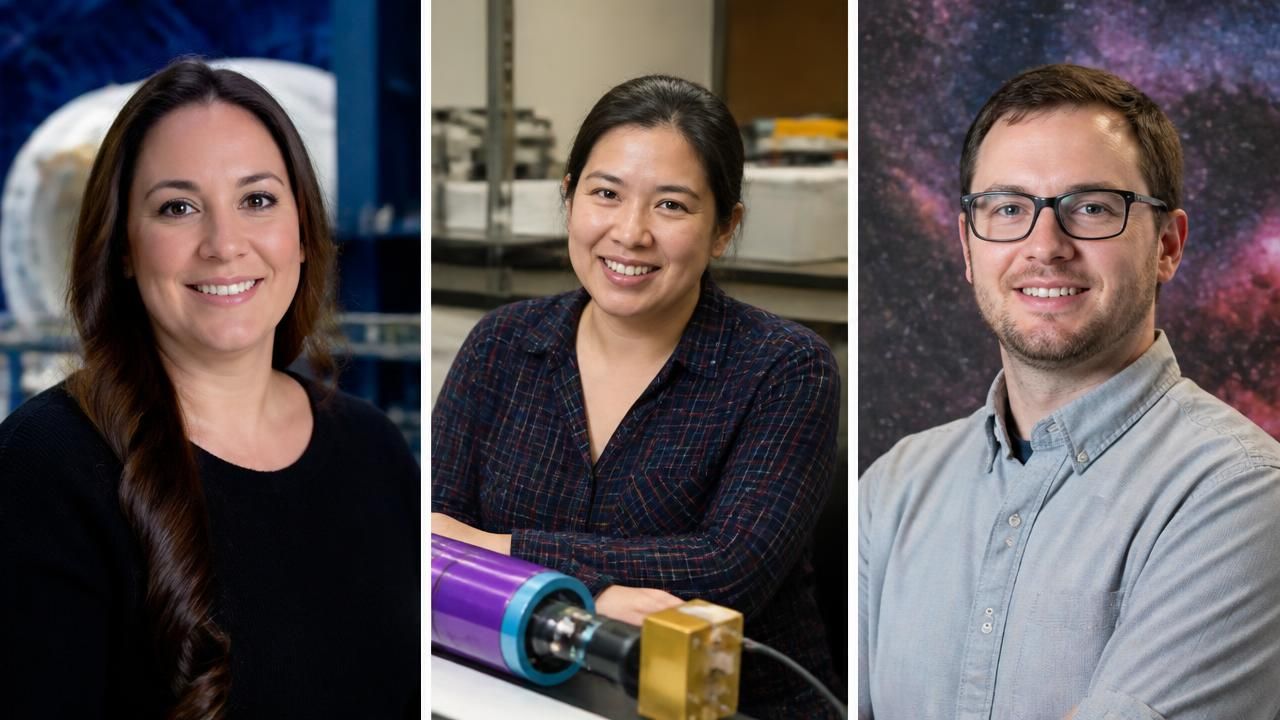
In August 2026, NASA’s Ames Research Center named three outstanding individuals as its Science Stars of the Month, celebrating their contributions to space biosciences and astrophysics. The recognition comes at a time when the agency is reflecting on the transformative legacy of its Kepler telescope, whose planet-hunting mission reshaped our understanding of the cosmos. Together, these stories underscore the collaborative spirit and technical expertise that define NASA’s scientific enterprise.
Ames Science Stars of the Month
The NASA Ames Science Directorate honors employees and partners who exemplify entrepreneurial spirit, technical expertise, and a collaborative disposition. This month’s honorees are Danielle Lopez, Jennifer Claudio, and Duncan Mifsud, each recognized for their distinct roles in advancing NASA’s mission.
Danielle Lopez: The Steward of Open Science
Danielle Lopez, Deputy Project Manager for the Open Science Data Repository with Amentum in the Space Biosciences Division, was praised for her leadership in managing efforts critical to NASA’s Open Science initiative. Her work spans collaborations across Ames directorates, NASA centers, and the public. According to the Ames announcement, Lopez has been a “critical stabilizing force during challenging and tumultuous times,” keeping multiple projects not only on track but at the forefront of Open Science for the entire agency.
Jennifer Claudio: Empowering High School Students
Jennifer Claudio, a research staff member with Blue Marble Space, was recognized for her outstanding contributions to the 2026 GeneLab for High School (GL4HS) summer program. The initiative gives students hands-on experience with NASA’s GeneLab platform, fostering the next generation of space biologists. Claudio was lauded for her efficiency, initiative, and resourcefulness—especially when she swiftly overcame a security breach of the GL4HS learning platform, ensuring the program’s continuity.
Duncan Mifsud: Astrophysics Star
Duncan Mifsud, named Astrophysics Star of the Month, represents the division’s dedication to studying the universe. While specific details of his work were not disclosed in the announcement, his recognition reflects the broader contributions of Ames astrophysicists to NASA’s missions, including the analysis of data from telescopes like Kepler.
Connecting Education and Exploration
The recognition of Claudio aligns with a broader theme in NASA’s outreach: engaging students in real science. The GL4HS program is one of many initiatives under NASA’s Open Science umbrella, which aims to democratize access to space data. Similarly, the SETI Institute’s June 2026 roundup highlighted ongoing educational and research collaborations, many of which rely on public datasets from NASA missions. These efforts ensure that the next generation of scientists is equipped to build on the discoveries of today.
The Enduring Legacy of the Kepler Telescope
No discussion of NASA’s scientific achievements is complete without mentioning Kepler, the trailblazing telescope that revolutionized our understanding of exoplanets. As Spaceflight Now reported, Kepler’s planet-hunting mission officially ended after nine years, having discovered more than 2,600 confirmed exoplanets. The telescope ran out of fuel in 2018, but its dataset continues to yield discoveries. Kepler’s findings revealed that planets are ubiquitous in our galaxy, many of them rocky and potentially habitable.
Kepler has shown us that there are more planets than stars in the Milky Way, and that has fundamentally changed the way we think about our place in the universe.
Kepler’s legacy extends beyond its own discoveries. The telescope paved the way for missions like TESS (Transiting Exoplanet Survey Satellite), which continues the hunt for exoplanets, and the James Webb Space Telescope, which can characterize atmospheres of distant worlds. The data collected by Kepler remains a treasure trove for researchers, including those at the SETI Institute, who use it to search for signs of technosignatures and habitable environments.
Key Kepler Achievements
- 2,600+ confirmed exoplanets discovered
- Revealed that most stars host at least one planet
- Identified hundreds of potentially habitable worlds
- Provided critical data for follow-up observations by ground and space telescopes
A Culture of Innovation and Collaboration
The honors bestowed on Lopez, Claudio, and Mifsud highlight the diverse skills required to sustain NASA’s ambitious programs. Lopez’s work on the Open Science Data Repository, for example, ensures that researchers worldwide can access and analyze NASA data, accelerating scientific discovery. Claudio’s dedication to education inspires young minds, while Mifsud’s astrophysics contributions push the boundaries of knowledge.
These individuals embody the same pioneering spirit that drove the Kepler mission. As NASA looks to the future—with Artemis returning humans to the Moon and the Mars Sample Return mission on the horizon—the agency continues to rely on a workforce that is as collaborative as it is innovative.
Implications for the Future
The convergence of these stories reflects a broader trend in space science: the shift toward open, inclusive, and data-driven exploration. NASA’s commitment to open science is not just about transparency; it is about maximizing the scientific return from every mission. By recognizing individuals like Lopez, Claudio, and Mifsud, the agency signals that its success depends on people who can navigate challenges, inspire others, and think across disciplines.
As the astronomy community continues to mine Kepler’s data, and as programs like GL4HS train the next generation, the legacy of NASA’s trailblazers endures. The stars of the month may change, but the mission remains the same: to explore, discover, and inspire.