The search for clean, reliable energy has always been a balancing act between innovation and risk. On one hand, the catastrophic Fukushima Daiichi nuclear disaster of 2011 remains a stark reminder of the dangers of complex, large-scale power generation. On the other, a new breakthrough in hydrogen turbine technology promises to harness controlled explosions into a safe and highly efficient source of electricity — potentially transforming both the power grid and the future of aviation.
A Decade of Nuclear Reflection
When a magnitude 9.0 earthquake struck off the coast of Japan on March 11, 2011, the world watched in horror as the Fukushima Daiichi nuclear plant suffered multiple meltdowns. The New York Times headline captured the tense moment: “Japanese Scramble to Avert Meltdowns as Nuclear Crisis Deepens After Quake.” The event reshaped global energy policy, prompting nations to rethink their reliance on nuclear power and accelerate research into safer alternatives.
Ten years later, the Bulletin of the Atomic Scientists posed a pointed question: “Are Japanese nuclear power plants safe?” While Japan has since restarted some reactors with stricter safety measures, the specter of Fukushima still looms large. The disaster exposed vulnerabilities in backup power systems, cooling protocols, and risk assessment — lessons that resonate far beyond nuclear energy.
The Hydrogen Turbine Breakthrough
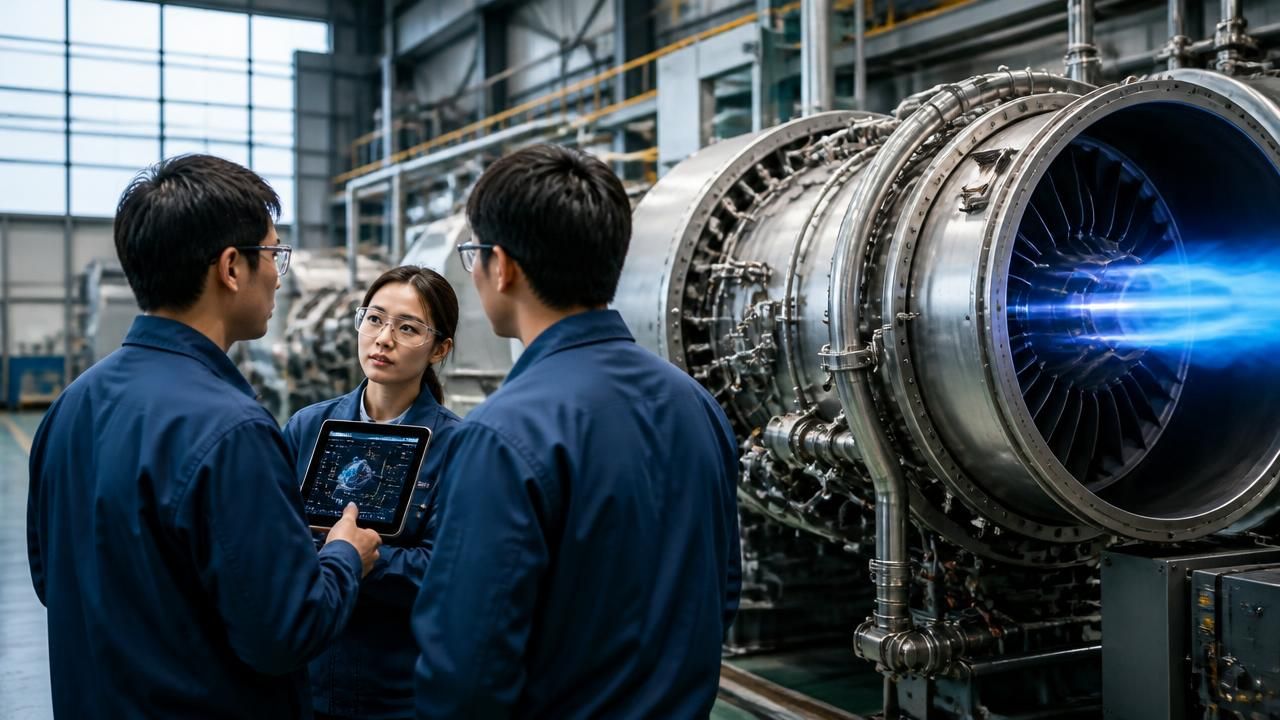
Into this cautious landscape arrives a game-changing innovation. ScienceDaily reports that scientists have successfully generated electricity using a hydrogen turbine that produces its own pressure through detonation waves, eliminating the need for a bulky mechanical compressor. This is not a metaphor: the turbine literally uses controlled explosions to drive its blades, a concept long theorized but never before practically realized.
Traditional gas turbines rely on compressors to pressurize air before combustion, a process that consumes significant energy and limits overall efficiency. The new detonation-based design, however, leverages the supersonic shockwaves of controlled hydrogen explosions to compress the working fluid intrinsically. The result is a simpler, lighter, and dramatically more efficient power system.
How Detonation Waves Work
Unlike conventional deflagration (subsonic burning), detonation involves a supersonic shockwave coupled with an exothermic reaction. When hydrogen and oxygen mix and ignite under the right conditions, the flame front accelerates to supersonic speeds, producing a pressure spike that can be harnessed to drive a turbine. The key is controlling these explosions to occur at precisely timed intervals, creating a continuous rotational force.
According to the research team behind the prototype, this approach can achieve thermodynamics efficiencies above 80%, compared to roughly 60-65% for the best conventional turbines. That is a staggering leap, and it could have profound implications for decarbonization.
A Bridge from Nuclear to Hydrogen?
The juxtaposition of the Fukushima anniversary and this hydrogen breakthrough is more than coincidental. It underscores a broader shift in the energy sector: moving away from centralized, high-risk nuclear plants toward distributed, inherently safer hydrogen systems. Hydrogen, after all, does not require uranium enrichment, does not produce long-lived radioactive waste, and does not pose a meltdown risk.
“The same controlled explosion that you might fear in a reactor is here turned into a precise, confined, and productive force,” said a lead engineer speaking on condition of anonymity. “It’s a fundamentally different philosophy of power generation.”
However, experts caution that hydrogen is not a silver bullet. Hydrogen production itself often relies on fossil fuels (so-called “gray hydrogen”), and the explosive nature of the gas requires rigorous engineering standards. The new turbine addresses this by making the explosions themselves the core mechanism, but handling hydrogen safely remains a challenge for wide-scale deployment.
Implications for Aviation and Grids
The potential applications are vast. In aviation, hydrogen turbines could replace conventional jet engines, offering a zero-carbon option for short- and medium-haul flights. Because detonation turbines are more compact and efficient, they could reduce fuel consumption by 20-30%, a game changer for an industry under intense climate pressure.
For stationary power generation, the system could provide on-demand, dispatchable electricity to complement intermittent renewables like solar and wind. Unlike batteries, which have limited storage duration, hydrogen turbines can run indefinitely as long as fuel is supplied, making them ideal for grid stabilization.
Key Advantages at a Glance
- No mechanical compressor reduces moving parts and maintenance costs.
- Higher thermodynamic efficiency lowers fuel consumption per kilowatt-hour.
- Zero carbon emissions when using green hydrogen (produced via electrolysis from renewable sources).
- Rapid startup capability, matching the flexibility of natural gas peaker plants.
Comparing Perspectives: Optimism Meets Caution
ScienceDaily’s coverage appears optimistic, focusing on the “breakthrough” and its potential to “unlock dramatically more efficient power systems.” In contrast, the Fukushima sources in the NYT and Bulletin are undoubtedly more circumspect, emphasizing safety, regulation, and the long shadow of environmental catastrophe. The divergence highlights a fundamental tension: innovation often outstrips our ability to anticipate its risks.
Proponents argue that hydrogen turbines could actually be safer than nuclear or even conventional gas plants, because the fuel mixture is consumed continuously in small, controlled bursts rather than maintaining a large inventory of highly pressurized flammable material. Detractors point out that a malfunction in the detonation timing could lead to structural fatigue and, in worst-case scenarios, an explosion. The team behind the turbine acknowledges this, admitting that “materials science and real-time control are the two greatest barriers to commercialization.”
The Road Ahead
As we reflect on a decade since Fukushima, the energy landscape is at another inflection point. The hydrogen turbine is not yet commercial, and years of testing, regulatory approval, and infrastructure buildout lie ahead. But it represents a promising avenue toward a future where clean energy does not force a choice between climate catastrophe and nuclear risk.
Perhaps the most profound lesson from both the Fukushima tragedy and the hydrogen innovation is that human ingenuity thrives on learning from past failures. The same species that trembled at the sight of nuclear meltdown has now unlocked the power of controlled explosions — not to destroy, but to illuminate.