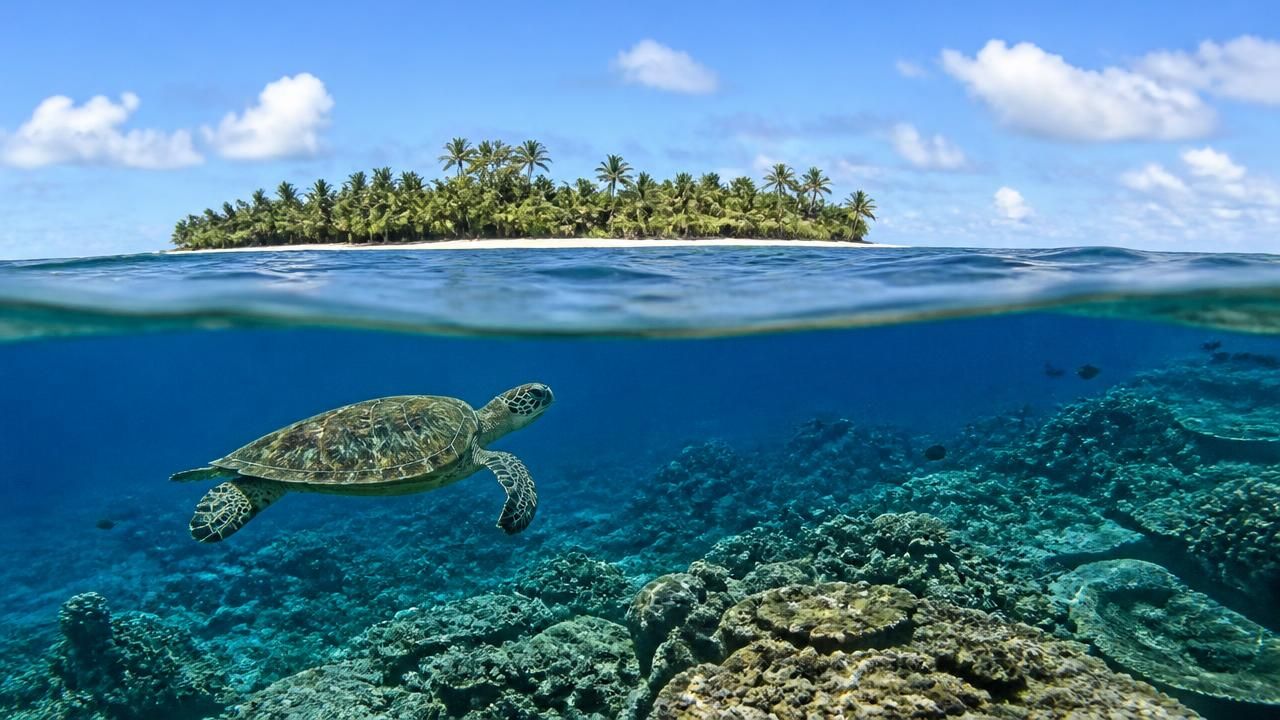
In a move that conservationists warn could irrevocably damage some of the last pristine ocean ecosystems on Earth, the Trump administration is opening the waters of U.S. marine monuments in the Pacific Ocean to commercial fishing. These remote areas, centered around tiny islands that serve as epicenters of biodiversity, have long been protected as scientific baselines and havens for endangered species. Now, they are at the center of a political battle over the balance between economic exploitation and environmental preservation.
The Pacific's Last Wild Places
The largest conservation areas in the United States are not in the continental mainland, but in the vast blue expanses of the Pacific. The Pacific Remote Islands Marine National Monument, Papahānaumokuākea, and Rose Atoll are among the most isolated and biologically rich places on the planet. These monuments encompass coral reefs, seamounts, and open-ocean habitats that support over 7,000 marine species, including sea turtles, sharks, whales, and millions of seabirds. NPR, which first reported the policy shift, describes them as “the last pristine ocean ecosystems” in U.S. waters.
These areas are not just biodiverse; they are scientific reference points. According to a study by the Wildlife Conservation Society (WCS), only 13 percent of the world’s oceans remain as “wilderness,” defined as areas largely free from industrial activity, pollution, and fishing pressure. The WCS study, led by conservation scientist Kendall Jones, found that most of these remaining wild waters are in the Pacific, precisely where the Trump administration is now rolling back protections.
A Reversal of Protections
While the exact regulatory details are still emerging, the administration’s plan would reopen monument waters to commercial longline fishing and other extractive industries. This reverses actions taken by previous presidents, including George W. Bush and Barack Obama, who expanded these monuments to protect their unique ecosystems. The move is part of a broader pattern of ocean policy that prioritizes short-term economic gains over long-term ecological stability.
Conservation groups, including Sea Shepherd Global, have condemned the decision. In a statement, the organization emphasized the importance of marine reserves for fish populations, noting that “overfishing is one of the greatest threats to ocean life, and these protected areas are vital replenishment zones.” The debate is not just about fish; it is about the very definition of conservation. Industry groups argue that U.S. waters are sustainably managed and that fishing helps feed a growing population. But scientists counter that the ocean is facing a global crisis that demands bold action.
A Global Crisis Beneath the Waves
The opening of these marine monuments comes amid mounting evidence of ecological collapse. A U.N. report, summarized by the Natural Resources Defense Council (NRDC), warns that up to one million species are at risk of extinction due to human activities. Similarly, a World Economic Forum analysis found that only 15 percent of the world’s coastlines remain in their natural state, and a study published in Nature shows that predator baselines in coral reef ecosystems have been dramatically reset by overfishing.
The threats extend far beyond the Pacific. In Antarctica, researchers from the University of Southampton and Discover Wildlife highlight that tourism and climate change are leaving “fingerprints of global warming” on the last great wilderness. Even the deep sea is not safe: Yale Environment 360 questioned whether we can mine the ocean floor without destroying it. And closer to home, The Guardian reports on Elon Musk’s plan to dump SpaceX rocket debris over Hawaii’s pristine waters, underscoring the relentless press of human activity on remote marine environments.
Tourism, Heatwaves, and Coral Reefs
Other sources tell a story of chronic stress. Florida International University documented a heatwave that devastated wildlife populations in a World Heritage marine site. Discover Magazine noted that Antarctic tourism is growing, along with its carbon footprint and potential long-term risks. Even the most biodiverse coral reefs, as Eurekalert reports, remain vulnerable to climate change and invasive species. The message is clear: every corner of the ocean is under threat.
What Does ‘Pristine’ Really Mean?
A recurring theme in the coverage is the contested notion of “pristine” nature. BBC Futurist and author Gia Milinovich famously argued that “there’s no such thing as truly ‘pristine’ nature anymore.” Indeed, human-induced climate change has affected even the most remote places, from the deep ocean to the poles. But conservationists respond that this is no excuse for inaction. As the Natural History Museum’s coral reef research shows, ecosystems can recover if we reduce stressors.
“Even here, at the edge of the world, the fingerprints of global warming are unmistakable,” writes Discover Wildlife, quoting scientists working in Antarctica.
This is the central tension: if no place is truly pristine, why bother protecting it? The answer, experts say, lies in resilience. Protected areas that are sheltered from direct human interference are better able to withstand climate change and other global pressures. They serve as living laboratories and genetic banks for the future.
The Stakes
The administration’s decision is not just a policy change; it is a test of our collective commitment to the oceans. As the Ministry for the Environment in New Zealand reminds us in its report on ecosystems and biodiversity, the health of marine systems is essential to human survival. The ocean provides half the oxygen we breathe and food for billions of people.
- The Pacific Remote Islands monuments cover roughly 490,000 square miles of ocean.
- Only 3 percent of the ocean is fully protected from fishing and other extractive activities.
- Marine protected areas have been shown to increase fish biomass by an average of 670 percent.
Conservationists are vowing to fight the rollback through lawsuits and congressional action. Meanwhile, the administration argues that opening these waters will bolster the U.S. fishing industry and reduce reliance on imported seafood. But as the body of evidence from these 22 sources demonstrates, the cost of inaction is far higher than the short-term benefits of extraction. The battle over these last pristine ecosystems is, in many ways, a battle for the future of the ocean itself.