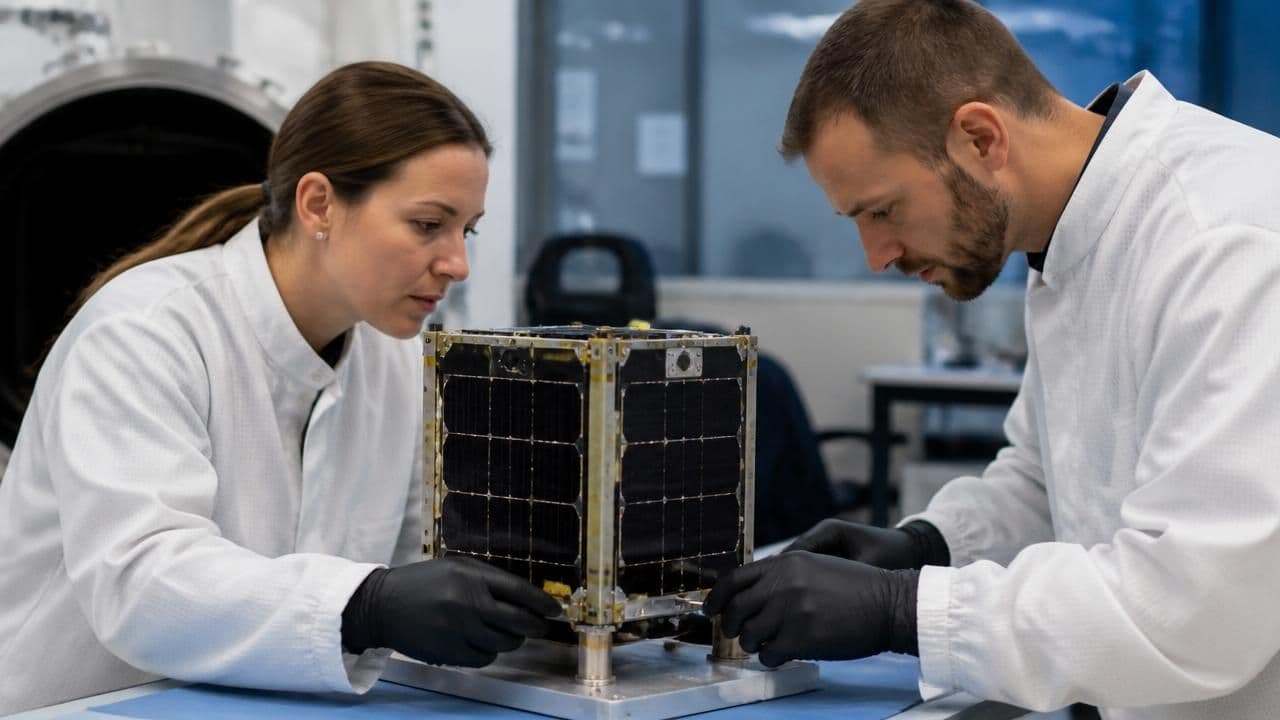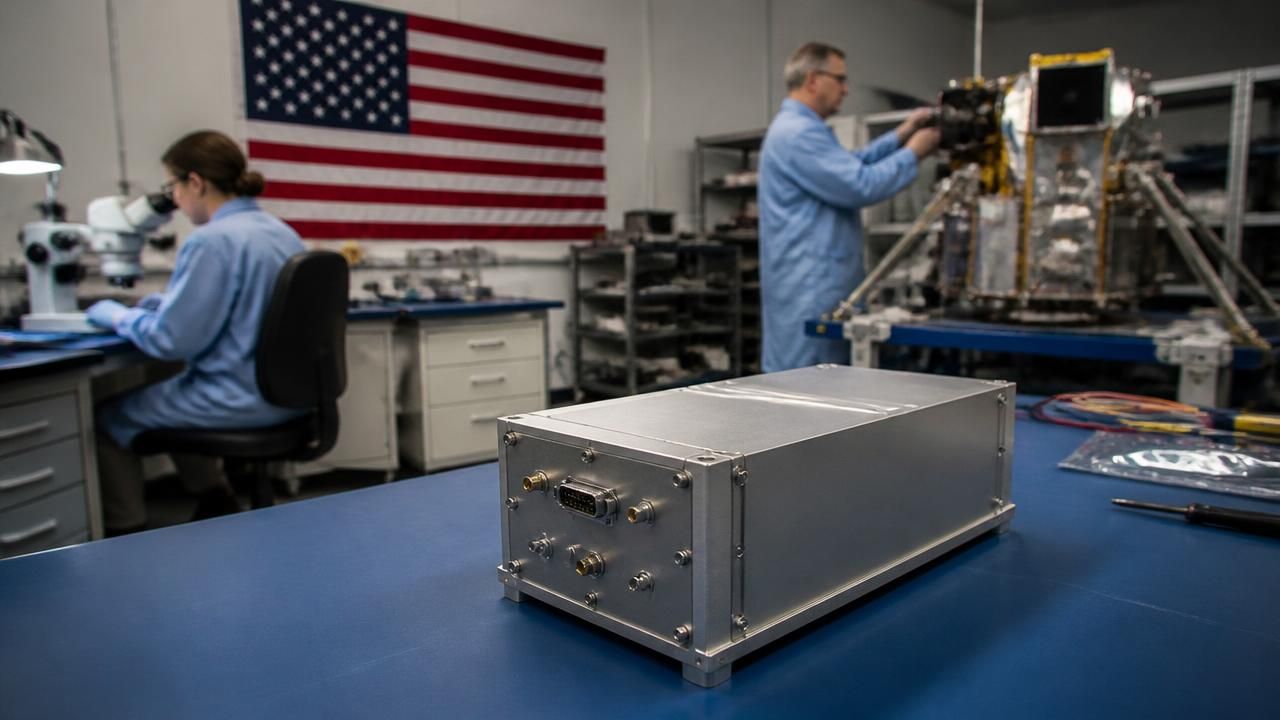
NASA has taken a major step toward building a permanent human presence on the Moon by delivering a compact navigation payload to Intuitive Machines, the company selected to provide commercial lunar communications and navigation services. The NavCube3-mini, delivered on July 13, will be integrated into Intuitive Machines' first lunar relay satellite, Altus-1, marking a foundational milestone in a program that could eventually replace the agency's aging tracking and data relay infrastructure with services bought from private companies.
The announcement comes amid a flurry of activity around lunar exploration, including new CLPS science missions, international partnerships, and a growing commercial space economy. As NASA pushes forward with Artemis II and plans for a long-term Moon Base, the need for robust, high-bandwidth communications and precise navigation beyond Earth orbit has become a critical priority.
A Shoebox-Sized Navigation Powerhouse
NASA's Goddard Space Flight Center developed the NavCube3-mini, a compact receiver about half the size of a standard shoebox and weighing just 3.5 pounds. Despite its small form factor, the device is designed to pick up signals from Earth-based GPS and Galileo constellations at lunar distances, a feat that requires exceptional sensitivity and signal processing. Operating on less than 20 watts of power—comparable to a laptop computer—NavCube3-mini can determine a spacecraft's precise position far beyond Earth orbit, opening new possibilities for autonomous navigation around the Moon.
"Operating on less than 20 watts, roughly the same as a laptop computer, it can determine a spacecraft's precise position far beyond Earth orbit," NASA said in its release, highlighting the payload's efficiency. The technology builds on a series of navigation advancements from Goddard, each iteration smaller and more capable.
The $4.8 Billion Commercial Relay Program
Intuitive Machines, based in Houston, has been a key player in NASA's Commercial Lunar Payload Services (CLPS) program. In 2024, NASA awarded the company a contract worth up to $4.8 billion to provide lunar communications and navigation services through a constellation of relay satellites. The Altus-1 mission, which will host NavCube3-mini, is the first of these commercial relays.
"NASA selects Intuitive Machines for lunar communications and navigation services," SpaceNews reported, though access to the full article was limited. The contract represents a shift toward a "services" model, where NASA buys capabilities rather than building and owning infrastructure. This approach mirrors the success of commercial cargo and crew programs, and it is expected to lower costs and accelerate innovation.
The program is part of NASA's broader Near Space Network, which aims to provide communications and navigation services to missions within 2 million kilometers of Earth. In a separate announcement, NASA selected four commercial companies—including Intuitive Machines—to support this network, signaling a diverse vendor ecosystem.
From Apollo-Era Radio to Lunar Broadband
One of the most significant challenges for Artemis is communications. During the Apollo missions of the 1960s and 1970s, astronauts relied on simple radio links with limited bandwidth. Today, NASA and its partners are planning a "lunar broadband" network that can support high-definition video, real-time telemetry, and scientific data streaming.
"NASA is revolutionizing space communications to fuel the new lunar economy," noted the Los Angeles Times, framing the relay system as critical infrastructure for commercial activity on and around the Moon. The shift is not just about bandwidth; it's about enabling a permanent human presence and a thriving ecosystem of robotic explorers, landers, and eventually habitats.
Artemis II, scheduled for 2025, will be the first crewed mission to test these new communication systems. "Broadband from the Moon: How Artemis II Pushes NASA Beyond Apollo's Radio Frequencies" highlights how the Orion spacecraft will use a more advanced network, leveraging commercial relays and laser communications to stay connected with Earth.
Intuitive Machines' Strategic Moves
Beyond the NASA contract, Intuitive Machines has been building its own infrastructure. The company recently announced the acquisition of Goonhilly Earth Station and COMSAT, a global ground-station network, for $49.6 million. This purchase will give Intuitive Machines direct control over the ground segment, allowing it to provide end-to-end services to NASA and other customers.
SpaceDaily reported that the acquisition comes after Intuitive Machines landed two probes on their sides during its first two lunar missions. "The sequencing tells you which moats the CLPS contracting model rewards first," the outlet noted, suggesting that the company is prioritizing communications infrastructure as a durable competitive advantage.
In a post-mission review, Intuitive Machines' CEO pointed to issues that prevented an upright touchdown during the IM-2 Moon landing, emphasizing that the company has learned from those challenges. Despite these setbacks, the $4.8 billion NASA award and the ground-station acquisition signal confidence in the company's long-term role.
Beyond the Moon: Mars and TDRSS Replacement
NASA's push for commercial communications is not limited to lunar missions. The agency is also seeking proposals for a commercial replacement for the Tracking and Data Relay Satellite System (TDRSS), which has served as NASA's primary relay network in low Earth orbit for decades. According to SpaceNews, NASA wants to transition to commercial services, similar to its lunar strategy.
The same logic applies to Mars. NASA has awarded studies for commercial Mars missions, exploring how private companies could provide communication relays and even cargo transport to the Red Planet. Rocket Lab, a company known for its Electron rocket, is considered a front-runner for a $700 million Mars network contract, according to 247wallst.com.
International and Scientific Dimensions
NASA is also collaborating with international partners. ESA (European Space Agency) is contributing to the lunar communication architecture through systems like the Lunar Pathfinder, a British-built satellite project featured in a GOV.UK case study. NASA is counting on ESA cooperation for lunar exploration, as noted by Room: The Space Journal.
Scientific instruments will also benefit. The Lunar Surface Electromagnetics Experiment-Night (LuSEE-Night), a University of Colorado Boulder project, will measure radio signals from the Moon's far side, a radio-quiet zone ideal for cosmology. Such experiments require reliable communication links to return data to Earth—a capability that the new relay network will provide.
A New Era of Space Infrastructure
The delivery of NavCube3-mini is just the beginning. As commercial lunar relays become operational, NASA will be able to retire bulky, expensive systems and buy services on demand. This model is expected to drive down costs, encourage innovation, and open the Moon to a wider range of users, including private companies and international space agencies.
The emergence of a lunar communications and navigation network is a prerequisite for the Artemis program's goal of establishing a sustainable presence on the Moon. It is also a test case for how NASA will conduct deep space exploration in the future: not as a sole proprietor, but as a customer of a vibrant commercial space ecosystem.
"The lunar relays are designed to enable communications and navigation for astronauts and rovers operating at the agency's future Moon Base."
— NASA
With billions of dollars in contracts, a growing roster of commercial partners, and ambitious timelines, the race to build the first lunar data highway is well underway. And if the current trajectory holds, the Moon will not only be a destination but a hub of human and robotic activity, connected to Earth by an invisible web of radio signals and precise navigation.