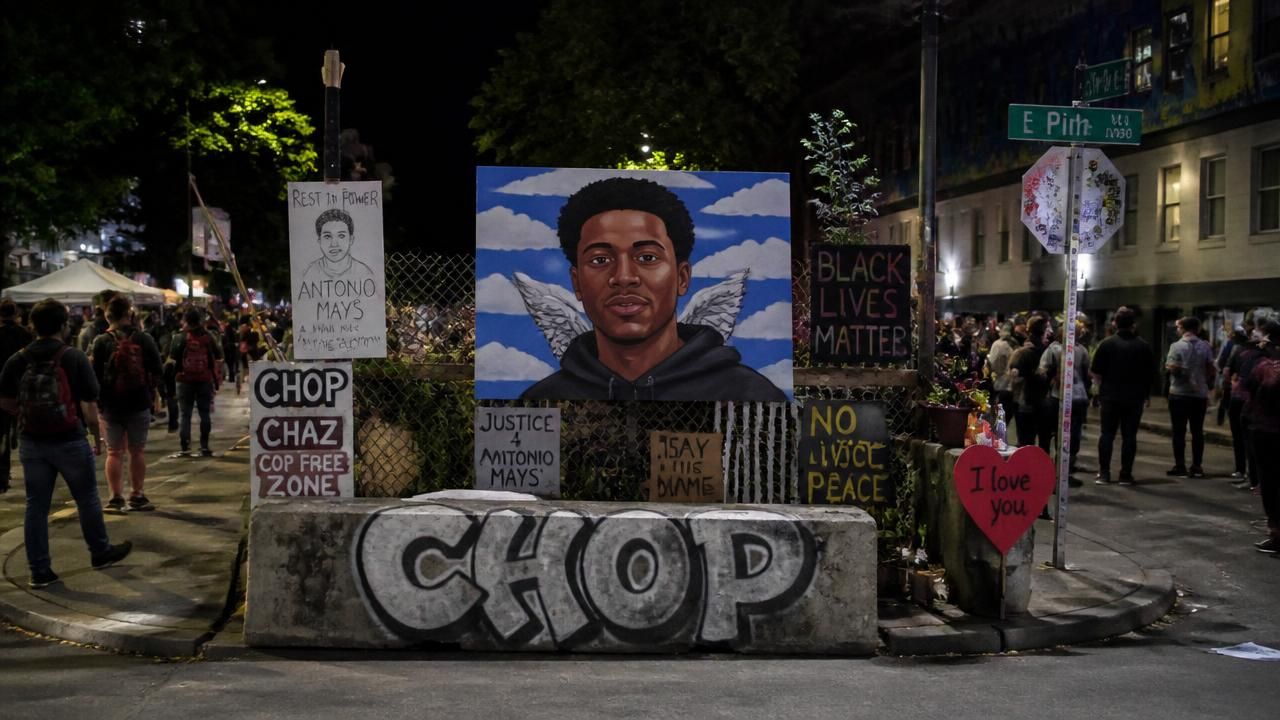
Five years after the death of Antonio Mays Jr., a Black teenager killed inside Seattle's Capitol Hill Organized Protest (CHOP) zone, the full story of what happened on the night of June 20, 2020, remains murky. But an 18-month collaborative investigation by The Seattle Times, KUOW, and NPR's Embedded podcast has pieced together the most detailed account to date, drawing on more than a dozen videos and interviews with witnesses. The new evidence challenges long-held assumptions and reveals how a young man drawn to the civil rights movement of his generation became the victim of a protest movement that mistakenly saw him as a threat.
The Night Antonio Mays Jr. Died
Mays, a teenager, arrived in the CHOP zone during a period of intense national reckoning over police violence following the murder of George Floyd. The Seattle Police Department had abandoned the precinct, leaving the area to protesters who established an autonomous zone. According to the investigation, Mays was drawn to the area by the music and the sense of community. But the scene was chaotic, with armed individuals, improvised security forces, and a volatile mix of protesters and counter-protesters.
As the evening unfolded, Mays was shot and killed. For years, the killing remained unsolved, and the official narrative, largely shaped by initial police reports and scattered social media, painted a confusing picture. The new investigation, however, reconstructs the sequence of events with unprecedented clarity, showing that Mays was likely killed by someone within the protest movement itself—someone who thought he posed a threat. As the NPR report describes it, Mays, "came to join the civil rights movement of his generation — in a zone abandoned by police — [and] ended up killed by a protest movement that thought he was a threat."
How the Investigation Unfolded
The investigation is the result of an unusual collaboration between three news organizations. Reporters from The Seattle Times, KUOW, and NPR's Embedded podcast spent 18 months reviewing video footage, police records, and witness accounts. They also analyzed body-worn camera footage and cellphone videos, some of which had never been made public. The findings were published as part of the Embedded series titled "We Keep Us Safe," a reference to a phrase often heard in the CHOP zone.
According to the reporters, the new video evidence paints a far more complex picture than previously known. It shows Mays moving through the crowd, interacting with people, and then, in a sudden flurry of activity, being shot. The footage also reveals that protest security groups, operating without formal authority, were stationed throughout the zone, and some of them were visibly armed. The investigation suggests that Mays may have been mistaken for an intruder or a threat, leading to the deadly encounter.
Challenging the Narrative
The newly released videos have directly contradicted some earlier claims about the shooting. For example, some initial reports suggested that Mays was caught in crossfire between protesters and law enforcement, but the investigation found no evidence of police involvement in the shooting. Instead, it points to a civilian shooter, possibly linked to protest security, who has never been identified or charged.
The investigation also uncovered a witness who described the killing as "an execution," according to The Seattle Times. That witness has provided a detailed account that aligns with the video evidence, adding weight to the theory that Mays was deliberately targeted. In addition, reporters found that critical evidence had been lost or withheld, including police body-camera footage and communication logs, which further complicated the case.
The Legal Struggle: A Family Seeks Justice
In the years since Mays's death, his family has waged a legal battle against the City of Seattle. In a wrongful death lawsuit, Mays's father alleges that the city "abandoned" the teenager by allowing the CHOP zone to exist without police oversight. "Seattle abandoned Antonio Mays Jr.," the family's lawyer argued in opening statements, according to The Seattle Times. The lawsuit claims that by withdrawing police and tolerating lawlessness, the city effectively encouraged the conditions that led to Mays's death.
The trial has been fraught with difficulties. Newly discovered video footage emerged on the eve of the trial, causing delays. Initially scheduled for September, the trial was pushed to December. Another trial, related to a different death, ended with a jury left to deliberate, but the Mays case remains unresolved. In court, the city has argued that it cannot be held liable for the actions of private individuals during the protest, and that Mays's death was a tragedy but not the city's fault.
Framing the Story: Differing Perspectives
Coverage of the CHOP killing has varied significantly across outlets. The Seattle Times has focused on the failures of the investigation, highlighting lost evidence and the "attorneys' eyes only" designations that kept key materials from the public. KUOW, in its five-year retrospective, emphasized the lack of answers for the family and the community. Capitol Hill Seattle, a local blog, drew attention to the new report's details and the videos that upended the official story. Meanwhile, national outlets like NPR and PBS have used the case to explore broader themes of protest-era violence and police withdrawal.
"A Black teenager who came to join the civil rights movement of his generation — in a zone abandoned by police — ended up killed by a protest movement that thought he was a threat."
That tension—between the movement's ideals and its failures—lies at the heart of the tragedy. As the investigation shows, Mays was not an outsider or a provocateur; he was a young man drawn to a cause, and he was killed by the very people who claimed to represent justice.
Beyond Seattle: Protest Violence and Accountability
The CHOP killing is part of a wider pattern of deadly encounters during the 2020 protests. In Minneapolis, a protester was shot and killed by an ICE agent, prompting even then-President Donald Trump to call for an "honest" investigation. In California, a Mexican father was killed by an ICE officer, and in Minnesota, a woman was gunned down as she stood outside her home. These cases, covered by PBS, underscore the dangers faced by protesters and bystanders alike.
Other outlets have also connected the dots. Bellingcat's analysis of bodycam footage showed a far-right figure preparing for violence in Portland, illustrating the volatile mix of ideologies at protests. Meanwhile, local investigations exposed police misconduct, including a video showing officers mocking a woman's death and displaying a Trump flag in the SPD break room. These incidents have fueled demands for systemic reforms.
What Remains Unanswered
Despite the new evidence, no one has been charged in Mays's death. The investigation has identified a likely sequence of events but has not pinpointed a suspect. The Seattle Police Department, which initially handled the case, has faced criticism for its response, including the decision to abandon the precinct and the subsequent handling of evidence. The department later ended its body camera analysis program after footage of officers mocking a death surfaced, raising further questions about accountability.
For the Mays family, the pain of loss is compounded by the slow pace of justice. As the civil trial continues, the family hopes that the truth will come to light. But the new investigation makes clear that, five years on, the full story of what happened in the CHOP zone has only now begun to emerge.