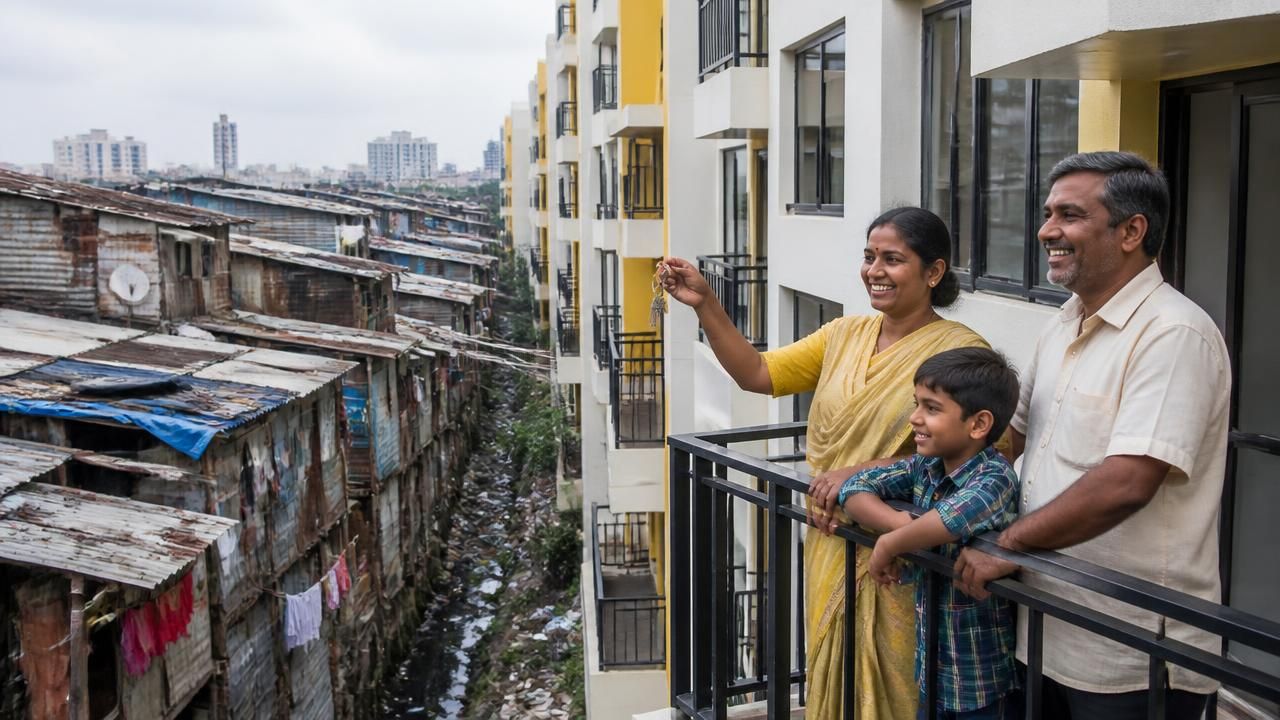
In a cramped slum where families once lived in one-room tin shacks, a groundbreaking housing experiment is turning despair into dignity. Residents have not only received keys to beautiful new apartments—they helped design them. The project, which has already won a prestigious prize, is being hailed as a model for participatory urban development in the world's fastest-growing cities.
The initiative, covered extensively by NPR and its member stations, represents a radical departure from top-down redevelopment schemes that often displace communities or ignore their needs. Instead, it puts residents at the center of the design process, from floor plans to facades.
The Experiment: From Shacks to Showpieces
In the heart of a densely packed informal settlement, the contrast between old and new is stark. Families who once navigated narrow alleys and patched roofs now live in light-filled apartments with proper kitchens, bathrooms, and ventilation. The transformation is not just physical—it's social and psychological.
"It's a bold new experiment and it's already won a prize," noted NPR's report, underscoring the project's recognition in the global planning community.
The redevelopment was not imposed by outside architects or bureaucrats. Instead, future residents were organized into focus groups, workshops, and design charrettes. They voted on layout options, chose materials, and even influenced the placement of windows and communal spaces. The result: a building that reflects the actual rhythms of daily life, with homes designed for extended families, small businesses, and religious and cultural practices.
How Participatory Design Works
Participatory design is not a new idea, but its application in slum redevelopment on this scale is rare. Typically, such projects are driven by cost and efficiency, with residents consulted only after decisions are made. Here, the process inverted the power dynamic.
- Community assemblies: Residents elected representatives to negotiate with developers and local authorities.
- Model making: Physical models allowed even illiterate residents to visualize and modify designs.
- Iterative feedback: Architects revised plans multiple times based on resident input, from the size of doorways to the placement of water taps.
One resident, who had lived in a 10-foot-square shack for decades, told NPR that she never imagined being consulted on something as complex as a building design. "They asked what we needed, and they listened," she said. "Now I have a home I can be proud of."
More Than Just Housing: A Community Rebuilt
The project's impact extends beyond the structural improvements. By involving residents in the design, the development has fostered a sense of ownership and neighborly cooperation. Crime rates have reportedly fallen in the surrounding area, and children's school attendance has improved—nobody wants to miss class when there's a proper desk at home.
Economically, the new apartments have increased property values, giving families an asset they can leverage for credit or pass down to children. Some residents have converted ground-floor units into small shops, creating micro-entrepreneurship opportunities that didn't exist before.
Why This Matters: The Global Housing Crisis
The experiment comes at a critical time. The United Nations estimates that over one billion people live in informal settlements worldwide, a number expected to rise as urbanization accelerates. Traditional slum clearance projects often fail, either because the new homes are unaffordable or located far from livelihoods. This project offers a third way: upgrading in place, with resident consent and collaboration.
Urban planners are taking note. The prize-winning project has become a case study in academic journals and planning conferences. "This is not about charity; it's about rights," said one urban development expert. "When people have a say in their environment, they treat it with respect. This is sustainable in every sense."
Challenges and Limitations
Despite its success, the model is not without challenges. Participatory design is time-consuming and requires significant facilitation, which can be costly. It also depends on the willingness of governments and developers to cede control. Critics argue that the approach may not be scalable to entire cities, where millions live in slums.
Yet the project's proponents counter that the long-term savings—in social services, health care, and community stability—outweigh the upfront investment. "This is not a cost; it's an investment in human potential," one architect involved in the project told NPR.
A Blueprint for the Future
As cities across the Global South grapple with housing shortages, this experiment offers a replicable blueprint. It demonstrates that slum dwellers are not passive victims but active agents of change, capable of designing homes that reflect their aspirations.
The prize is a testament to that vision. But the real reward is visible in the faces of the residents, who now wake up each morning in a home they helped create. As one new homeowner put it: "We didn't just get a building. We got our dignity back."
This story, told by NPR and its affiliates, is a reminder that journalism can illuminate solutions, not just problems. It challenges us to rethink who gets to shape our cities—and how.