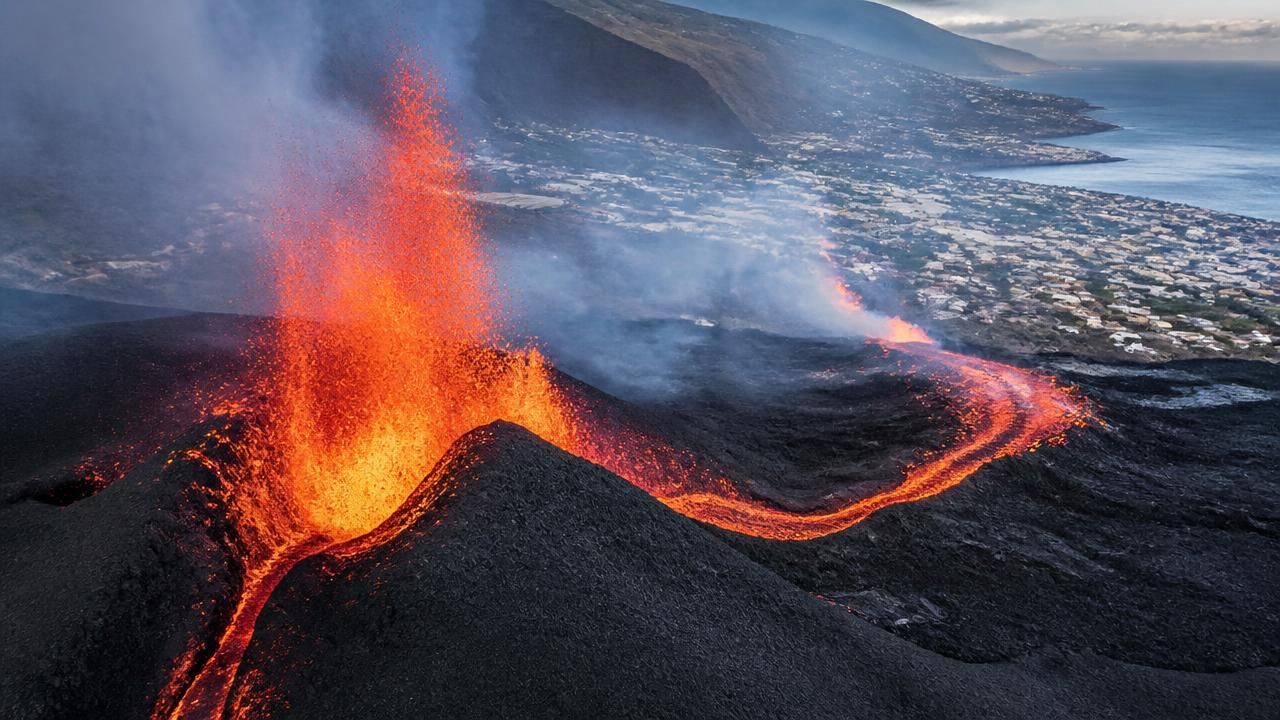
In a discovery that could reshape volcanic hazard assessment, scientists have found that superheated magma may hold the key to understanding why some eruptions produce towering lava fountains while others creep out as sluggish flows. The findings, drawn from the 2021 Tajogaite eruption on La Palma in the Canary Islands, are also providing fresh context for the dramatic lava fountains currently shooting up to 950 feet from Hawaii's Kilauea volcano.
What Makes Superheated Magma Different?
Magma is a complex mixture of molten rock, dissolved gases, and tiny crystal seeds. Under normal conditions, these microscopic crystals act as nucleation sites, prompting the magma to crystallize and thicken as it ascends toward the surface. But when magma becomes superheated—heated well above its normal melting point—those crystal seeds can dissolve completely. Without them, crystallization is delayed, and the magma remains remarkably fluid even as pressure drops during ascent.
“Extreme heat can dramatically change how an eruption unfolds,” the study authors noted, explaining that superheated magma can rise rapidly without losing mobility, which may lead to more explosive activity and higher lava fountains.
Case Study: The 2021 Tajogaite Eruption
The Tajogaite eruption began on September 19, 2021, and lasted for 85 days, covering over 12 square kilometers of La Palma with lava. The eruption was notable for its wide range of styles, including strombolian explosions, lava fountains, and fast-moving lava flows. By analyzing the chemistry and texture of erupted samples, the research team identified evidence of superheating in the magma reservoir.
Normally, crystallinity increases as magma rises, but in these samples, the expected crystallization was absent. Instead, the crystals that did exist showed signs of having been partially resorbed, hinting that they had begun to dissolve under extreme temperatures. The team proposed that a recharge of hotter magma from depth had superheated the existing storage system, erasing the crystal seeds and resetting the magma's behavior.
Kilauea's 51st Eruptive Burst
On the other side of the Pacific, Kilauea has been putting on a show of its own. The volcano's summit caldera has produced multiple eruptive bursts, with the 51st episode sending lava fountains an astonishing 950 feet into the sky. These towering fountains have lit up the night sky and drawn throngs of visitors to Hawaii Volcanoes National Park. The style of activity—sustained fountains rather than effusive flows—has prompted comparisons to the La Palma findings.
While Kilauea's magma system is different from La Palma's, the underlying physics may be similar. If portions of Kilauea's shallow conduit become superheated, the magma could remain unusually mobile, allowing gas to expand explosively and launch lava high into the atmosphere. Scientists are now examining whether the same crystal-dissolution mechanism is at play in Hawaii.
Why Similar Volcanoes Behave So Differently
One of the most intriguing implications of the new research is its potential to explain why volcanoes with similar compositions and settings can erupt in radically different ways. Some eruptions are effusive, building broad shields of lava; others are explosively violent, shattering the landscape and sending ash high into the stratosphere. The presence or absence of crystal seeds, controlled by subtle temperature variations, could be a missing piece of the puzzle.
This insight could be crucial for hazard assessment. If scientists can detect signs of superheated magma—perhaps through seismic data or monitoring of gas emissions—they may be able to anticipate whether an eruption will produce fountains or flows. Early warnings could save lives and property in volcanic regions around the world.
Implications for Volcanic Monitoring
The study also underscores the value of studying past eruptions in detail. The Tajogaite eruption was one of the best-documented volcanic events in modern history, thanks to a network of seismometers, gas sensors, and drones deployed by Spanish and international researchers. These data allowed the team to reconstruct the conditions inside the magma system with unprecedented precision.
As monitoring networks improve, scientists hope to identify the precursors to superheating—perhaps a sudden change in gas composition or a swarm of deep earthquakes—that could give communities days or even weeks of warning. With millions of people living in the shadow of active volcanoes, the stakes are high.
Key Takeaways
- Superheated magma may dissolve crystal seeds that normally trigger crystallization.
- The result is a more fluid magma that can rise rapidly and drive explosive eruptions.
- Evidence comes from the 2021 Tajogaite eruption on La Palma.
- Kilauea's current 950-foot lava fountains may share the same underlying mechanism.
- The findings could improve volcanic hazard forecasts worldwide.
What's Next?
The research team plans to apply its findings to other volcanoes, including Mount Etna, Iceland's Eyjafjallajökull, and Indonesia's Mount Merapi. They are also conducting laboratory experiments to replicate superheating conditions and test how much heat is needed to erase crystal seeds. The goal is to build a model that predicts eruption style based on temperature and crystal content.
For now, the new study offers a fascinating glimpse into the hidden dynamics that shape the most powerful natural phenomena on Earth. As Kilauea continues to erupt and La Palma's scars heal, the science of superheated magma is only beginning to heat up.