August 2026 is shaping up to be a spectacular month for skywatchers, with a rare total solar eclipse crossing the Arctic and Europe, the Perseid meteor shower peaking under dark skies, Venus shining at its best, and a deep partial lunar eclipse closing out the month. NASA's Jet Propulsion Laboratory has released its monthly skywatching tips, offering a roadmap for both casual observers and dedicated eclipse chasers.
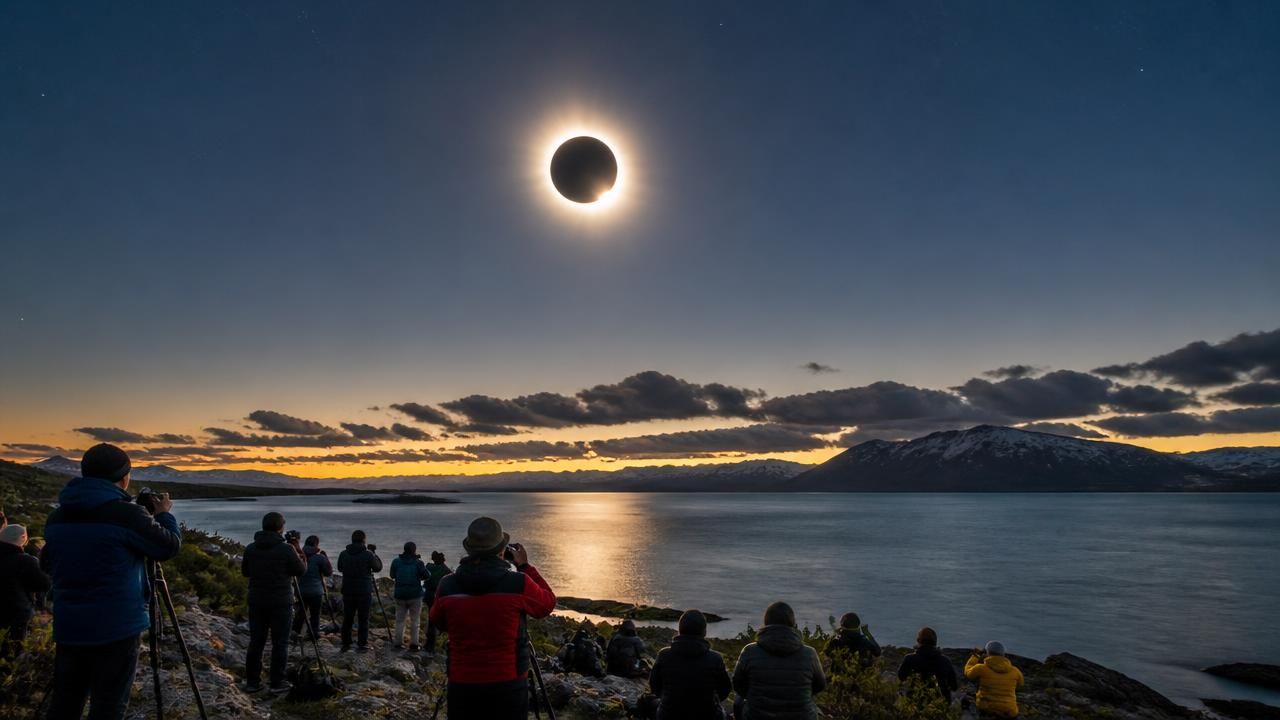
The celestial highlight is undoubtedly the total solar eclipse on August 12, 2026. The path of totality will sweep across northern Russia, Greenland, Iceland, and northern Spain, with a small corner of Portugal also experiencing the full spectacle. For viewers in parts of the United States, ranging from Alaska to North Carolina, the eclipse will appear as a partial one, with the Moon taking a "small bite" out of the Sun, as NASA describes it. The degree of coverage will vary significantly by location.
A Solar Eclipse Across the Arctic and Europe
Total solar eclipses occur when the Moon passes directly between the Sun and Earth, completely blocking the Sun's disk for a few minutes. The August 2026 event is particularly notable for its path over high northern latitudes and well-populated areas of Europe. NASA's map shows the viewing zones, with the path of totality crossing remote regions and major cities alike.
For those planning to travel, Space.com has gathered insider tips from veteran eclipse chasers. Their advice covers everything from choosing the right viewing location to understanding weather patterns. One key insight is the importance of arriving early and having a backup plan, as Arctic and Atlantic weather can be unpredictable. "Eclipse chasing is as much about flexibility as it is about astronomy," says one experienced chaser. "You need to be ready to move if clouds roll in."
What to Expect in the Path of Totality
During totality, the sky darkens dramatically, stars become visible in the daytime, and the Sun's corona—its outer atmosphere—is revealed in stunning detail. Observers within the path will experience this phenomenon for up to two minutes, depending on their exact position. Outside the path, a partial eclipse will be visible across a much wider area, including the northeastern United States and parts of Alaska.
NASA warns that safe viewing is paramount. "Remember to watch safely. Use certified eclipse glasses or a safe solar viewer any time any part of the Sun is visible," the agency advises. Regular sunglasses are not sufficient. Eclipse glasses must meet the ISO 12312-2 international standard to protect eyes from permanent damage.
Perseid Meteor Shower Peaks Under Dark Skies
Just hours after the solar eclipse, the Perseid meteor shower reaches its peak on the night of August 12-13. This is one of the most beloved meteor showers of the year, known for producing up to 100 meteors per hour under ideal conditions. The New Moon on August 12 means dark skies will provide perfect viewing conditions, making this an exceptional year for the Perseids.
The shower radiates from the constellation Perseus, but meteors can appear anywhere in the sky. NASA recommends finding a dark location away from city lights, letting your eyes adapt for 30 minutes, and lying flat on your back to take in as much of the sky as possible. The Perseids are debris from Comet Swift-Tuttle, which the Earth plows through every August.
Venus at Its Brightest and a Partial Lunar Eclipse
Mid-August brings a celestial treat for evening observers: Venus reaches its greatest eastern elongation on August 14, meaning it will appear at its highest angle above the horizon after sunset. The planet will shine brilliantly low in the western sky for several nights, from August 14 to 16. This is an ideal time for naked-eye and telescopic observations of Venus's phases.
At the end of the month, a deep partial lunar eclipse will occur on August 27-28. Visible from most of North and South America, as well as parts of Europe and Africa, this event will see up to 95% of the Moon's diameter pass into Earth's umbral shadow, creating a striking "bite" out of the lunar disk. The eclipse will be a prelude to the total lunar eclipse later this year, offering a taste of the celestial mechanics that govern our solar system.
Expert Tips and Travel Advice for Eclipse Chasers
Space.com's eclipse chasers emphasize that planning is key for the 2026 total solar eclipse. They recommend researching the historical weather patterns for your chosen viewing site, especially in northern Spain and Iceland, where in August skies can be partially cloudy. Some chasers suggest northern Spain as the most accessible and likely to offer clear skies, while others favor Greenland for the dramatic landscape.
Another tip is to book travel and accommodation well in advance, as eclipse tourism creates a surge in demand. For those who cannot travel, NASA and other organizations will likely offer live streams. However, nothing compares to experiencing totality in person. As one chaser put it, "It's the most awe-inspiring sight in nature."
How to Make the Most of August's Skywatching
Here are key recommendations from NASA and veteran observers:
- For the solar eclipse, use certified eclipse glasses or a safe solar viewer; never look directly at the Sun.
- For the Perseids, find a dark sky site, bring a comfortable chair or blanket, and allow plenty of time for your eyes to adjust.
- For Venus, observe shortly after sunset when the sky is still slightly bright; the planet will be unmissable.
- For the lunar eclipse, no eye protection is needed—it is safe to watch with the naked eye or binoculars.
Why August 2026 Matters Beyond the Spectacle
These events are more than just pretty sights. They serve as reminders of the dynamic nature of our solar system and provide valuable opportunities for scientific research. Solar eclipses allow scientists to study the Sun's corona in ways that are impossible at other times. Meteor showers offer insights into cometary debris and the composition of the solar system. Lunar eclipses help scientists understand the Moon's orbital dynamics and thermal properties.
For the public, they are a gateway to STEM engagement. NASA's monthly skywatching guides are designed to make astronomy accessible to everyone, encouraging people to look up and wonder. With three major events occurring within a single month, August 2026 is a perfect opportunity to get started in skywatching.
Whether you are standing in the path of totality in Spain, braving the chill of Iceland, or simply stepping outside to catch the Perseids, this month promises to be unforgettable. As NASA reminds us, all you need is a clear sky and a sense of curiosity.