The release of Christopher Nolan's The Odyssey was supposed to settle an argument. Instead, it has ignited a new one. From the first leaked set photos to the final IMAX trailer, the film has been a lightning rod for controversy, pitting classical scholars against casual moviegoers. And even with the film now in theaters—raking in critical acclaim and box office gold—the debate over whether Nolan has done justice to Homer's 2,700-year-old epic shows no signs of cooling.
At a Glance
- Director: Christopher Nolan
- Based on: Homer's The Odyssey, 8th century BCE
- Runtime: 2 hours 47 minutes
- Budget: $250 million
- Worldwide gross: $400+ million
- Principal locations: Sicily, Morocco, Scotland
A Legendary Source
Homer's Odyssey follows the Greek hero Odysseus on his decade-long journey home from the Trojan War. It is one of the founding texts of Western literature, and its themes of cunning, resilience, and identity have resonated for millennia. Nolan, known for Inception, Dunkirk, and Oppenheimer, announced his adaptation with promises of "mythic action" and "state-of-the-art IMAX technology." The result: a nearly three-hour spectacle that has become a box-office phenomenon and a cultural flashpoint.
The film's production itself was an epic. Shot on location in Sicily, Morocco, and the Scottish Highlands, it reportedly carried a budget of $250 million. Within weeks of release, it had grossed over $400 million worldwide. But the numbers tell only part of the story. The film has also generated endless social media threads, think pieces, and academic debates.
The Flashpoints
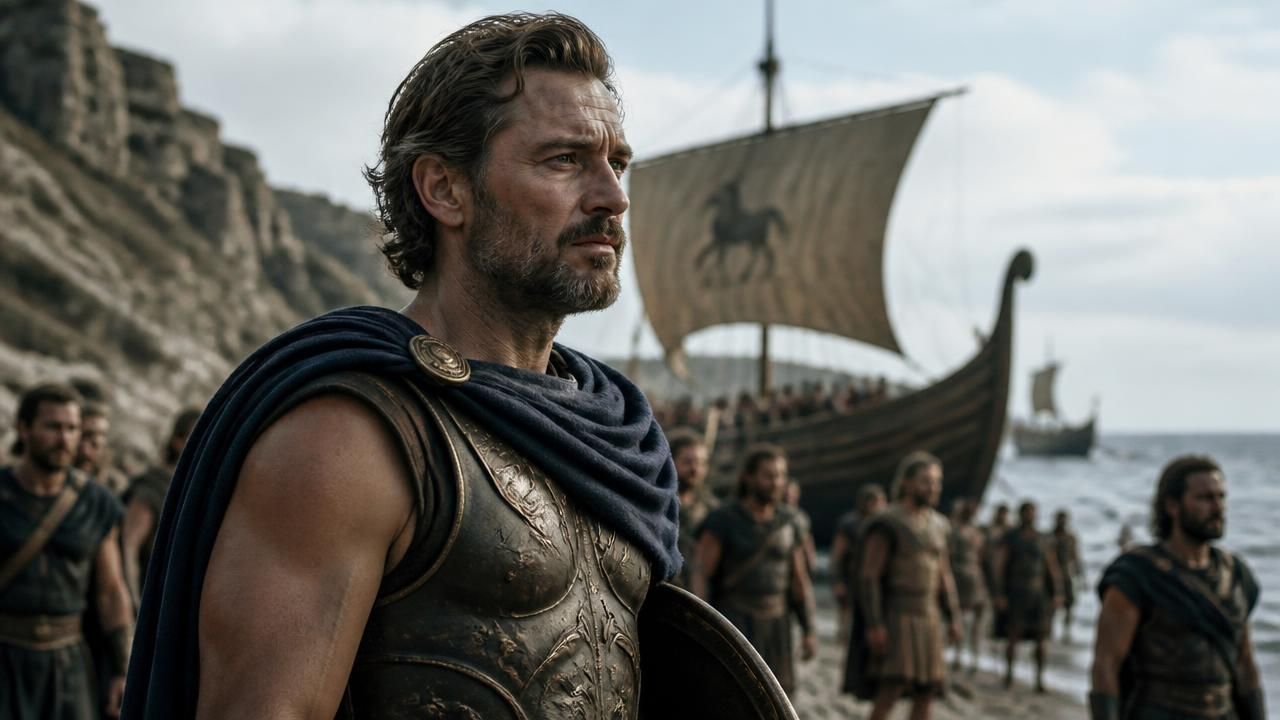
The controversies began with casting and design reveals. Nolan assembled a star-studded ensemble, but some choices seemed anachronistic to purists. Classicists noted that the armor and weaponry blended eras, and that the film's visual language drew more from modern cinema than ancient Greek art. Others objected to the use of American accents for characters from Greek myth, arguing that it broke the spell of historical verisimilitude.
"This is not a reconstruction; it is a transformation," says Dr. Helena Vasquez, a professor of classics at Oxford. "Nolan is not a translator—he's an interpreter. The debate this film provokes is healthy because it forces us to confront what we believe the Odyssey should be."
The general public has also weighed in. Some viewers have complained about the film's pacing, particularly its long, dreamlike sequences. Others have embraced the surrealism, finding it true to the spirit of Homer. The split has become a meme: on one side, the "purists"; on the other, the "Nolanites."
An Intimate Epic
Amid the shouting, our reviewer offers a measured take. "The IMAX scale is epic, but Nolan gives the story an intimate feel," they write. "He weaves a captivating, nearly three-hour cinematic spell. The magic slowly dissipates once one leaves the theater, but the powerful imagery resonates for days."
"The film gave me a fresh perspective on the central character of Odysseus. This is not the flawless, cunning hero of myth; it is a man scarred by war, desperate to get home."
The reviewer's perspective is shared by some film critics, who see the film as a character study rather than an action epic. The set pieces are there—cyclopes, sirens, the underworld—but they serve as mirrors into Odysseus's psyche. In this reading, Nolan has done something rare: he has turned an ancient poem into a modern meditation on trauma and memory.
Spoiler Territory
Those who have not seen the film should beware. The final act reimagines Odysseus's reunion with Penelope not as the blood-soaked slaughter of the suitors, but as a quiet, almost abstract exchange. This creative choice has divided audiences even more sharply. For some, it is a profound reinterpretation of the poem's ending; for others, it is a betrayal of the source material.
Nolan himself has remained characteristically cryptic in interviews, saying only that "every generation must find its own Odysseus." That ambiguity has done nothing to quell the debate. If anything, it has fueled it.
The Debate Rages On
The ongoing controversy is a testament to the enduring power of Homer's poem. Few films inspire this level of intellectual engagement. Whether you're a classicist or a newcomer, The Odyssey demands a response. And that, perhaps, is the most fitting tribute to the original epic: it is still making us argue, still making us think, and still making us see ourselves in its hero.