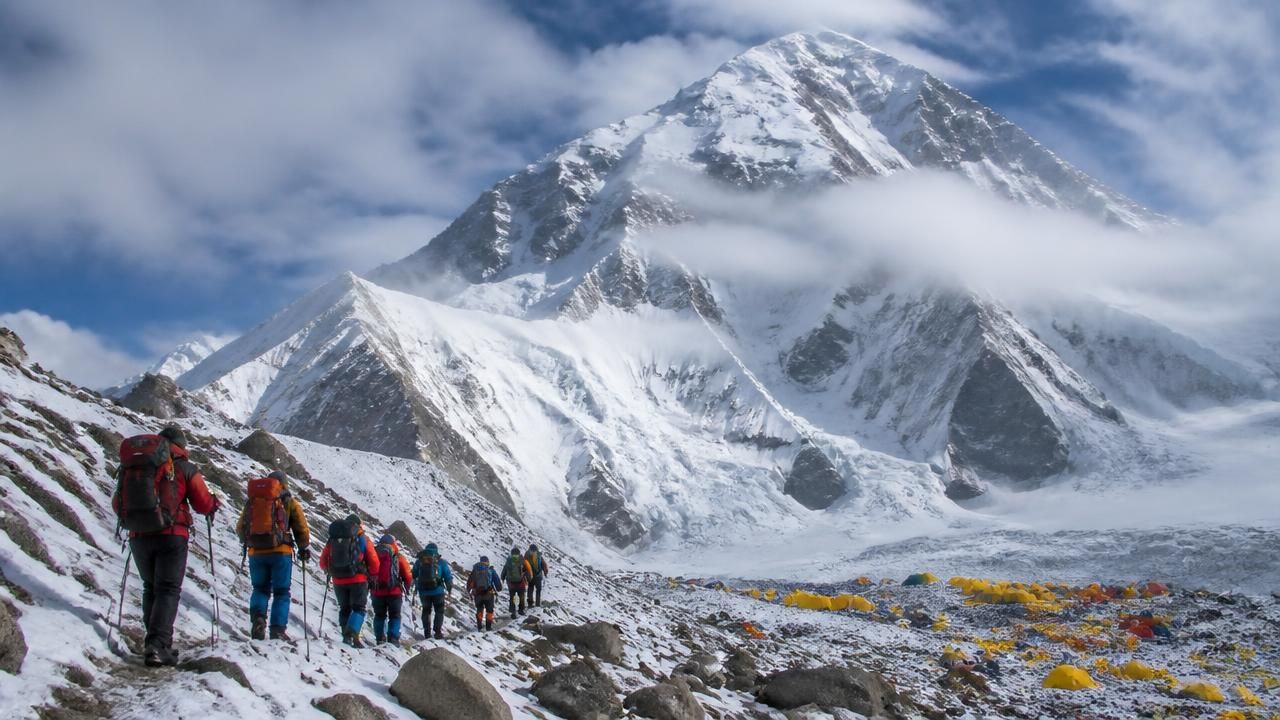
A rescue operation is underway on Broad Peak in Pakistan's Karakoram range after a devastating avalanche swept through a group of international climbers, leaving at least four dead and six missing, including the legendary Nepali mountaineer Nirmal Purja. The avalanche struck on Thursday, catching a team of ten climbers as they were reportedly making their way up the 8,047-meter peak, the world's 12th highest mountain. By Friday, rescue teams had recovered four bodies, while the search for the remaining six continued, hampered by treacherous conditions and unpredictable weather.
The Incident
The avalanche occurred on Thursday afternoon, according to Pakistani officials, who confirmed that a large snowfall had broken loose from a ridge above the climbers' route. The expedition was part of a commercial climbing season on Broad Peak, which has seen increased traffic in recent years. Among the ten climbers were several highly experienced mountaineers, including Purja, the British-Nepali climbing star known worldwide for his Netflix documentary "14 Peaks" and for summiting all 14 eight-thousanders in record time.
As news of the avalanche spread, rescue teams from the Alpine Club of Pakistan and local porters were dispatched to the mountain. Initial reports indicated that three bodies had been found, but that number quickly rose to four. A spokesman for the Alpine Club said that the recovery operation was ongoing and that every effort was being made to locate the missing climbers, though he acknowledged that the likelihood of survival was diminishing.
The Missing and the Dead
The four confirmed dead include an American climber, whose body was identified among those recovered, as well as Nadhira al Harthy, the first Omani woman to summit Mount Everest. Al Harthy, a 40-year-old mother of two, was a celebrated figure in Oman and had become a symbol of women's achievement in the region. She was part of a larger expedition on Broad Peak when the avalanche hit. Her death was confirmed by the Omani Mountaineering Committee, which expressed profound sorrow.
Family and friends of the American climber, whose name has not yet been officially released, remembered her as an adventurous spirit. "She could do almost anything she wanted to do," a family member told a local news outlet, recalling her love for the mountains and her fearless approach to life. She was described as a seasoned alpinist who had climbed peaks in Alaska, the Andes, and the Himalaya.
Nirmal Purja, 42, remains among the six missing. His social media accounts have been dormant since the avalanche, but before the climb he posted an ominous message that struck a chord with followers. In one post, he wrote that a summit push was "not the plan" and that conditions were far from ideal. The post, which was later described as "eerie" by some outlets, suggested that Purja and his team were weighing the risks shortly before disaster struck. His wife, Suchi Purja, appealed for prayers and urged the international climbing community to support the rescue efforts.
Rescue Efforts
The rescue operation has been complicated by the mountain's altitude, remoteness, and the continued threat of further avalanches. Helicopters were grounded for several hours on Friday due to high winds and cloud cover, forcing ground crews to work on foot. A team of experienced high-altitude rescuers, including members of the Pakistani military, was deployed to the site, but their progress was slow. "We are doing everything physically possible to reach the missing climbers," a rescue coordinator told reporters. "But the conditions are extremely challenging."
Local authorities have not yet determined the exact cause of the avalanche, though climbers in the region reported unusually warm temperatures in the days leading up to the incident, which may have destabilized the snowpack. Climate scientists have noted that avalanches at high altitudes are becoming more common as temperatures fluctuate, a point echoed by several mountaineering experts who commented on the tragedy.
Context and Background
Broad Peak, located in the Gasherbrum massif of the Karakoram range, was first summited in 1957 by an Austrian expedition. The mountain is known for its long, steep slopes and technical challenges, though it is often overshadowed by neighboring K2, the world's second-highest peak. In recent years, Broad Peak has become increasingly popular with commercial expeditions, leading to overcrowding and safety concerns. The 2023 season, for example, saw several climbers die of exhaustion and exposure on the mountain.
Nirmal Purja, who holds British and Nepali citizenship, is perhaps the most prominent name associated with modern high-altitude mountaineering. After leaving the British special forces, he completed all 14 peaks over 8,000 meters in just six months and six days in 2019, a feat that shattered the previous record. His story was captured in the Netflix documentary "14 Peaks" and he has since founded a company that guides climbers on major expeditions. He has also been involved in several daring rescues, earning him widespread respect within the climbing community.
The presence of such an experienced mountaineer in the missing group has underscored the unpredictability of the mountains. Even the best-prepared climbers can fall victim to avalanches, which are often random and beyond human control. As one climbing commentator put it, "Broad Peak may not have the notoriety of K2, but it has its own dangers, and today is a stark reminder of that."
Different Media Perspectives
The story has been covered extensively by outlets around the world, each framing it through a distinct lens. International media, from CNN to the BBC, focused on the global significance of the missing climbers, with headlines highlighting Nirmal Purja's fame and the tragic death of the American woman. Meanwhile, Pakistani media, including Geo TV and Daily Pakistan, emphasized the scale of the rescue operation and the efforts of local authorities. Reports there initially varied on the number of casualties, with some suggesting that eight bodies had been recovered and only two climbers remained missing, though this was later disputed by officials.
Nepalese media, notably The Himalayan Times and Kathmandu Post, gave prominent coverage to Purja, describing him as a national hero and expressing hope for his safe return. Oman's newspapers mourned al Harthy in glowing tributes, celebrating her as a trailblazer for Omani women. On social media, the climbing community united in a mix of grief and determination, with many posting photos of the missing climbers and sharing memories of their past expeditions.
Implications and Outlook
The tragedy raises urgent questions about the safety of commercial high-altitude climbing. With more climbers attempting peaks like Broad Peak each year, authorities in Nepal and Pakistan have struggled to regulate the industry and ensure adequate rescue infrastructure. Experts are calling for better forecasting, more stringent checks on expedition permits, and improved communication systems on the mountains.
As the search enters its second day, the focus remains on the missing six climbers and their families. The window for survival is closing, and each passing hour makes a tragic outcome more likely. Yet those involved in the rescue have not given up hope. "In the mountains, miracles happen," one rescue worker said. "We will keep looking until there is no chance left."
For the climbing community, the loss of life is a sobering reminder of the risks they willingly embrace. For the world outside, it is a glimpse into a realm where the forces of nature dwarf human ambition. The bodies recovered so far will be repatriated in the coming days, while the search for the missing continues against all odds.