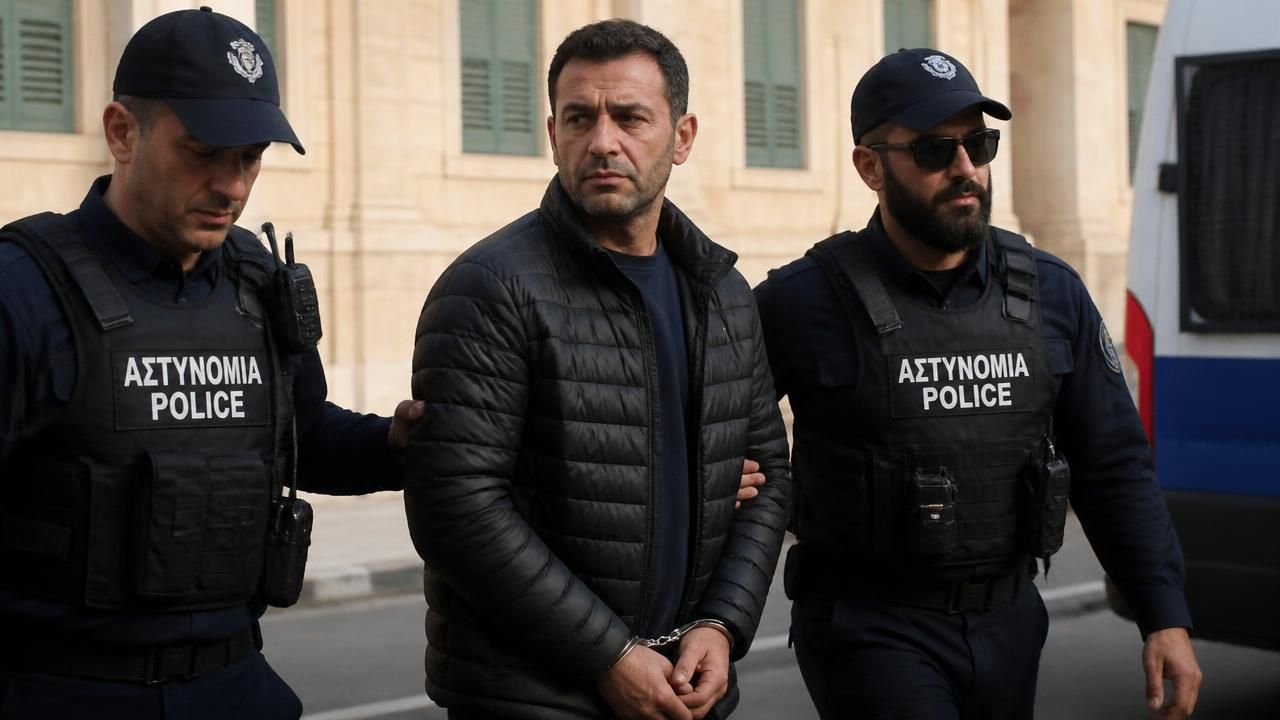
In a case that underscores the shifting espionage landscape in the Eastern Mediterranean, a 44-year-old British-Azerbaijani man has been arrested in Cyprus on suspicion of spying for Iran at a UK military base. The suspect, identified by multiple sources as Rashad Sultanov, was taken into custody on the island after allegedly surveilling RAF Akrotiri—a strategic Royal Air Force installation that serves as a critical hub for British and coalition operations in the Middle East—and passing details to Iran's Islamic Revolutionary Guard Corps (IRGC).
British authorities have formally requested Cyprus to extradite Sultanov, who faces allegations that include both espionage and terrorism-related offences under UK law. The case is believed to be the first overseas investigation conducted under the UK's National Security Act, a sweeping piece of legislation introduced in 2023 to counter hostile state activity.
Who Is Rashad Sultanov?
Sultanov, a London-based dual British and Azerbaijani citizen, was arrested by Cypriot police following what local reports describe as a coordinated surveillance operation. According to the BBC, he is suspected of spying and terror offences. The Guardian and other outlets reported that he is accused of gathering intelligence on RAF Akrotiri and transmitting it to the IRGC, Iran's elite military force.
Philenews, a Cypriot news outlet, reported that Sultanov's detention is being challenged at the European Court of Human Rights (ECHR), where his legal team argues that his arrest and the conditions of his detention violate his rights. He remains in custody in Cyprus while the extradition process unfolds.
RAF Akrotiri: A Strategic Prize
RAF Akrotiri is one of two Sovereign Base Areas retained by the UK on Cyprus, and it has long been a linchpin of British military power in the region. It hosts intelligence-gathering aircraft, strike fighters, and support squadrons, and has played a central role in recent operations against Iranian drone attacks on Israel. In fact, BBC reporting in the same period highlighted the RAF tanker crews flying defensive missions from Akrotiri to refuel jets intercepting Iranian drones—a reminder of the base's direct relevance to the Iran-Israel conflict.
The alleged spy plot therefore carries significant weight. According to Ynetnews, the arrest followed a “credible alert” from a foreign intelligence service, prompting Cypriot authorities to put the suspect under surveillance. The operation reportedly culminated in his arrest before he could carry out any attack. Türkiye Today and other outlets noted that the suspect is of Azerbaijani descent, a detail that adds a further layer of geopolitical complexity given Azerbaijan's close ties with both Turkey and Iran.
Espionage or Terror Plot? Differing Framings
News coverage of the incident has varied, reflecting the multiple legal and security dimensions of the case. The New York Times emphasized the espionage angle, describing Sultanov as accused of surveilling the military installation and sharing details with the Revolutionary Guards. The Guardian and the Evening Standard highlighted both spying and terrorism allegations, with the latter reporting that the man was arrested over a suspected “spy plot” targeting the base. Sky News initially framed its story around a separate arrest in Crete, but a correction later pointed to Cyprus—indicating the fluidity of information in the early hours of the story.
“This is a significant development in the UK's ability to counter hostile state activity overseas,” a former British intelligence officer told The Telegraph, which ran the story under the headline “RAF base ‘targeted in Iran spy plot’.”
Philenews reported that Cypriot authorities believe the suspect may be part of a regional spy ring, not operating alone. This aligns with broader concerns about Iranian intelligence networks using Cyprus as a staging ground. Cyprus has historically been a flashpoint for espionage activity, given its proximity to the Middle East and its divided status between the Greek Cypriot south and the Turkish Republic of Northern Cyprus.
Legal and Diplomatic Implications
The UK's extradition request marks the first use of the National Security Act in an overseas context, an indication of how seriously London views the alleged plot. The act, which was passed in the wake of a string of espionage scandals, gives UK authorities the power to prosecute individuals for activities linked to hostile states, even when the actions occur abroad.
Sultanov's appeal to the European Court of Human Rights adds a further layer of legal complexity. His lawyers are expected to argue that the terrorism charges are unfounded and that his detention is politically motivated. The ECHR has previously intervened in Cypriot extradition cases, though the UK's strong legal relationship with Cyprus—both being Commonwealth members—suggests the extradition is likely to proceed if the evidence meets the threshold.
Regional Context: Rising Tensions
The arrest comes amid heightened tensions between Iran and the West, with RAF Akrotiri playing an active role in defending Israel against Iranian drone attacks in the spring of 2025. In a related development, UK Prime Minister Keir Starmer confirmed that the Royal Navy warship HMS Dragon would be deployed to Cyprus, a move that analysts interpret as a bolster to British force posture in the region.
Iran's use of proxies and intelligence operatives in Europe and the Middle East has been well documented. The IRGC has been accused of plotting assassinations and sabotage operations on European soil, and Cyprus's location makes it a natural observation post. The alleged surveillance of RAF Akrotiri fits a pattern identified by security services: Iran seeking intelligence on Western military infrastructure that could be used to coordinate weapons or plan attacks.
What Happens Next?
Sultanov remains in custody in Cyprus while the extradition case is litigated. Cypriot courts will need to rule on the UK's request, and Sultanov's legal team is likely to exhaust all appeals, including the ECHR application. For British authorities, the case represents a test of the National Security Act's reach and a warning to hostile actors that the UK will pursue them even in sovereign base areas.
For Cyprus, the incident is a reminder of its delicate geopolitical position. The island is a member of the European Union but hosts British military bases that are technically outside EU jurisdiction. This duality often makes it a battleground for intelligence operations, as both Western and Iranian actors seek to exploit the island's unique status.
As the story develops, one thing is clear: the quiet airbase on the south coast of Cyprus has become a flashpoint in the shadow war between Iran and the West, and a 44-year-old man's alleged actions have thrown a spotlight on the covert intelligence battle raging just miles from the Mediterranean's turquoise shores.