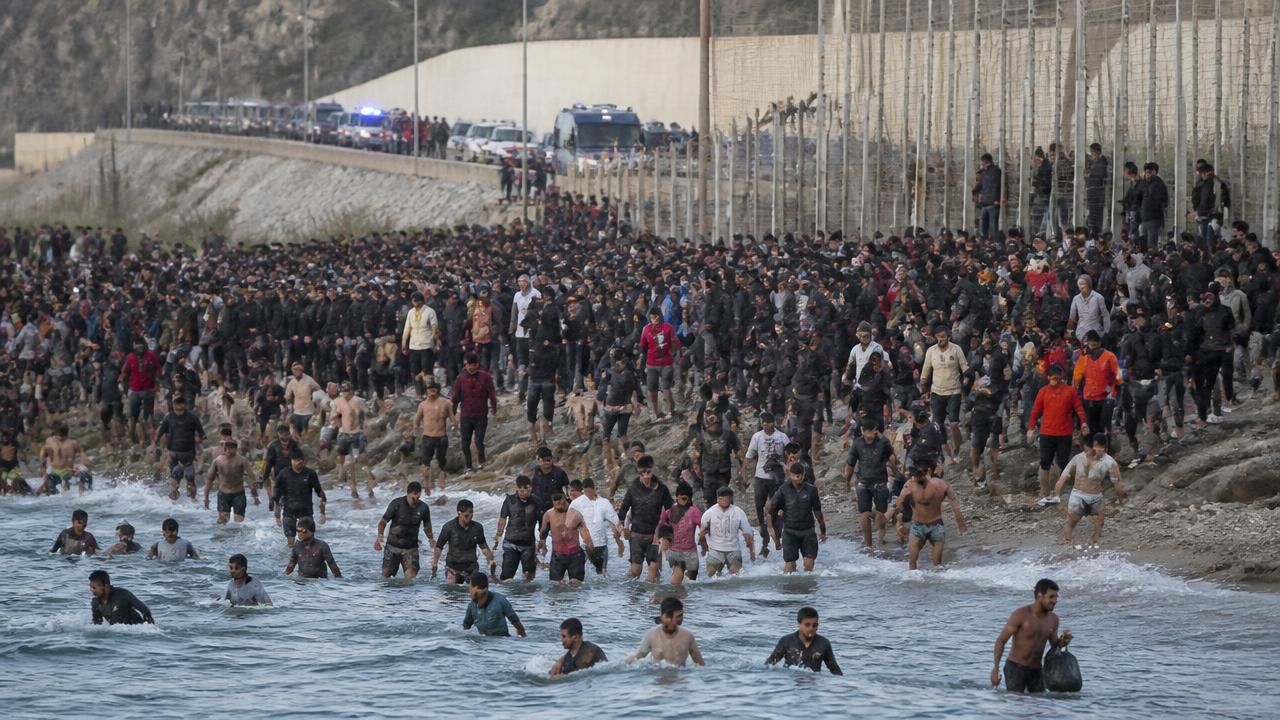
In a single, chaotic 24-hour period, approximately 49,000 migrants crossed into the Spanish enclave of Ceuta from neighboring Morocco, overwhelming local authorities and leaving at least 18 people dead in a tragedy that rapidly escalated into a full-blown political crisis for Madrid. The influx, described by one local police association as a “serious humanitarian crisis,” has prompted a military deployment, emergency diplomatic negotiations, and harsh criticism from European partners, including France and Italy. The event marks one of the largest single-day border breaches in modern European history and exposes a deep fracture in EU migration policy.
A City Overwhelmed
Ceuta, a tiny Spanish territory on Africa’s northern coast with a population of just 85,000, was completely unprepared for the influx. Migrants, many of them Moroccan, but many from sub-Saharan countries as well, reached the enclave by swimming around the high border fences that separate Morocco from Spanish soil, while others scaled the barriers or slipped through gaps. The sheer volume—nearly 60% of Ceuta’s population arriving in one day—paralyzed the city, with migrants filling streets, parks, and makeshift shelters. Local officials reported scenes of desperation: people wading ashore soaking wet, families with young children, and groups huddled in shipping containers.
The death toll, initially reported as 18 and later revised to at least 19 by some outlets, resulted from drownings in the strong currents of the Mediterranean and the Atlantic, as well as from injuries sustained in stampedes among the crowd. The Guardian reported that some migrants died in a crush, while others were pulled from the sea. Morocco’s officials acknowledged that the numbers were unprecedented, and Spanish authorities scrambled to account for the missing.
“This is a serious humanitarian crisis that requires an urgent response from the Spanish government and the EU.” — Local police association spokesperson
Madrid Responds: Troops, Border Reopening, and a Return Deal
Spain’s government quickly moved to regain control. Prime Minister Pedro Sánchez ordered the deployment of the military to Ceuta, with troops reinforcing border checkpoints and patrolling the city’s streets. A significant number of migrants were bused to detention centers or military installations, while authorities attempted to identify and process the new arrivals. The Spanish interior ministry said it was working to return the migrants to Morocco, and within days, Spain and Morocco struck a return deal, according to reports from The News and other regional media. The agreement, quietly negotiated, allowed Spain to send back the vast majority of the migrants, though unaccompanied minors were initially exempted and became a point of contention.
The deployment was framed by Madrid as a necessary measure to restore order, but it drew fire from human rights organizations, which urged Spain to respect asylum procedures. At the same time, right-leaning outlets such as The European Conservative used the language of “storming” and “invasion,” reflecting a security-focused perspective that resonated with some European audiences.
A Political Firestorm
The crisis quickly spilled into European politics. France and Italy criticized Spain’s handling of the border, with both governments suggesting that Spain had failed to protect the EU’s external frontier. French Interior Minister Gerald Darmanin accused Spain of having the “most generous” border policy in Europe, a veiled jab at Madrid’s open-door stance. Italy’s far-right leader Matteo Salvini tweeted that “the invasion of Europe has begun,” using the event to push for more aggressive border controls. These criticisms surprised Madrid, which had expected EU solidarity, and exposed a north-south divide within the bloc on migration.
Russian President Vladimir Putin’s envoy to the EU, Vladimir Chizhov, mocked Europe’s handling of the situation, comparing it to “barbarians at the gate” in a thinly veiled reference to the migrants. The comment, reported by Dagens.com, was seen as a deliberate provocation from Moscow, using the crisis to highlight European disunity.
British right-wing outlets, including The Conservative Post, drew parallels to the UK’s own border challenges, warning that “Britain should take note” of the Ceuta crisis. The Sun went further, reporting that hundreds of migrants had also stormed a second Spanish enclave, Melilla, raising the specter of a broader border breach. While the Melilla crossing was much smaller, it fueled alarmist coverage in some media.
Why Now? Diplomatic Context and Morocco’s Leverage
Behind the immediate chaos lies a deeper diplomatic conflict between Spain and Morocco. The influx came days after Spain quietly allowed Brahim Ghali, the leader of the Polisario Front—a Western Sahara independence movement long at odds with Morocco—to be treated for COVID-19 in a Spanish hospital. Morocco, which views the Polisario as a direct threat to its sovereignty over Western Sahara, reacted with fury. Analysts widely believe that Rabat deliberately relaxed border controls as a punitive measure, effectively opening the floodgates to Ceuta to pressure Madrid. This interpretation was echoed by multiple sources, though Moroccan officials denied any deliberate policy and blamed “irregular migration” on economic instability and the pandemic.
The timing was no accident. Morocco has long used migration as leverage in its diplomatic disputes, and the Ceuta crisis demonstrated its powerful hand. Spain, heavily reliant on Morocco for counterterrorism cooperation and trade, had to balance its humanitarian obligations with the need to appease Rabat. The return deal signaled a pragmatic retreat, with Madrid prioritizing stability over principle.
Differing Frames: Security vs. Humanitarian
The media coverage of the Ceuta crisis reveals a stark divide in how the story was framed. Left-leaning outlets like The Guardian and NBC News emphasized the human tragedy, highlighting the deaths, the desperate conditions, and the moral duties of Spain and the EU. They critiqued the Spanish government for its unpreparedness and for implementing swift deportations without proper asylum screenings. In contrast, right-leaning outlets like The European Conservative and The Sun focused on the security dimension, portraying the migrants as an invasive force that threatened Spanish and European integrity. The Sun’s headline “Hundreds of migrants storm SECOND Spain enclave as 49,000 breach EU border” exemplifies this alarmist tone, while The Conservative Post’s “Britain Should Take Note” drew a direct line to UK border policy.
These divergent perspectives are not merely stylistic; they reflect a fundamental policy fault line. The Ceuta crisis has reignited debates over the Schengen Area’s porous external borders, the uneven burden of migration among EU member states, and the ethics of returning migrants to a country—Morocco—that may not offer them safe haven. For many sub-Saharan migrants, Morocco is a transit country to Europe, and returning them there exposes them to abuse and immobility.
What Next?
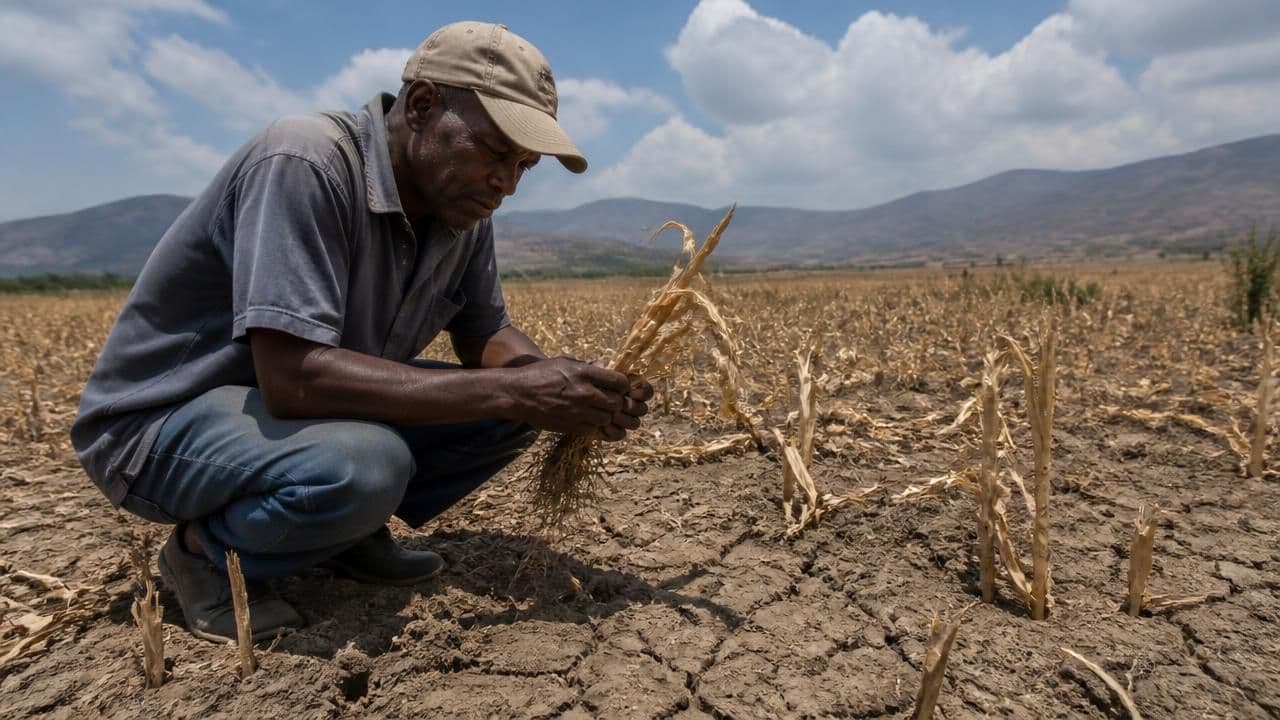
By the end of the first week, Spain had repatriated the majority of the migrants, though reports suggested that thousands remained in Ceuta, and hundreds of minors were still awaiting processing. The diplomatic rift with Morocco appeared to heal, as Spanish Foreign Minister Arancha González Laya traveled to Rabat for talks, and the two countries reaffirmed their commitment to border cooperation. However, the underlying issues—poverty, conflict, and climate change in Africa, combined with the EU’s inability to forge a unified migration policy—remain unresolved.
The Ceuta crisis is a wake-up call. It demonstrated that tens of thousands of people can cross into Europe in a single day when a neighboring state decides to look the other way. For Spain, it was a political humiliation; for the EU, a warning; and for the migrants, it was a deadly gamble. As European leaders debate how to handle the next wave, the images from Ceuta remain a haunting reminder of the human cost of inaction.