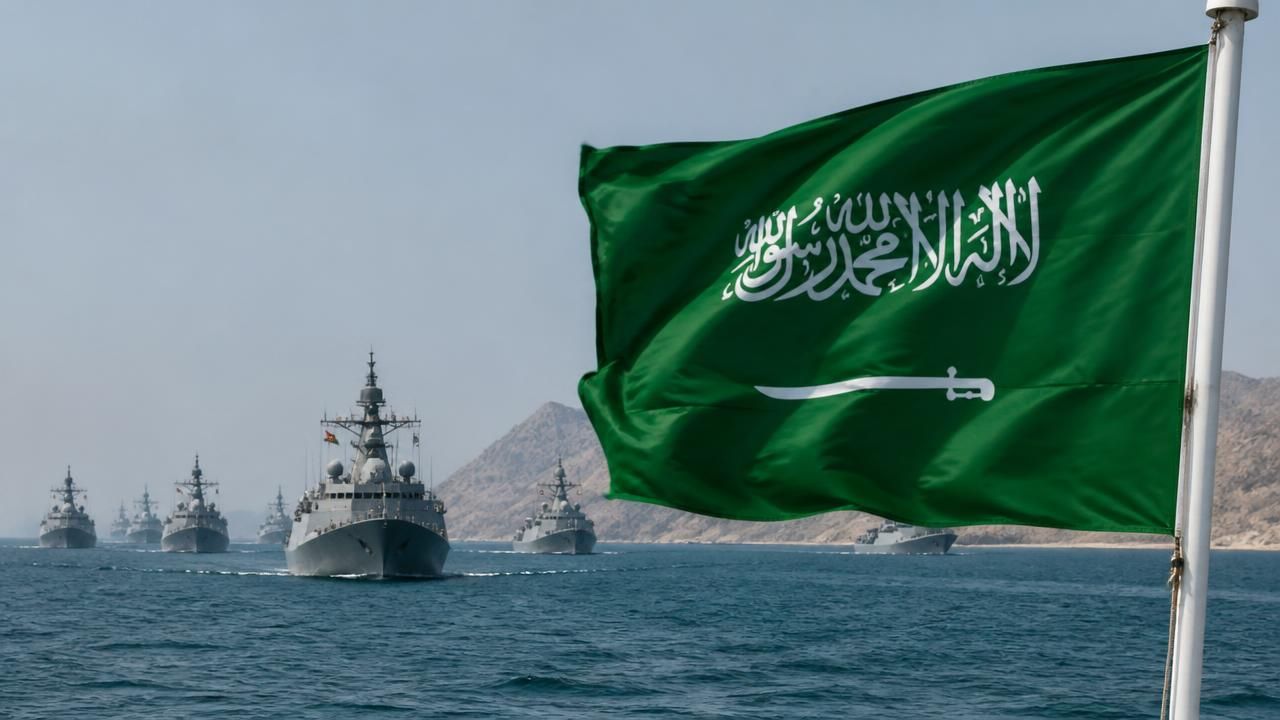
In a bold move to secure one of the world's most critical maritime chokepoints, Saudi Arabia has announced the formation of a multinational military coalition to protect shipping in the Red Sea, the Bab al-Mandab strait, and the Gulf of Aden. The alliance, comprising at least 14 nations including Egypt, Turkey, and Pakistan, comes amid escalating Houthi attacks on commercial vessels and a widening conflict between the United States and Iran.
The coalition, reported by multiple outlets including The New York Times and the Financial Times, marks a significant escalation in regional efforts to safeguard vital trade routes. Saudi officials have framed the initiative as a defensive measure against threats from Yemen's Iran-backed Houthi rebels, who have launched a series of drone and missile strikes on ships passing through the Red Sea since the start of the Gaza war.
A New Maritime Alliance
According to sources, the Saudi-led coalition brings together a diverse array of states, from Gulf neighbors to Mediterranean and South Asian partners. The Daily Times reported that Saudi Arabia is pushing for a Red Sea security alliance, while other outlets confirmed that Pakistan and 12 other countries have signed on. The alliance's founding members have approved a framework to coordinate naval patrols, intelligence sharing, and rapid response operations.
“This is a critical step toward ensuring freedom of navigation and protecting the economic interests of all nations that rely on these waters,” a Saudi defense official said in a statement quoted by the Arabic Trader news site. The coalition will operate under Saudi command but with significant input from partner navies.
Participants and Scope
- Egypt and Jordan, both heavily dependent on Red Sea trade, are key members.
- Turkey, despite its recent tensions with Riyadh, has joined to secure its commercial interests in the region.
- Pakistan, a long-time Saudi ally, brings naval expertise and a strategic presence in the Arabian Sea.
- Several Gulf Arab states, small African nations like Djibouti and Sudan, and others round out the coalition.
Why Now? Houthi Attacks and the Iran War
The immediate trigger for the coalition is the surge in Houthi attacks on shipping, which have intensified dramatically in recent weeks. The Houthis, who control large parts of Yemen, have declared a naval blockade on Saudi Arabia and threatened to shut down the Bab al-Mandeb strait, through which an estimated 5 million barrels of oil pass daily. Defence Security Asia reported that such a shutdown would have catastrophic effects on global energy supplies.
The attacks are widely seen as part of a broader regional power struggle involving Iran. The New York Times noted that “the Iran war is entangling a growing list of Mideast nations,” with Saudi Arabia now directly engaged in a new front. The US attack on Iranian assets in response to Tehran's provocations has raised tensions to a near-boiling point, and the Red Sea has become a flashpoint.
“What we're seeing is the convergence of two conflicts: the long-running Yemen war and the new US-Iran confrontation,” said a regional security analyst quoted by the Critical Threats Project. “The Houthis are acting as Iran's proxy, and the shipping lane is their weapon.”
Energy and Economic Stakes
The Red Sea route is a linchpin of global trade, connecting the Mediterranean to the Indian Ocean. For Saudi Arabia, it is the primary corridor for oil exports to Europe and the United States. The disruption of this route would not only hit the kingdom's economy but also send shockwaves through global markets. As Politico reported, an attack on Iran could pose a bigger risk to the energy market than the crisis in Venezuela, given the concentration of oil traffic here.
Business analysts point to the immediate impact on shipping insurance premiums and freight rates. “Every missile fired near a tanker adds a premium to every barrel of oil transported,” said a commodities trader quoted by Gulf Business. “The coalition is an attempt to stabilize these waters and reassure markets that supplies will continue to flow.”
Regional Dynamics and Divergent Interests
The formation of the Saudi-led coalition also highlights a subtle but important divergence from the United States' own maritime initiative. Ynet News reported that several Arab nations have opted out of the US-led coalition against the Houthis, wary of being seen as taking sides in the broader Iran conflict. Riyadh's separate, independent alliance allows Arab states to participate without overtly aligning with Washington's strategy.
“The Saudis are trying to thread the needle: they want to secure their own waters, but they don't want to be seen as a US proxy,” explained a Middle East expert at the Arab Center Washington DC. “By leading a regional effort, they gain legitimacy and keep some distance from the controversial US campaign against Iran.”
Egypt's partnership is particularly notable, as Cairo has traditionally been cautious about military commitments. However, its dependence on Suez Canal revenues and the port of Damietta, recently targeted by a drone strike, likely drove its decision to join.
Historical Context: The Yemen Conflict
This new alliance is but the latest chapter in Saudi Arabia's decade-long military involvement in Yemen. Since 2015, a Saudi-led coalition has been fighting the Houthis, who overthrew the internationally recognized government in 2014. The war has become a stalemate, with the Houthis launching ballistic missiles and drones into Saudi territory and attacking shipping in the Red Sea. As Britannica notes, the Yemeni civil war has been marked by widespread civilian suffering and a devastating humanitarian crisis.
“The Houthis have proven remarkably resilient,” said a report from the Middle East Institute. “Their arsenal, supplied by Iran, has evolved from short-range rockets to advanced anti-ship missiles, capable of threatening maritime traffic.”
The new maritime coalition reflects a recognition that the Red Sea front is now as important as the land war. Saudi Arabia has reportedly also prepared for “sea and possible land offensive” against the Houthis, according to The Guardian.
Implications and Outlook
The success of the new coalition is far from assured. The Houthis have demonstrated an ability to adapt to defensive measures, and Iran's continued support means the threat is likely to persist. Moreover, the coalition's effectiveness will depend on the willingness of partners to commit actual resources, and on avoiding a broader escalation that could engulf the region.
Some experts warn that the focus on military protection may be a short-term fix. “The real solution lies in ending the Yemen war and reducing Iranian influence,” argued an analyst for the International Crisis Group. “Until then, we will continue to see these maritime flare-ups.”
As the world watches, the Red Sea has become a test case for regional security cooperation in the shadow of great-power rivalry. The Saudi-led coalition represents a new model of multilateral action—one that may be replicated in other trouble spots. But in the short term, the question remains: can a naval shield guarantee the safety of one of the world's most crowded, and now most dangerous, maritime highways?