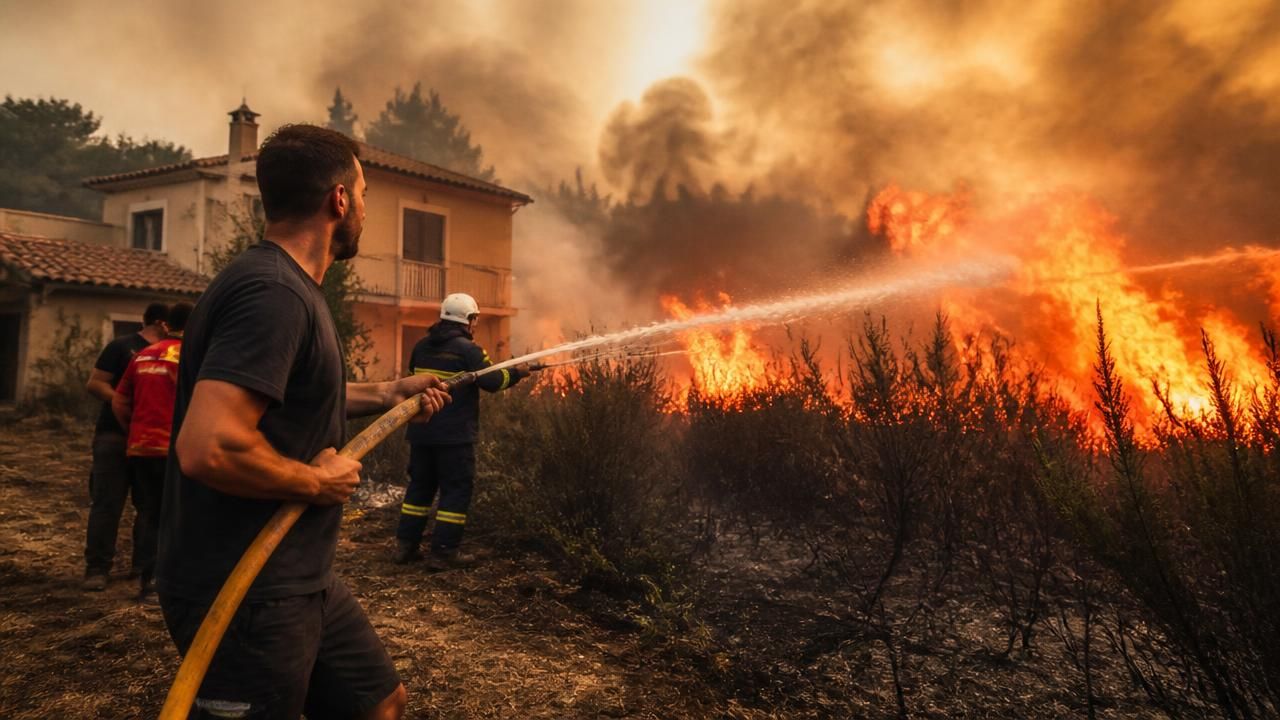
As wildfires continue to rage across southwestern France and Spain, civilian volunteers in the Bordeaux region have taken up hoses and shovels to defend their homes, supplementing overworked fire crews. The flames, which have been burning for more than a week, have forced tens of thousands to evacuate and prompted French President Emmanuel Macron to convene an emergency crisis meeting. Experts and officials point to an intensifying climate crisis as a key driver behind the severity of this year's blazes.
Evacuations and the Human Toll
According to multiple reports, nearly 300,000 people have been evacuated across France and Spain as wildfires encroach on populated areas. In the Gironde region near Bordeaux, around 4,000 people were forced to flee tourist sites and residential zones over the weekend alone, with thousands more displaced in previous days. The British Broadcasting Corporation (BBC) reported that 'more than 220,000 evacuated in France and Spain due to wildfires,' while Reuters noted that 'tens of thousands' have been ordered to leave their homes. The evacuations have disrupted summer vacations and strained emergency services.
“We are in a situation of extreme vigilance,” said French Interior Minister Gérald Darmanin, as quoted by RFI. “The situation remains very unfavourable.”
Civilians Step In as Firefighters Struggle
The New York Times highlighted the extraordinary efforts of residents who have formed bucket brigades and used garden hoses to slow the advance of the flames. 'The flames are too spread out for professional firefighters to be everywhere,' the Times reported, 'so for now, civilian volunteers are the only thing standing between the fire and a major French city.' The Guardian also covered this phenomenon, noting that near the village of Cazaux, locals have been fighting alongside firefighters to protect their properties. The situation underscores the strain on firefighting resources in the face of increasingly large and fast-moving fires.
International and Political Response
French President Emmanuel Macron called a crisis meeting on Monday to coordinate the response, as reported by the BBC, LBC, and Saudi Gazette. The meeting brought together senior ministers and emergency officials to assess the fires, which have destroyed thousands of hectares of forest. Meanwhile, Spanish Prime Minister Pedro Sánchez linked the fires directly to climate change. 'Spain is suffering the effects of the climate crisis,' Sánchez said, according to The Guardian. 'This is a global emergency that requires urgent action.'
The European Union has also mobilized resources, with several member states sending firefighting aircraft and personnel to support France and Spain. The EU's Copernicus satellite system has been tracking the fires and providing critical data to ground crews.
Heatwave and Climate Context
The wildfires are occurring amid a record-breaking heatwave across southwestern Europe. France recorded its hottest day ever on Monday, with temperatures exceeding 42 degrees Celsius (107.6 Fahrenheit) in some areas, as reported by the New York Times. The extreme heat has dried out vegetation and created tinderbox conditions. Scientists have linked the heatwave and increased fire risk to human-caused climate change.
“We are seeing more intense and more frequent wildfires across Europe,” said Dr. Caroline Leck, a climate scientist at Stockholm University, in an interview with The Hindu BusinessLine. “The combination of heatwaves and drought is creating a perfect storm for fires.”
In Spain, fires continue to burn in multiple regions, including Extremadura and Castile and León, forcing additional evacuations. The two countries are racing to contain the blazes before a new heatwave is forecast to arrive later this week, according to Reuters.
What Comes Next
Firefighters are focusing on protecting urban areas and critical infrastructure. In the Bordeaux region, the main threat is to the city itself, though authorities say the fire front is still several kilometers away. However, shifting winds and continued dry conditions could change that rapidly. The French government has warned holidaymakers to avoid the affected areas and has set up emergency shelters for evacuees.
The crisis has also prompted debate about forest management and land-use policies. Some experts argue that better planning and investment in fire prevention, such as controlled burns and clearing of underbrush, could mitigate the risk. Others point to the need for stronger climate policies to address the root cause.
As the fires continue, the resilience of local communities and the dedication of firefighters remain the first line of defense. But as the world watches, the question lingers: how much more can the region endure as the planet warms?