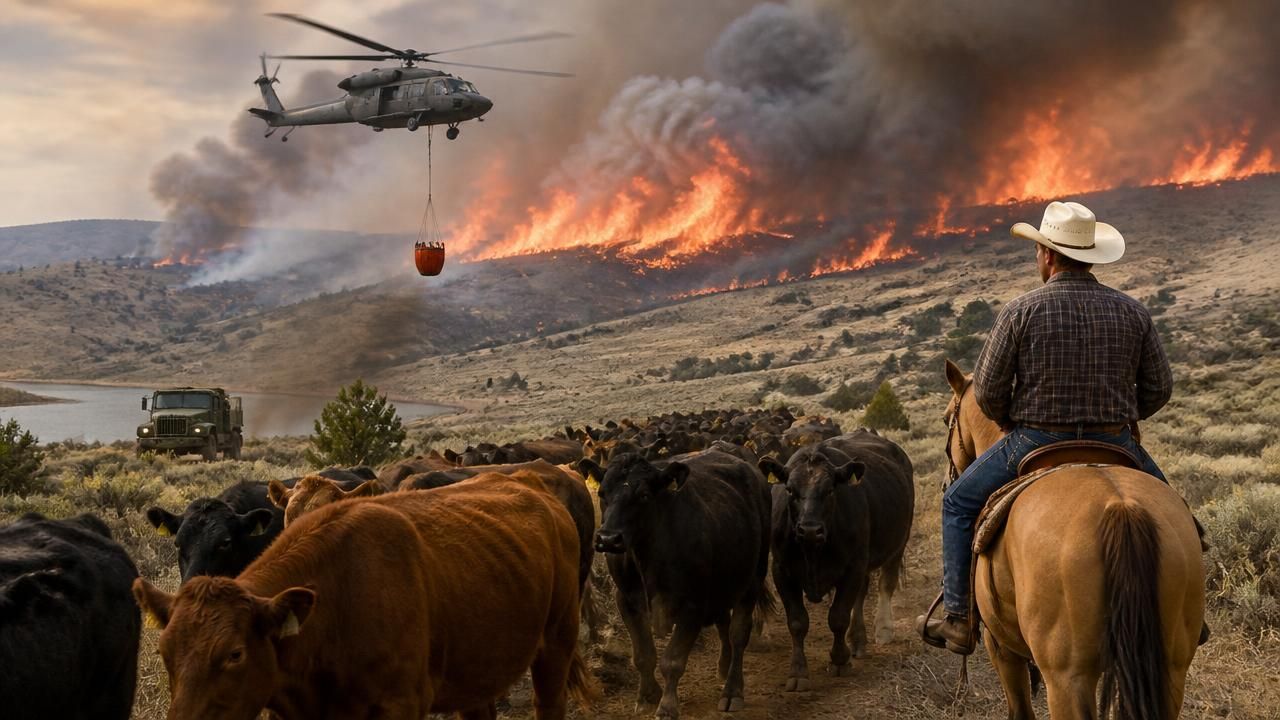
Oregon is hurtling toward its worst wildfire season on record, with more than a million acres already scorched and fire crews struggling to contain blazes that have forced evacuations, threatened livelihoods, and drawn criticism of federal disaster response. According to reports from NPR and other outlets, the vast majority of fires in central and eastern Oregon remain uncontained, and state officials warn that conditions could worsen as dry weather persists.
A Season of Unprecedented Scale
As of mid-summer 2025, Oregon has surpassed the grim milestone of one million acres burned, eclipsing the pace of previous record years. The Oregon Department of Forestry reports that multiple large fires are burning simultaneously, with the largest complexes located in the high desert regions east of the Cascade Range. The scale has prompted comparisons to the devastating 2020 season, but current data suggests this year could exceed even that historic benchmark.
Ranchers in central and eastern Oregon are among the hardest hit. Public grazing lands that provide critical summer forage have gone up in flames, forcing livestock owners to evacuate herds and scramble for feed. “It’s like watching your livelihood turn to ash,” said one rancher quoted by NPR. The Bureau of Land Management has closed large swaths of land, and emergency hay shipments are being organized to avert a feed crisis.
Mobilizing the National Guard
In response to the escalating crisis, Oregon Governor Tina Kotek activated the Oregon National Guard, deploying helicopters equipped with water buckets to assist in aerial firefighting. An msn.com report noted that the activation aims to bolster state and local resources as private contractors are stretched thin. “We are preparing for the worst while hoping for the best,” a Guard spokesperson said. The helicopters are focusing on protecting structures and providing reconnaissance in areas inaccessible to ground crews.
Funding Dispute: Senators Challenge FEMA Criteria
Meanwhile, a political firestorm has erupted over federal disaster assistance. Two wildfires in Oregon—the Lick Creek Fire and the Double Creek Fire—were denied Fire Management Assistance Grants (FMAG) from the Federal Emergency Management Agency (FEMA), according to a report on msn.com. Senators Ron Wyden and Jeff Merkley have challenged the agency’s criteria, arguing that the denials ignore the severity of the fires and the strain on state budgets. “FEMA’s formula is broken,” Wyden said in a statement. “When a million acres burn, that’s not a local problem—it’s a national emergency.” FEMA defended its decisions, stating that the fires did not meet the threshold for “imminent threat to life and property” at the time of application, a claim disputed by local officials.
By the Numbers: Comparing the Season to Prior Years
While a detailed statistical breakdown from KGW.com was inaccessible due to a server error, other sources provide context. According to data cited by multiple outlets, the 2025 fire season has already burned more acres by July than the entirety of several recent years. The National Interagency Fire Center reports that drought conditions, above-average temperatures, and low humidity have created a tinderbox across the Pacific Northwest. “We’re seeing fire behavior that is more typical of August or September,” noted a fire behavior analyst at the Northwest Coordination Center.
Historical climate records show that Oregon’s fire season is lengthening, with earlier starts and later ends. Since 2000, the state has experienced a fivefold increase in acres burned annually, a trend scientists attribute to climate change. The 2025 season is testing the capacity of firefighting agencies already exhausted by years of megafires.
Human Impact
Evacuation orders have affected thousands of residents in counties like Lake, Harney, and Grant. Shelters have been set up in community centers, and the American Red Cross is providing assistance. The smoke from dozens of fires has also degraded air quality across the region, triggering health advisories for vulnerable populations.
Outlook and Implications
With no significant rain in the forecast and lightning storms predicted, fire officials expect conditions to worsen. The activation of the National Guard and the political scrutiny of FEMA’s response underscore the growing strain on disaster management systems. For Oregon’s ranchers, the immediate challenge is survival; for policy makers, the question is whether federal and state resources can adapt to a new era of extreme wildfire.
As one firefighter told NPR: “We’re fighting a war out here, and the enemy is the weather. Until we change how we manage our forests and address climate change, this will be the new normal.” The coming weeks will determine if 2025 indeed becomes Oregon’s worst wildfire season—and what that means for the nation.