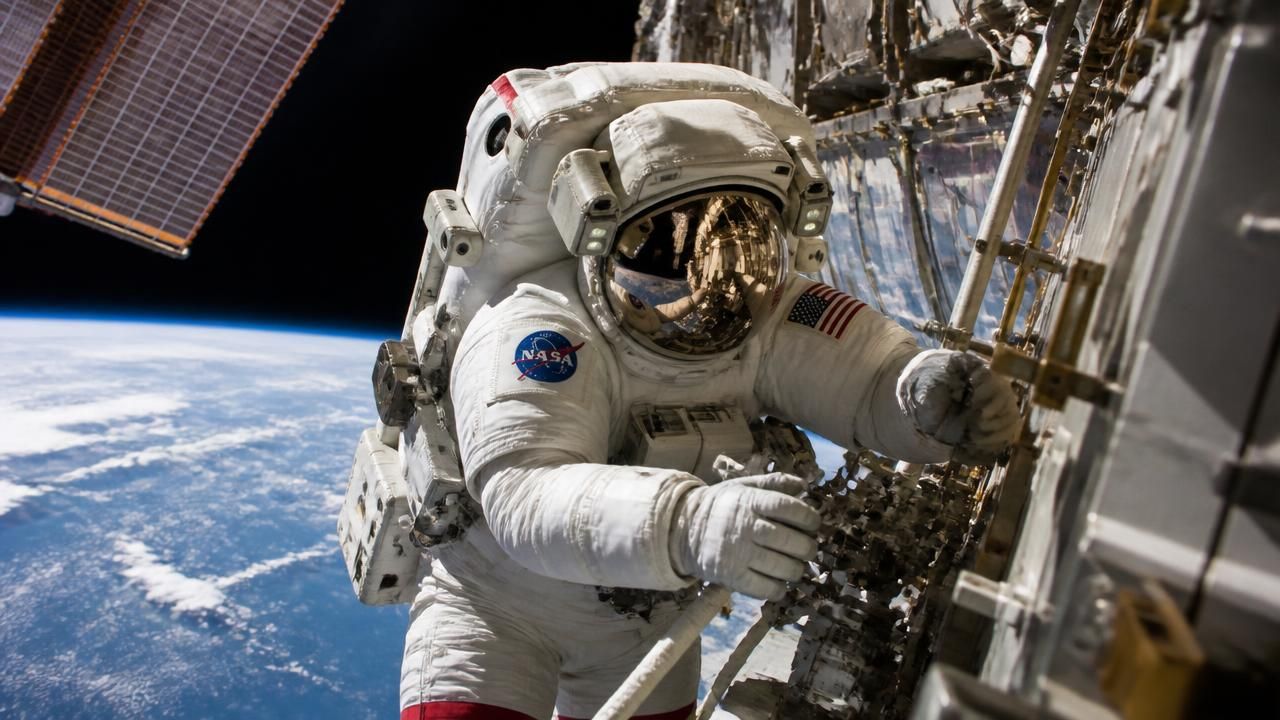
NASA has awarded $3.2 million to 18 visionary technology concepts through its Innovative Advanced Concepts (NIAC) program, selecting a diverse array of early-stage ideas that could transform space exploration. The awards, announced in late 2025, fund nine-month feasibility studies with each grant providing up to $175,000.
Bold Ideas for the Future
The NIAC program serves as an innovation incubator, supporting concepts that are both transformative and potentially feasible. Among this year’s selections are several standout proposals: an inflatable drone designed to explore Venus’s hostile atmosphere, advanced spacesuits for Mars that incorporate biological systems, a lunar levitation track system for transporting cargo, and space tethers for orbital debris removal and satellite servicing.
“Every innovation, every leap in technology, starts with a seed of an idea,” said Phillip Williams, NIAC’s acting program executive. “The NIAC program allows us to nurture those seeds into concepts that could one day become NASA missions.”
Notable Projects
One particularly ambitious concept is the inflatable Venus drone, a balloon-like craft that could float in the planet’s thick, acidic atmosphere, sending back data for weeks. Another project proposes a Mars spacesuit with integrated bioregenerative life support, using algae to recycle air and water. The lunar levitation track—a magnetic rail system inspired by maglev trains—aims to move payloads efficiently across the Moon’s surface.
Other funded ideas include a space tether system for deorbiting satellites, a laser communications network for deep space, and a truss-braced wing aircraft concept for Earth aviation. Tethers Unlimited, a Washington-based firm, won five awards to develop tethers, solar sails, and other novel technologies. “These awards are the kind of innovation the world needs NASA to help foster,” said Greg Stover, director of NASA’s Advanced Research and Technology division.
Academic and Industry Involvement
Universities and companies across the country are participating. The University of Hawaiʻi at Mānoa was named a finalist for a lunar power project, while MIT teams earned top honors in the competition. The NIAC program also intersects with broader NASA efforts: Blue Origin recently achieved a milestone in its Blue Alchemist project to produce solar cells from lunar regolith, and NASA awarded nearly $1 billion in Moon base contracts to Blue Origin, Astrolab, and Lunar Outpost.
STEM Education and Workforce Impact
Beyond technology, NASA is also investing in the next generation. The agency awarded $5 million to expand STEM learning nationwide, and the Challenger Center honored three teachers with the 2026 Trailblazing STEM Educator Award. These efforts align with NASA’s goal of inspiring students while developing the workforce needed for future space endeavors.
Why This Matters
NIAC projects are not official missions—they are seed investments. But history shows that many NASA breakthroughs began as NIAC studies. “Achieving that will require more than incremental technological advancement,” Stover said. “It means we need great leaps.”
From inflatable drones to levitating lunar railways, these concepts capture the spirit of exploration that defines NASA. While some may never fly, others could become the foundation of humanity’s next giant leap.