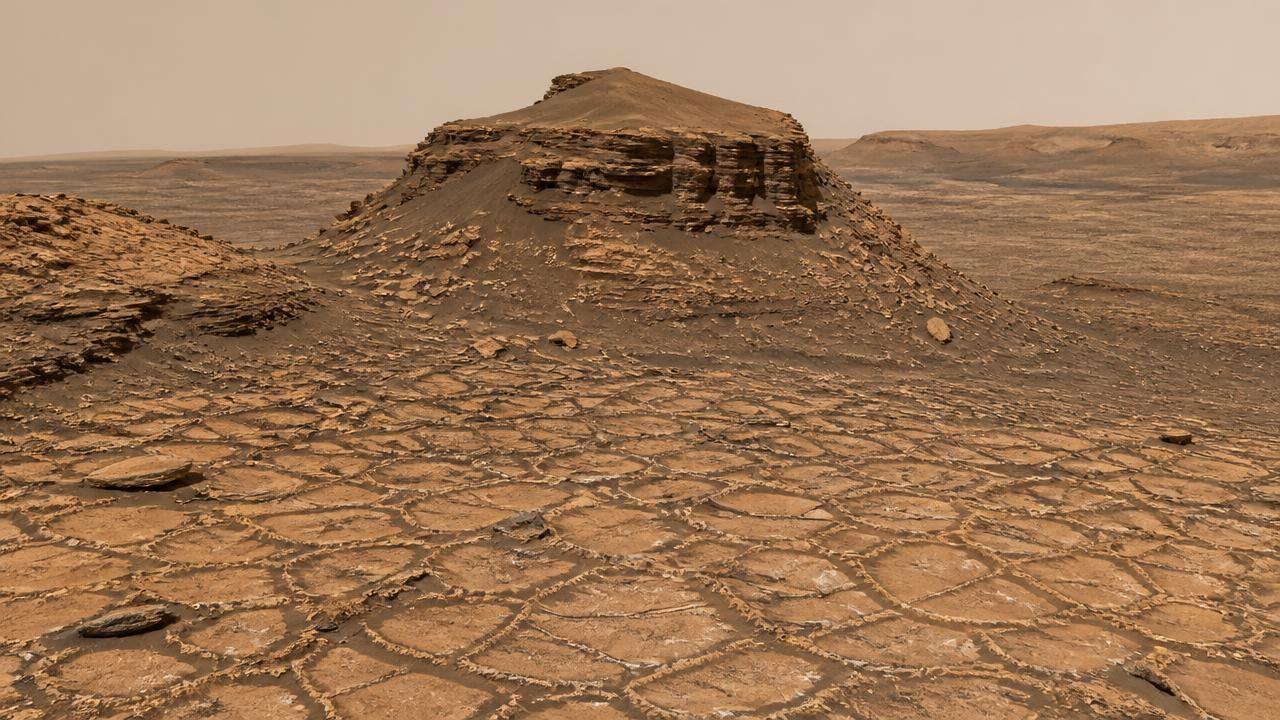
NASA's Curiosity Mars rover has sent back a stunning new panorama of the Red Planet, showcasing a sand-capped butte named “Miraflores” standing about 20 feet (6 meters) tall. The image, captured on June 11, 2026 (sol 4923), offers a glimpse into the ongoing geological processes that have shaped Gale Crater over millions of years.
A Butte Born of Erosion
The butte, which rises above the surrounding terrain, is a remnant left behind as softer rock eroded away, deepening the broad valley that Curiosity is currently climbing. “Miraflores is a textbook example of differential erosion on Mars,” said Dr. Ashwin Vasavada, Curiosity project scientist at NASA's Jet Propulsion Laboratory (JPL). “It tells us about the history of wind and water in this region.”
The panorama was constructed from 11 individual images taken by Curiosity’s Mast Camera (Mastcam) and stitched together on Earth. The color has been adjusted to match lighting conditions as the human eye would see them on our planet, providing a naturalistic view of the dusty landscape.
Honeycomb Textures on the Ground
A particularly intriguing feature in the area is the widespread polygon terrain covering the ground near the butte. These honeycomb-like patterns, also observed in previous rover missions, form when repeated cycles of freezing and thawing crack the surface into geometric shapes. “We’re seeing a field of these polygons, almost like a honeycomb,” noted Dr. Kristen Bennett of the U.S. Geological Survey, a collaborator on the mission. “They provide clues about the Martian climate history and the presence of subsurface ice.”
The polygons resemble textures seen earlier in Curiosity’s journey, but their presence in this valley suggests a more widespread process than previously thought.
From Murray Buttes to Miraflores
This latest image comes as Curiosity continues its extended mission, now years beyond its primary goal of assessing ancient habitable environments. The rover famously traversed the “Murray Buttes” in 2016, a region of eroded mesas and buttes that provided dramatic vistas. “Goodbye, Murray Buttes” read one headline from AmericaSpace at the time, marking the rover’s departure toward higher slopes of Mount Sharp.
Now, over a decade later, Curiosity is climbing through a similar landscape but with newer instruments and a more weathered rover. “We’re in a new phase of the mission,” said Vasavada. “Each butte we study adds to our understanding of the timeline of environmental change on Mars.”
An Evolving Story
The Miraflores butte and its polygon field are part of a larger narrative. While earlier images from JPL focused on the Murray Buttes panorama, the current discovery highlights how Curiosity continues to find fresh insights even in familiar terrain. The honeycomb textures, initially reported by some outlets as a separate finding, are actually the same polygon features visible in this image.
Different media outlets frame the story in distinct ways: NASA’s official release emphasizes the beauty and technical achievement of the panorama, while others highlight the geological puzzles the polygons present. AmericaSpace, for instance, has tracked the rover’s long journey, framing Miraflores as a milestone in the extended mission.
“The butte was left behind as surrounding rock eroded away over time, deepening the broad valley Curiosity is climbing through.” - NASA's description of the Miraflores butte.
Implications for Mars Science
The presence of polygon terrain near the butte suggests that the area experienced periodic freeze-thaw cycles, possibly within the last few million years. This has implications for understanding recent climate variations on Mars and the stability of water ice in the shallow subsurface. Moreover, the erosion patterns on Miraflores itself can help scientists date the rate of wind-driven erosion.
Curiosity was built by JPL, managed by Caltech, for NASA’s Science Mission Directorate. The Mastcam was built and is operated by Malin Space Science Systems in San Diego.
Looking Ahead
Curiosity continues its ascent of Mount Sharp, the 5.5-kilometer-high mountain at the center of Gale Crater. As it climbs, it will encounter younger rock layers, offering a chronological record of Mars’ environmental evolution. Each butte, including Miraflores, is a chapter in that story.
As one NASA press release put it, “Curiosity is not just a rover; it is a time machine on wheels.” And with every new image, it brings us closer to understanding whether Mars ever hosted life.