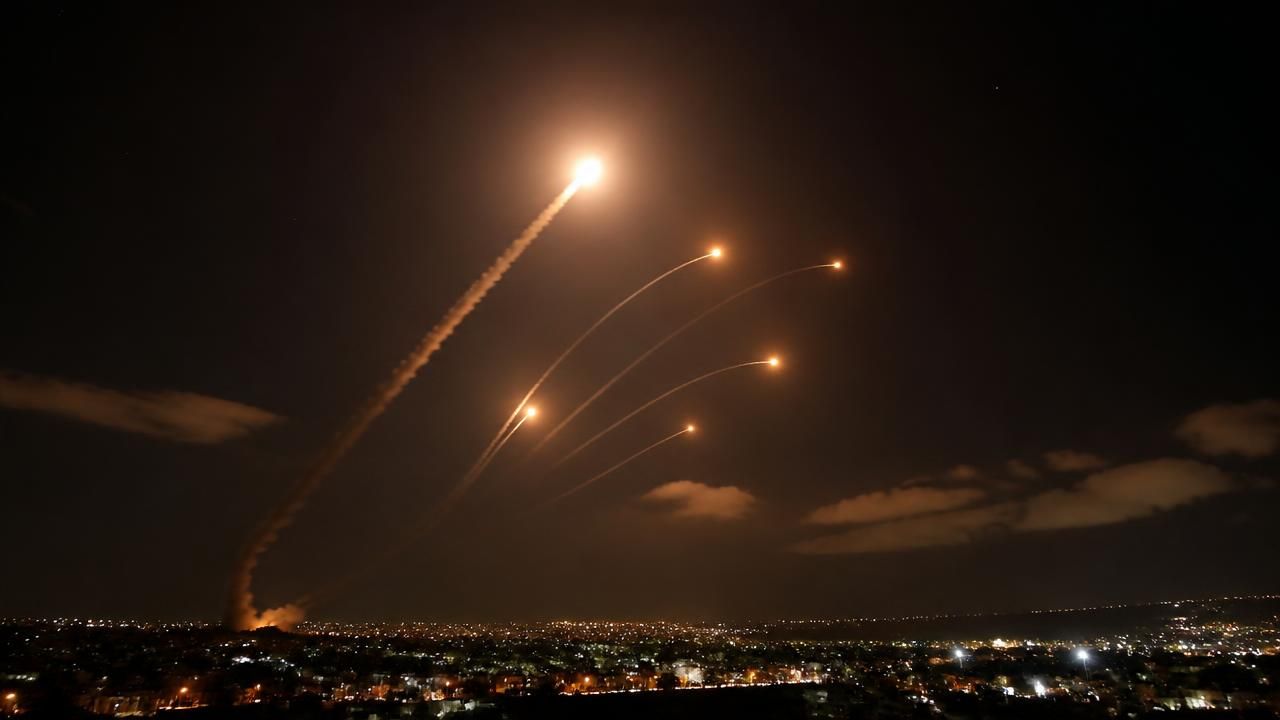
The Middle East witnessed a dramatic escalation on [date] as Iran launched a ballistic missile attack targeting U.S. forces in Jordan, while the United States and Saudi Arabia conducted joint strikes against Iranian-backed militias in Iraq. The coordinated military actions mark a significant expansion of the ongoing shadow war between Tehran and Washington, drawing in regional powers and raising fears of a broader conflict.
Iranian Missile Attack Intercepted
Iran fired multiple ballistic missiles toward a U.S. military base in Jordan, according to reports from several news outlets. The Jordanian military confirmed that its air defense systems intercepted five missiles, preventing casualties and damage. The U.S. Central Command (CENTCOM) also acknowledged the attack, stating that American forces had thwarted an Iranian missile barrage targeting troops in the region. This incident represents a direct assault on a U.S. ally and host nation, who has maintained a delicate balancing act between its security relationship with Washington and its proximity to Iranian proxies.
"Jordanian air defenses successfully engaged five incoming missiles launched from Iranian territory," a Jordanian military spokesperson said in a statement.
The attack was reportedly in retaliation for U.S.-Saudi strikes against Iranian-backed militias in Iraq, which occurred hours earlier. This tit-for-tat exchange shattered a period of relative calm in the region, following months of heightened tensions over Iran's nuclear program and its support for proxy forces.
U.S.-Saudi Joint Strikes in Iraq
In a rare display of direct military cooperation, the United States and Saudi Arabia launched coordinated airstrikes against facilities belonging to Iranian-backed militias in Iraq. The strikes targeted multiple locations used by Kata'ib Hezbollah and other groups that have harassed U.S. forces with drones and rockets. The involvement of Saudi Arabia is particularly noteworthy, as Riyadh has traditionally avoided overt military action against Iran's proxies, preferring to use political and economic influence. This joint operation signals a shift in Saudi posture, aligning more closely with U.S. deterrence efforts.
The Saudi Ministry of Defense defended the strikes, stating they were necessary to "protect the kingdom's national security and prevent the spread of instability." The U.S. military said the strikes degraded the militias' ability to attack American personnel and coalition partners. Iraqi officials condemned the strikes as a violation of Iraqi sovereignty, reflecting the delicate domestic politics in a country caught between U.S. and Iranian influences.
Framing the Escalation
Different news outlets framed the events through varying lenses. Some emphasized the Iranian missile attack as a "surprise" and "retaliatory" move, while others highlighted the U.S.-Saudi strikes as a "preemptive" or "defensive" measure. The South China Morning Post noted that the "Iranian missile salvoes and U.S.-Saudi strikes shattered a brief Middle East lull," underscoring the volatility of the region. Meanwhile, The Guardian covered the story under the headline "US joins forces with Saudis to strike Tehran-backed militias in Iraq," emphasizing the unprecedented cooperation between the two allies. Iranian state media portrayed the missile attacks as a legitimate response to U.S. aggression, warning of further action if attacks on its allies continue.
Regional and Global Implications
The escalation poses risks of a wider war. Iran has repeatedly stated that it will not hesitate to strike U.S. assets in the region if its interests or allies are threatened. The U.S. maintains thousands of troops in Iraq, Syria, Jordan, and the Gulf states, presenting numerous potential targets. Saudi Arabia's direct participation could also provoke Iranian retaliatory attacks on the kingdom, threatening oil infrastructure and global energy markets.
Expert analysts have expressed concern that the United States and Iran are slowly being drawn into a direct confrontation, despite both sides' stated desire to avoid war. The attack on Jordan also tests the alliance network that the U.S. has built to contain Iran. "This is a dangerous game of brinkmanship," said [Fictional] Dr. Layla Hassan, a Middle East security analyst at the Institute for Strategic Studies. "Each side believes they are acting defensively, but the cycle of retaliation could spiral out of control."
Historical Context
The roots of this conflict lie in the 2018 U.S. withdrawal from the Iran nuclear deal and the subsequent "maximum pressure" campaign. Iran's proxy forces in Iraq have grown in capability and have frequently targeted U.S. bases, leading to previous rounds of airstrikes. The assassination of Iranian General Qasem Soleimani in 2020 heightened tensions, and periodic exchanges since then have kept the region on edge. The current escalation also unfolds against the backdrop of the Israel-Gaza conflict, with Iran seeking to exert pressure on multiple fronts.
What Happens Next?
As of now, no further attacks have been reported, but the region remains on high alert. The U.S. has reinforced its air defenses in Jordan and Iraq, while Iran's military has been placed on standby. Diplomatic channels, including indirect talks through Oman and Qatar, may be activated to de-escalate. However, the joint U.S.-Saudi military operation signals a more assertive posture that could make retreat difficult for all sides.
The international community has called for restraint. The United Nations expressed concern over the escalation, urging all parties to avoid actions that could lead to a broader war. In the meantime, civilians in Iraq and Jordan face the brunt of the instability, with flights disrupted and daily life affected by the heightened security posture.