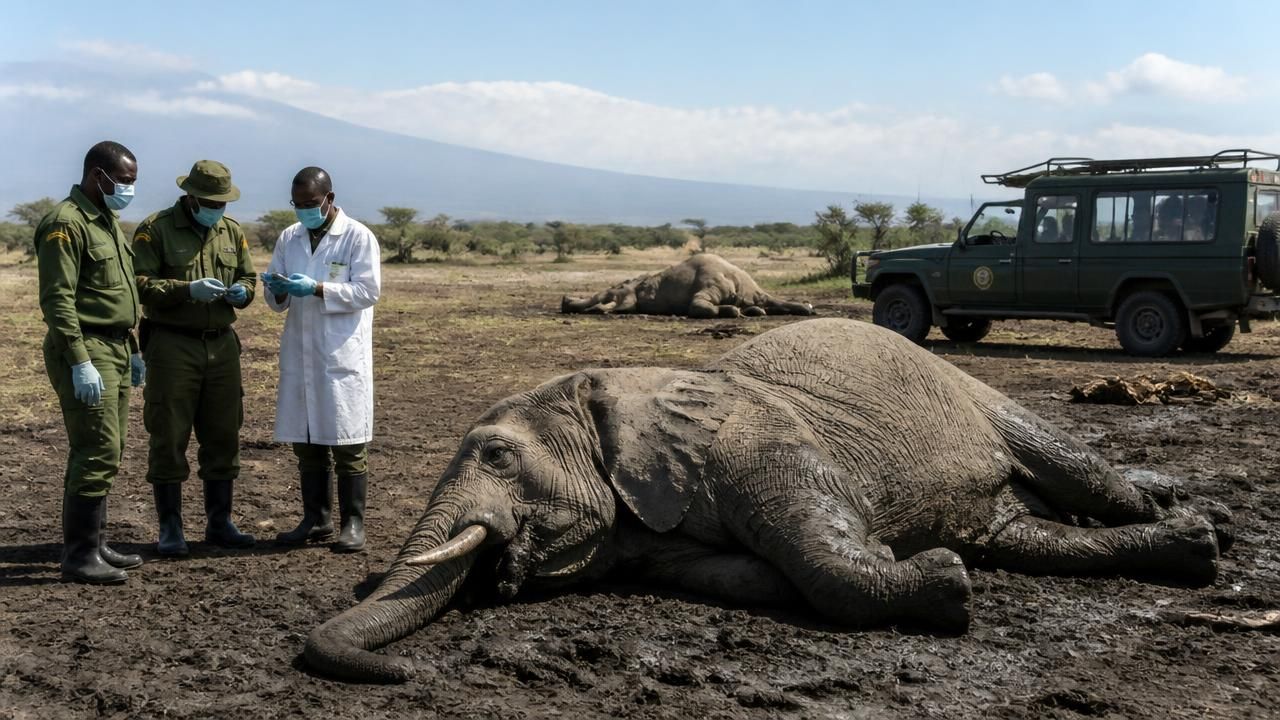
In a troubling development for conservation efforts, the Kenya Wildlife Service (KWS) has launched an urgent investigation into the deaths of 15 elephants in Amboseli National Park over the past month. The deaths, which have puzzled rangers and wildlife experts, exhibit unusual symptoms, including partial paralysis, raising fears of a potential toxic threat.
Timeline and Discovery
The first carcasses were spotted by park rangers in early September, with more discovered in the following weeks. According to KWS officials, 10 of the elephants showed signs of partial paralysis before dying within two days. The remaining five appeared to have died suddenly, with no prior symptoms reported. Toxicology samples have been sent to laboratories in Nairobi for analysis, and initial tests have detected the presence of a potential toxic substance in some of the deceased animals.
“We are treating this as a high-priority incident. The pattern of deaths, particularly the paralysis, points to a possible poisoning event, but we are keeping all options open,” said Dr. Patrick Omondi, a senior KWS veterinarian.
Context: Amboseli’s Elephant Population
Amboseli National Park, located in southern Kenya near the Tanzanian border, is renowned for its large elephant herds, which number around 1,500 individuals. The park is a critical habitat for African savanna elephants, and its population is closely monitored by conservation groups such as the Amboseli Trust for Elephants. The recent deaths represent nearly 1% of the park’s elephant population, a significant loss for a species already classified as endangered by the IUCN.
Historically, elephant deaths in the region have been linked to drought, human-wildlife conflict, and poaching. However, the sudden cluster of deaths and the paralysis symptom are unusual. In 2020, a similar event in Botswana saw hundreds of elephants die from cyanobacteria poisoning in waterholes. Experts are now drawing parallels to that incident.
Potential Causes Under Investigation
KWS has identified several possible causes, including natural toxins, contamination of water sources, or intentional poisoning. Elephants rely heavily on water and vegetation, making them vulnerable to toxins in their environment. Dr. Omondi noted that “the paralysis suggests a neurotoxin, which could come from algae blooms, plant poisoning, or even a deliberate act. We are analyzing tissue samples and water from the park’s watering holes.”
Local communities have also been alerted, as some water sources in the region are shared with livestock. No human illnesses have been reported, but authorities are monitoring the situation closely.
Broader Implications
The deaths come at a time when Kenya is grappling with increasing human-wildlife conflict due to drought and land-use changes. Amboseli’s elephants often roam outside park boundaries, bringing them into contact with farms and settlements. “If this is a poisoning, it could be retaliatory from locals who have lost crops to elephants,” said Dr. Jane Mwangi, a conservation biologist at the University of Nairobi. “But we need to wait for the toxicology results.”
The incident has also sparked concerns about wildlife tourism, a major economic driver for Kenya. Amboseli draws thousands of visitors annually, and any prolonged threat to the elephant population could affect local livelihoods.
International Attention and Next Steps
News of the deaths has been covered by outlets including The Guardian and CBS News, drawing international attention. The KWS has formed a special task force comprising veterinarians, toxicologists, and crime scene investigators. They are also coordinating with the Amboseli Trust for Elephants and the international conservation community.
Preliminary results from toxicology tests are expected within two weeks. In the meantime, park officials have closed some waterholes to elephant access and are conducting aerial surveys to check for additional carcasses. “We are doing everything we can to protect the remaining elephants,” said KWS Director General, Brigadier (Rtd.) John Waweru. “Every death is a tragedy for conservation.”
Historical and Environmental Context
Kenya has a mixed record of elephant conservation. While populations have rebounded since the poaching crises of the 1980s, new threats like habitat loss and climate change are emerging. The ongoing drought in East Africa has strained water and food resources, potentially increasing the risk of poisoning events as animals concentrate around shrinking water sources.
“This is a wake-up call,” said Dr. Mwangi. “We need to expand monitoring of water quality and reinforce community engagement to prevent future tragedies. The solution lies in understanding the full picture—environmental, human, and animal.”
As Kenya awaits answers, the world watches. The fate of Amboseli’s elephants hangs in the balance, and the outcome of this investigation could reshape conservation strategies across the continent.