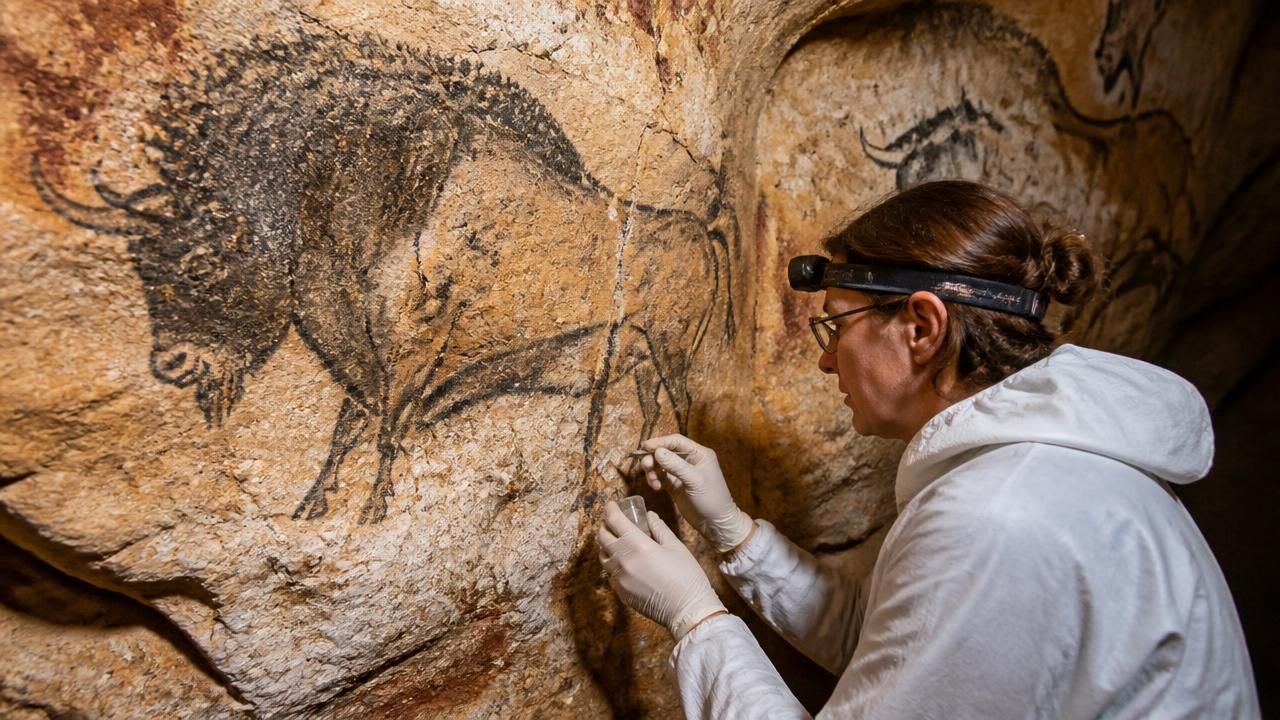
In a remarkable week for science, researchers have unveiled a series of discoveries that reshape our understanding of human history, ancient life, and the natural world. From the precise dating of cave paintings in France to the identification of hidden DNA in ancient rock art, these findings highlight the power of modern analytical techniques. Here, we synthesize the most significant stories from dozens of sources, weaving together a narrative of discovery that spans tens of thousands of years.
Hidden Charcoal Reveals True Age of Font-de-Gaume Cave Paintings
For the first time, scientists have precisely dated the famous Paleolithic paintings in France’s Font-de-Gaume cave. A new analysis published in Science Daily and reported by multiple outlets reveals that researchers discovered charcoal inside black pigments that were once thought to contain only minerals. This allowed them to apply radiocarbon dating. The results show that a bison was painted about 13,000 years ago, while sections of a mask-like figure were added during several widely separated periods. This finding challenges previous assumptions about the timeline of parietal art in the region and underscores the complexity of cave painting creation. As one researcher noted, “The use of charcoal was a game-changer – it gave us a direct date for the art itself.”
Human DNA Found in Ancient Cave Paintings
In a related breakthrough, scientists have discovered that ancient cave paintings can harbor human DNA for millennia. According to a report on Yahoo! and MSN, researchers analyzing pigments from caves in Europe and elsewhere have extracted genetic material from the artists themselves. This opens new avenues for understanding who made the art and how populations moved across continents. “It’s like finding a fingerprint on a masterpiece,” said a geneticist involved in the study. The method could be applied to other rock art sites worldwide, potentially rewriting the story of human migration.
The Higgs Bison: A Mystery Species Hidden in Cave Art
A separate study, highlighted by Popular Archaeology, has identified a previously unknown species of bison – dubbed the “Higgs Bison” – hidden in plain sight within ancient cave paintings. The research used DNA analysis of bison remains and compared them to artistic depictions in caves like Altamira and Lascaux. The results suggest that a hybrid species, formed by the mating of steppe bison and aurochs, was painted by ice age artists. This discovery not only adds to our knowledge of Pleistocene fauna but also shows that ancient humans were keen observers of their environment. “They documented a species that science has only just discovered,” one paleontologist remarked.
The Secret to Making a Painting Last an Ice Age
How did Indigenous rock art survive tens of thousands of years? As reported by ABC News (Australia), researchers have uncovered the secret: a combination of mineral films and organic compounds that act as a natural protective coating. Studies of Australian Aboriginal art suggest that microbial activity and chemical weathering created a durable “varnish” that preserved the pigments. This insight could help conservators protect ancient art worldwide and underscores the ingenuity of early humans in selecting durable materials.
Other Headlines from the Week
The week’s science news was not limited to cave art. Among the most intriguing reports:
- 500,000-Year-Old Elephant Bone Hammer: A new study shows ancient humans were master toolmakers, crafting a hammer from elephant bone that predates the use of stone tools in some regions.
- Textbooks Were Wrong on Hair Growth: Scientists have revealed how human hair really grows, overturning decades-old assumptions about follicle biology.
- Homer’s Iliad Inside an Egyptian Mummy: Archaeologists discovered a 1,600-year-old copy of the epic poem used as wrapping for a mummy, highlighting the cultural exchange between Greece and Egypt.
- A 75-Million-Year-Old Tyrannosaur Secret: A fossil reveals that tyrannosaurs had surprisingly advanced feathers and possibly warm-blooded metabolisms.
- Hidden Neanderthal Group: Ancient DNA has revealed a previously unknown Neanderthal population that remained isolated for millennia in Siberia.
- Earth’s First Animals Were Sponges: An MIT study confirms that ancient sea sponges were the first animals, pushing the origin of animal life back to 640 million years ago.
Implications and Future Directions
These discoveries showcase the power of interdisciplinary science – combining archaeology, genetics, geochemistry, and art history. The ability to extract DNA from paintings and date them precisely allows us to see the ancient world through new eyes. Meanwhile, the identification of hybrid species in cave art suggests that ice age artists were not just depicting their world; they were recording evolutionary history. As one researcher put it, “Every cave is a time capsule, and we are only just learning how to open it.”
The coming months promise even more revelations as scientists apply these techniques to other sites. From the depths of New Zealand’s million-year-old time capsules to the hidden weaknesses of forever chemicals, the pace of discovery shows no signs of slowing. This week’s collection of news is a testament to human curiosity and the relentless pursuit of knowledge.