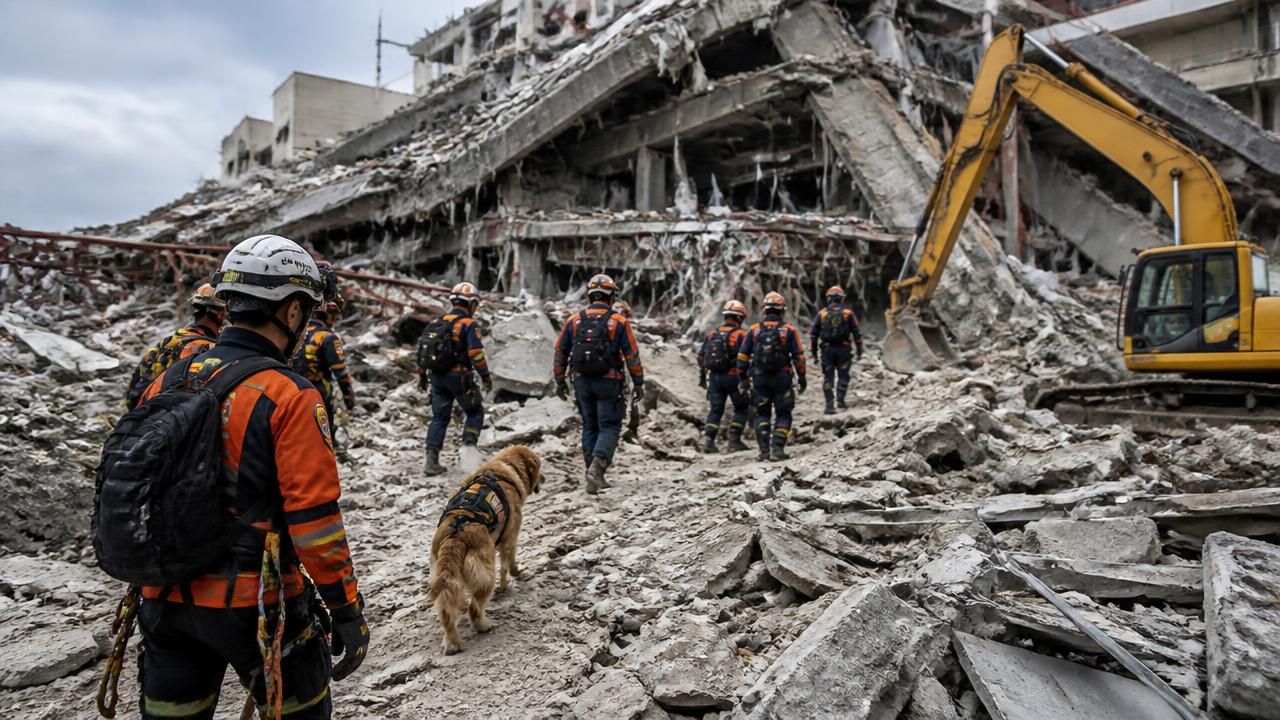
Rescuers are engaged in a desperate race against time in southern Japan after a powerful 7.1 magnitude earthquake struck the island of Kyushu, killing at least 13 people and leaving an unknown number trapped under rubble. The quake, which hit early Wednesday morning local time, triggered widespread damage, including the partial collapse of a newly reopened Aeon Mall in Kumamoto, where dozens are feared trapped. Soldiers, firefighters, and emergency workers are combing through debris with sniffer dogs and heavy machinery as the window for finding survivors narrows.
The Quake and Immediate Aftermath
The earthquake struck at a depth of about 10 kilometers (6 miles) near the city of Kumamoto on Kyushu, Japan's southernmost main island. According to the Japan Meteorological Agency, the quake registered a 7 on the Japanese shindo scale—the highest intensity—in parts of Kumamoto Prefecture. The tremor was felt as far away as Tokyo, hundreds of kilometers to the northeast. Within hours, a series of aftershocks, including a 5.4 magnitude tremor, rattled the region, complicating rescue efforts and raising fears of further collapse.
The hardest-hit structure was the Aeon Mall in Kumamoto, a large shopping complex that had recently reopened after renovations. Multiple sources report that the building's upper floors gave way, trapping shoppers and employees. "It was like the world was shaking apart," a survivor told local media. "Then the ceiling came down." The mall collapse is the single deadliest incident so far, with rescuers pulling several survivors from the wreckage but confirming multiple fatalities.
"We are in a race against time. Every minute counts." — Japanese Prime Minister Sanae Takaichi, as quoted by Sky News and other outlets
Rescue Efforts and Challenges
The Japanese military has dispatched hundreds of troops to assist local emergency services. Television footage shows rescue workers in orange uniforms crawling through twisted metal and concrete, calling out to those trapped. In some cases, survivors' voices can be heard from beneath piles of debris. The government has set up emergency shelters and is distributing food, water, and blankets to the displaced.
However, access to some areas remains cut off due to damaged roads and landslides. The National Police Agency reported that at least 30 people have been injured, some critically. "We are doing everything we can to find people alive," a Fire and Disaster Management Agency official told reporters. The search operation is expected to continue for days, with rescuers using specialized equipment to detect signs of life.
Historical Context and Japan's Preparedness
Japan is one of the most earthquake-prone countries in the world, sitting on the Pacific Ring of Fire. The country experiences about 20% of the world's magnitude 6 or greater quakes. This latest disaster brings back memories of the 2016 Kumamoto earthquakes, which killed over 50 people and caused extensive damage. Since then, building codes have been tightened, and early warning systems improved. Yet, infrastructure like the Aeon Mall’s collapse underscores the relentless force of nature.
Experts note that while Japan's earthquake preparedness is among the best globally, no structure is entirely immune to a strong quake. Dr. Hiroshi Ota, a seismologist at the University of Tokyo, explained, "The rapid succession of aftershocks is a major concern. Each one weakens already damaged structures and increases the risk of secondary disasters." The government has urged residents to stay alert for landslides and tsunamis, though no major tsunami warnings were issued for this event.
Media Coverage and Evolving Narrative
International news agencies have been providing round-the-clock coverage. The Guardian described the rescue as a "race against time," while the BBC highlighted the "desperate search" in the mall. Reuters noted that "rescuers haul people from collapsed mall," emphasizing the physical effort involved. Some outlets, such as the South China Morning Post, pointed out that the Aeon Mall had just reopened, a fact that adds to the tragedy. In contrast, a few news sources—likely due to editorial errors—initially mixed up the Japan earthquake with unrelated disasters in Venezuela or the Philippines, but those reports have been corrected.
Government Response and International Support
Prime Minister Sanae Takaichi has established a special emergency task force and pledged full government support. In a press conference, she stated, "We will spare no effort in rescue operations and ensure that all possible measures are taken to save lives." The United States, a close ally, offered assistance, including search-and-rescue teams and satellite imagery. China and South Korea also expressed condolences and readiness to help. However, Japan has so far managed the crisis with its own resources, deploying over 2,000 personnel from the Self-Defense Forces.
What’s Next
As night falls, temperatures in the affected areas are expected to drop, adding urgency to the rescue. Power outages affect thousands of households, and water supply lines have been severed in some districts. The focus remains on the collapsed mall, where rescue workers are painstakingly removing debris by hand to avoid causing further collapse. Meanwhile, officials are warning of potential disease outbreaks in shelters if hygiene conditions deteriorate.
For the families waiting outside cordoned-off areas, the hours are agonizing. "My daughter was in that mall," one woman told reporters, her voice breaking. "I just want them to find her alive." Japan, a nation accustomed to earthquakes, now faces another test of its resilience.