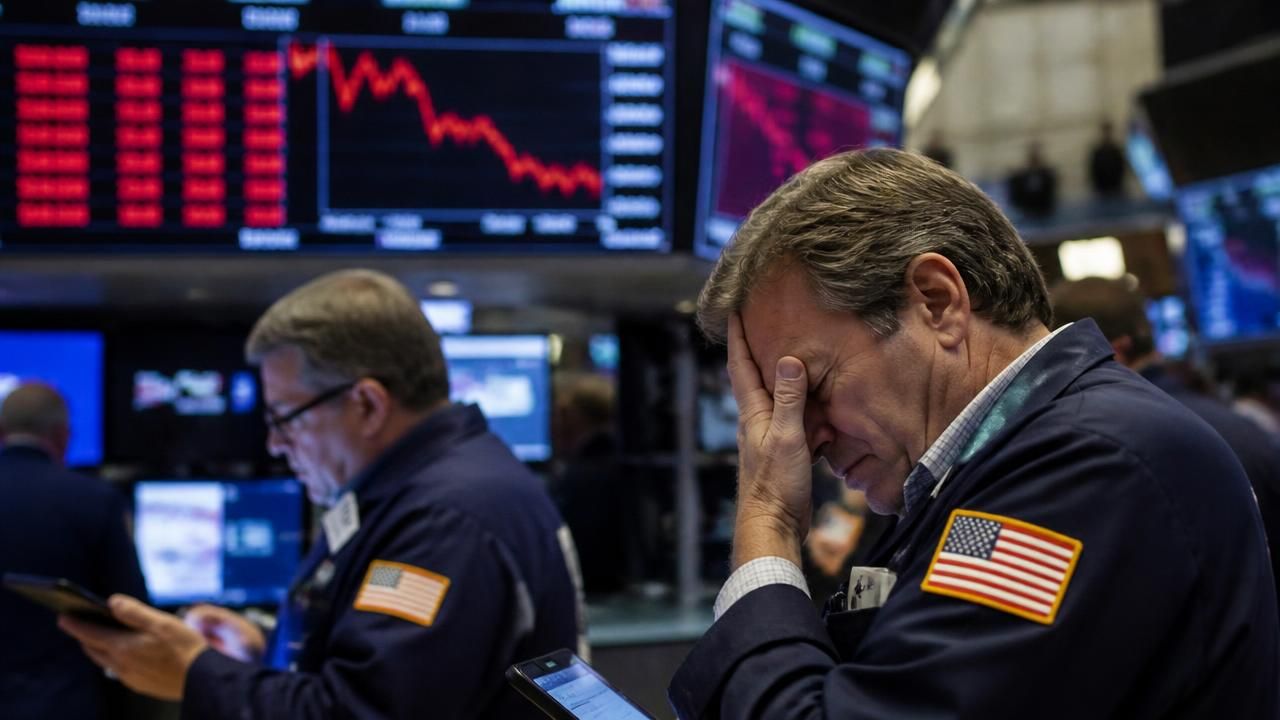
A brutal selloff in semiconductor stocks cascaded across global markets Wednesday, dragging U.S. benchmarks to their worst session since 2020 and pushing emerging-market equities to a three-month low. The rout, fueled by cooling AI trade euphoria, renewed inflation fears, and geopolitical tensions involving Iran, saw the S&P 500 and Nasdaq Composite sink more than 3% and 5%, respectively, while the Dow Jones Industrial Average tumbled over 1,700 points. 'This is a broad-based risk-off move,' said a strategist at Bloomberg. 'The chip rout is at the center, but it's amplified by concerns about the Fed's next move and a potential escalation in the Middle East.'
Semiconductor Stocks Lead the Plunge
The Philadelphia Semiconductor Index fell nearly 7%, its steepest drop since March 2020, as major chipmakers and AI beneficiaries bore the brunt of the selloff. Nvidia, the poster child of the AI revolution, posted a record market-cap loss of over $500 billion in a single day, according to Reuters. SK Hynix, the South Korean memory chip giant, tumbled more than 10% on its first trading day on the Nasdaq after a cool reception, while Samsung Electronics reversed earlier gains to close sharply lower. 'The euphoria around AI-related chips is clearly fading,' noted an analyst at FXEmpire. 'Investors are realizing that valuations have run too far, too fast.'
The rout extended to AI-linked names beyond semiconductors. Shares of companies tied to the artificial intelligence theme—from data center providers to software firms—declined broadly, reflecting what Yahoo Finance called 'AI valuation fears.' The selloff was exacerbated by a rotation out of growth stocks into defensive sectors, as the 'stagflation trade' emerged as a rare winner, Bloomberg reported.
Emerging Markets Hit Hard; South Korea in Focus
Emerging-market stocks bore the brunt of the global selloff, with the MSCI Emerging Markets Index sliding to its lowest level in more than three months. South Korea's KOSPI index plunged nearly 10%—its worst day in years—after regulators cautioned against leveraged exchange-traded funds (ETFs). According to Reuters, the Korea Financial Investment Association warned that leveraged ETFs could amplify losses, triggering forced selling. 'South Korean stocks are swinging wildly,' reported KED Global. 'Samsung and SK Hynix reversed course abruptly as forced selling deepened market strain.'
The rout was not confined to Asia. European and Middle Eastern markets also slipped, while oil prices edged higher, adding to stagflation concerns. 'Iran threats and 4% inflation are a toxic mix,' wrote FXEmpire. 'Investors are pricing in a worst-case scenario where central banks can't cut rates because inflation remains sticky, while growth slows due to geopolitical headwinds.'
Federal Reserve Decision Looms
The selloff unfolded ahead of the Federal Reserve's interest rate decision, with markets pricing in a 75% chance of a 25-basis-point hike. However, the rout has fueled speculation that the Fed may pause its tightening cycle. 'The market is screaming for the Fed to blink,' said a fund manager quoted by Bloomberg. 'But if they hike too aggressively, they risk breaking something. If they don't, inflation stays.'
Bitcoin also came under pressure, dipping below $100,000 for the first time in weeks. MicroStrategy's Michael Saylor, a prominent bitcoin bull, issued a message to investors, urging them to stay the course. 'Volatility is part of the process,' he said, according to Investopedia. 'This is a reset, not a collapse.'
Stagflation Trade Emerges as Rare Winner
Amid the carnage, a handful of sectors gained. Utilities, healthcare, and consumer staples—so-called 'stagflation plays'—rose as investors rotated out of growth. 'The stagflation trade is back,' wrote Bloomberg. 'It's a classic response to a scenario where inflation remains high and growth slows.'
Analysts are divided on whether the selloff is a correction or the start of a deeper downturn. 'This feels like a garden-variety correction in an overbought market,' said a strategist at Morgan Stanley. 'But if the Fed gets it wrong, it could be worse.' Others point to the 2020-style rout as a warning sign. 'The parallels to the COVID crash are eerie,' noted a commentator on Yahoo Finance. 'But back then, central banks rode to the rescue. That might not happen this time.'
What's Next?
Investors now brace for key economic data and corporate earnings in the coming days. The Fed decision, due later Wednesday, will dominate headlines. For now, the 'chip rout' remains the story, with implications for global supply chains, AI investment, and emerging-market stability. As one analyst summed up: 'It's a storm, not a hurricane—but stay in shelter.'