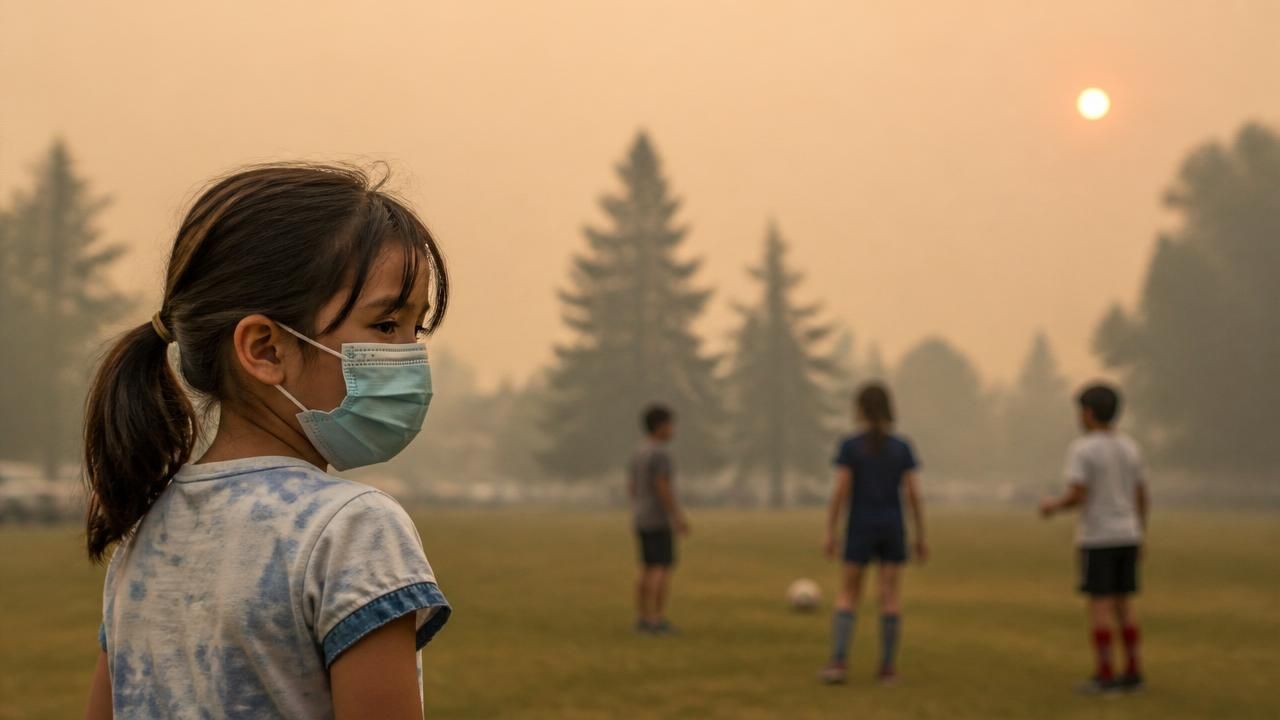
When summer rolls around, many parents scramble to sign up their young kids for outdoor activities. But what do you do when extreme heat and wildfire smoke increasingly make the outdoors dangerous? According to a recent report from NPR, climate change is now threatening a pillar of childhood: summer break. Rising temperatures and worsening air quality are forcing families to rethink traditional summer fun, from campfires to soccer games.
Heatwaves Sound Alarm
In a column published by the Warrington Guardian, a local MP highlighted how the recent heatwave serves as a stark reminder of the imminent threat of climate change. The column notes that such extreme weather events are becoming more frequent and intense, disrupting daily life and endangering vulnerable populations. Children are particularly at risk because their bodies regulate heat less efficiently and they spend more time outdoors during summer.
“The heatwave reminds us that climate change is not a distant problem—it is here, and it is affecting our children's ability to play, learn, and stay healthy,” the MP wrote.
EPA Rule Could Worsen Risks
Meanwhile, the Michigan Advance reports on a proposed rule from the Environmental Protection Agency (EPA) that critics say directly threatens children's health. Dubbed the 'secret science' rule, the regulation would limit the use of scientific studies that are not publicly available in full, potentially excluding key research on pollution and climate impacts. Health advocates argue this could block evidence linking air pollution to asthma, heatstroke, and other climate-sensitive illnesses in children.
In an op-ed, the article warns: “If the EPA is allowed to sideline critical public health research, children will bear the brunt of weakened regulations on emissions and environmental hazards.” The rule is part of a broader debate over transparency versus scientific integrity.
Historical Context and Data
Climate scientists have long warned that rising global temperatures will increase the frequency and severity of heatwaves and wildfires. The National Oceanic and Atmospheric Administration (NOAA) reports that 2023 was one of the hottest years on record. For children, this means more days when outdoor activities are unsafe. The American Academy of Pediatrics recommends canceling outdoor events when the heat index exceeds 90°F, a threshold now breached more often across many states.
Wildfire smoke, which contains fine particulate matter that can penetrate deep into lungs, has also become a major concern. In 2023, smoke from Canadian wildfires caused some of the worst air quality levels in the U.S., leading to school closures and canceled summer camps.
Expert Perspectives
Dr. Lisa Patel, a pediatrician at Stanford Medicine, emphasizes that climate change is a child health crisis. “Children are not little adults—they breathe more air per pound of body weight, and their immune systems are still developing. We are seeing more emergency room visits for heat exhaustion and asthma attacks during summer months,” she said in an interview.
Environmental policy experts note that the proposed EPA rule could undermine essential studies. “The 'secret science' rule would prevent the agency from using key epidemiological research that relies on confidential health data. This could delay or block regulations that protect children from air pollution,” said Dr. Jennifer Peters, a public health researcher at the University of Michigan.
Implications for Families
For parents, the changing climate is reshaping summer planning. Many are opting for indoor activities, early morning outings, or seeking air-conditioned spaces. Community pools and recreation centers report higher demand, but not all families have access to such resources. Low-income communities and communities of color are disproportionately affected, as they often have less green space and poorer air quality.
The YMCA of the North, cited in the NPR report, has adapted its summer programs to include more indoor sessions and water breaks. “We’re monitoring heat advisories more closely than ever. The priority is keeping kids safe, even if it means changing long-standing traditions,” a spokesperson said.
Looking Ahead
As summer break approaches, the intersection of climate change, health policy, and childhood experiences is drawing increased attention. Advocacy groups are calling for stronger federal and local action to reduce emissions and protect children from heat and smoke. Meanwhile, the EPA’s proposed rule is expected to face legal challenges.
The MP from Warrington summed up the urgency: “We cannot afford to ignore these warnings. Our children’s health and the traditions we cherish are at stake.”