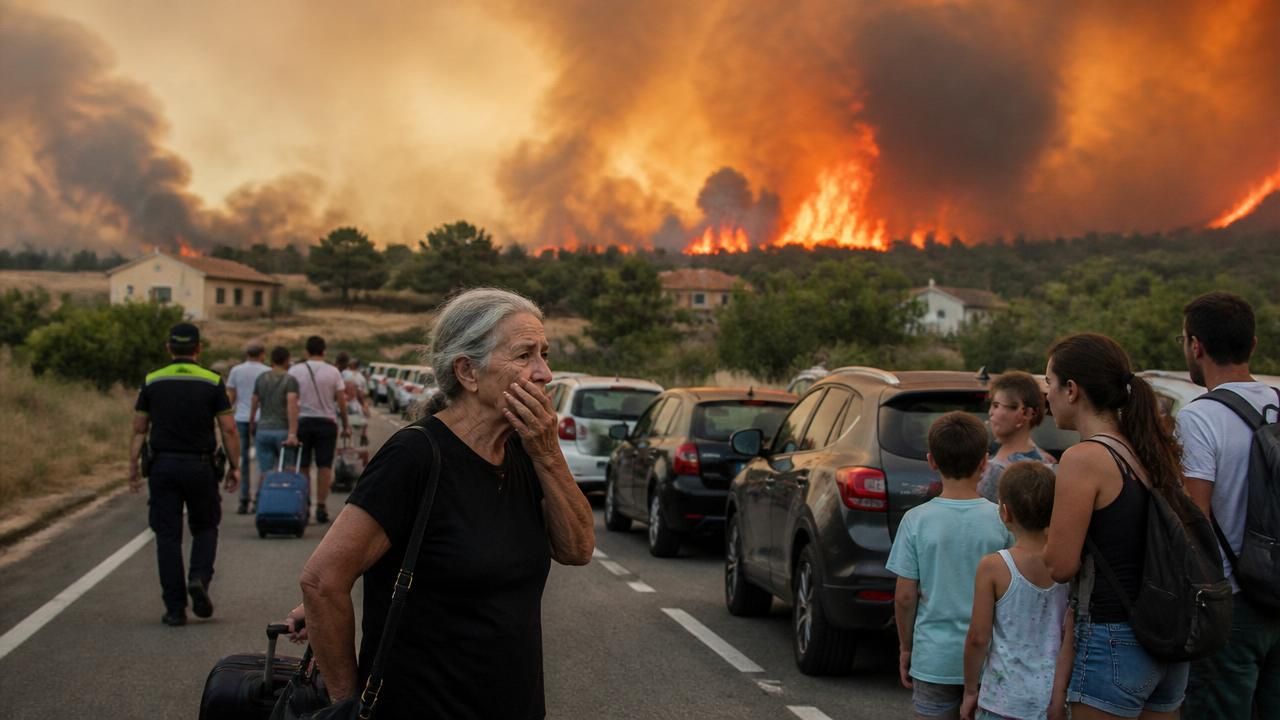
More than 250,000 people have been forced to flee their homes as uncontrolled wildfires rage across southwestern France and central Spain, threatening major metropolitan areas and prompting unprecedented emergency responses. The blazes, intensified by a severe heat wave, have moved perilously close to Bordeaux and Madrid, two cities with a combined population of over 8 million.
Mass Evacuations and a Human Toll
According to multiple reports, the evacuations are among the largest in the region's history. Bloomberg Markets first reported over 250,000 fleeing, a figure echoed by CBS News, The Guardian, and others. Inkl's later coverage raised the estimate to 280,000, while Daily Finland cited 265,000. The vast majority of evacuees are from tourist areas near Bordeaux and rural communities outside Madrid. Tragically, The Sun reported one death, though official confirmation remains pending.
In France, the Gironde region has been hit hardest, with flames advancing toward the Atlantic coast. BBC noted that 20,000 were evacuated from a single tourist spot near Bordeaux. In Spain, the fire near Madrid forced over 40,000 from their homes, according to local officials.
Government Responses and International Aid
French President Emmanuel Macron, visiting the affected area, declared: 'We will rebuild.' His government has mobilized significant resources, including the deployment of an A400M military transport plane to support firefighting efforts, as reported by AOL. French Prime Minister also ordered additional aircraft and hundreds of firefighters. Spanish authorities have similarly deployed military units and requested EU assistance.
'Standing shoulder to shoulder, we will overcome this ordeal,' Macron said, pledging national recovery funds.
The fires come amid a record-breaking heat wave across Europe, with temperatures exceeding 40°C (104°F) in some areas. Scientists link such extremes to climate change, noting that dry conditions and high winds have created a tinderbox. This disaster echoes the 2022 wildfires that scorched the same regions, but the scale of evacuation is unprecedented.
Differing Perspectives on the Crisis
News outlets framed the story in varying lights. Bloomberg focused on the financial and economic impact, noting insurance losses could mount. The Guardian emphasized the human suffering and displacement. France24 highlighted Macron's leadership, while The Sun used the term 'apocalyptic.' CBS News provided a straightforward factual account. In contrast, some local reports like Nice-Matin stressed the resilience of communities. The divergence reflects broader narratives: climate catastrophe versus national resilience. One expert quoted by The Guardian said, 'This is the new normal; we must adapt quickly.'
Historical Context and Future Implications
These fires are part of a worrying trend. Mediterranean Europe has seen a 40% increase in wildfire risk over the past decade, according to the European Forest Fire Information System. The 2023 season has already burned over 200,000 hectares in Spain and France, double the 10-year average. Economists warn of spiraling costs for firefighting and reconstruction. Public health officials alert to respiratory risks from smoke—already hospitals near the fires report a spike in asthma cases. Meanwhile, agricultural losses are vast, with vineyards in Bordeaux threatened.
As the fires continue to burn, the immediate focus remains on containment. But the long-term implications for urban planning, climate policy, and European solidarity are profound. As one evacuee told French television, 'We lost everything, but we are alive.'