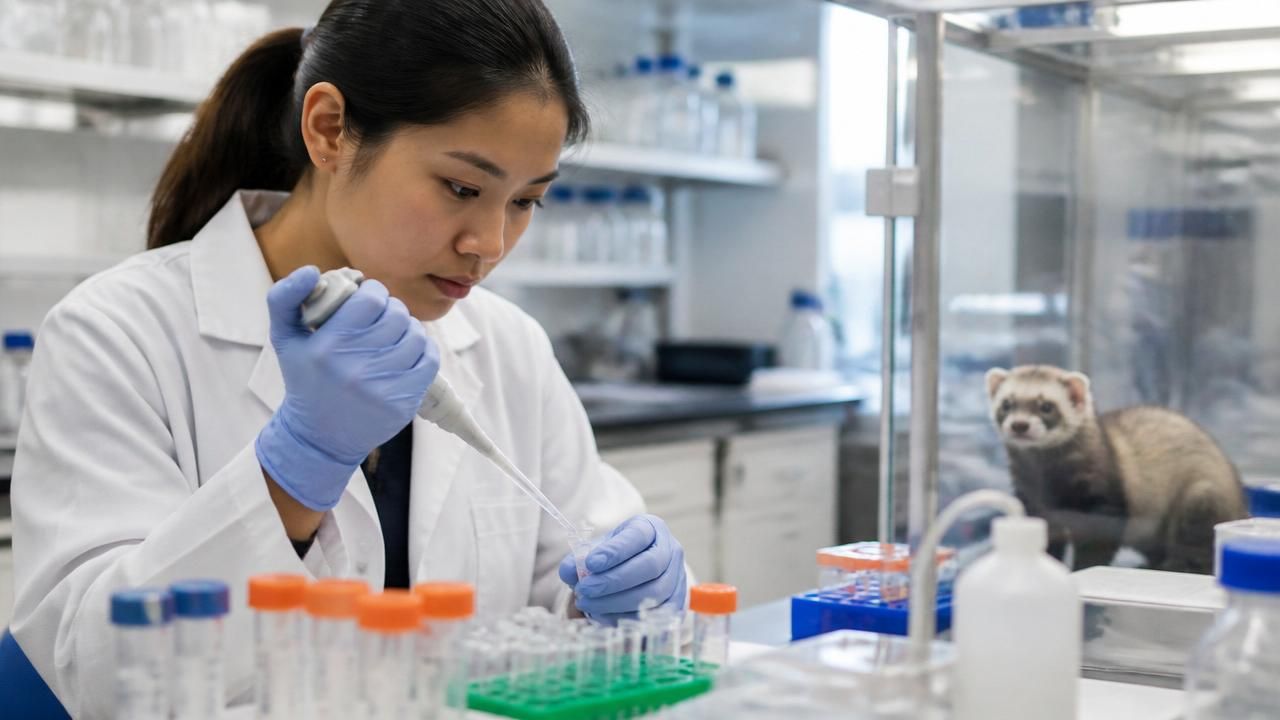
A groundbreaking experimental pill has shown the ability to prevent a measles-like virus from spreading in ferrets, offering a potential new tool to contain outbreaks before they escalate. The research, published in Science Translational Medicine, demonstrates that the antiviral drug, given shortly before or after exposure, not only prevents infection but also shortens illness and reduces the contagious period. While the findings are preliminary, they signal a possible shift in how public health officials might combat one of the most contagious diseases known to humanity.
A New Frontier in Measles Treatment
Measles, caused by the paramyxovirus, remains a major global health threat despite the availability of an effective vaccine. In 2019, the World Health Organization reported over 869,000 measles cases worldwide, with many outbreaks occurring in communities with low vaccination rates. The new antiviral, developed by researchers at the University of Georgia and other institutions, targets the viral RNA polymerase, an enzyme essential for replication. In ferrets, the drug blocked airborne transmission and prevented infection even when animals were exposed to high viral loads.
“The drug could one day complement vaccination and make outbreaks easier to contain,” said Dr. Richard Plemper, a lead researcher. “It’s not a replacement for vaccines, but a powerful adjunct.”
The study, covered by Science Daily, highlights the drug’s ability to protect both before and after exposure, a feature that could be crucial for unvaccinated individuals or those with compromised immune systems. However, experts caution that human trials are still needed, and the drug is likely years away from clinical use.
The Current Measles Landscape: A Resurgent Threat
Measles cases are rising in the United States and globally. According to the Centers for Disease Control and Prevention, the U.S. has seen over 100 cases in 2025 as of March, with outbreaks in several states. A Stanford Medicine expert, Dr. Yvonne Maldonado, outlined five key facts: measles is highly contagious—up to 90% of unvaccinated people exposed will get it—and can cause severe complications like pneumonia and encephalitis. The MMR vaccine remains the best protection, with two doses being 97% effective.
In New Zealand, the Science Media Centre reported concerns about potential community spread, with experts warning that even a single case can trigger an outbreak in undervaccinated populations. “We’re seeing a perfect storm of declining vaccination rates and increased travel,” said Dr. Helen Petousis-Harris, a vaccine researcher.
Vitamin A: A Controversial Spotlight
Amid the measles resurgence, Health and Human Services Secretary Robert F. Kennedy Jr. has promoted vitamin A as a treatment, drawing sharp criticism from medical experts. In a New York Post article, Kennedy suggested that vitamin A could help fight measles, but experts emphasize that while vitamin A can reduce mortality in malnourished children with severe measles, it is not a treatment or preventive measure for the general population. The National Foundation for Infectious Diseases (NFID) warns that high doses can be toxic, and the primary defense remains vaccination.
“Vitamin A is not a cure for measles,” said Dr. Amesh Adalja, an infectious disease specialist. “It’s a supportive therapy in specific cases, not a replacement for vaccines or antivirals.”
The Your Local Epidemiologist newsletter also weighed in, noting that the conversation around vitamin A risks diverting attention from proven public health measures. In a broader context, the newsletter highlighted that measles outbreaks are now competing with other crises, such as mass shootings and COVID-19 variants, for public attention.
Broader Implications and the Road Ahead
The new antiviral, if proven safe and effective in humans, could revolutionize outbreak response. Unlike vaccines, which require weeks to induce immunity, a pill could be deployed rapidly in ring vaccination campaigns or to protect immunocompromised individuals. However, experts caution that it will not solve the root cause—vaccine hesitancy. “We need a multi-pronged approach,” said Dr. Maldonado. “Vaccines, surveillance, and when available, antivirals.”
Meanwhile, the BBC Science Focus article on “mutant humans” immune to all viruses is a separate topic, not directly related to measles, but it underscores the public’s fascination with extreme medical scenarios. The measles antiviral story, however, is grounded in real, actionable science.
What You Can Do
Public health officials urge everyone to ensure they are vaccinated with the MMR vaccine. If you suspect exposure or develop symptoms—fever, cough, runny nose, and a red rash—contact a healthcare provider immediately. For now, the best defense remains prevention, but the promise of a new antiviral offers hope for future containment.