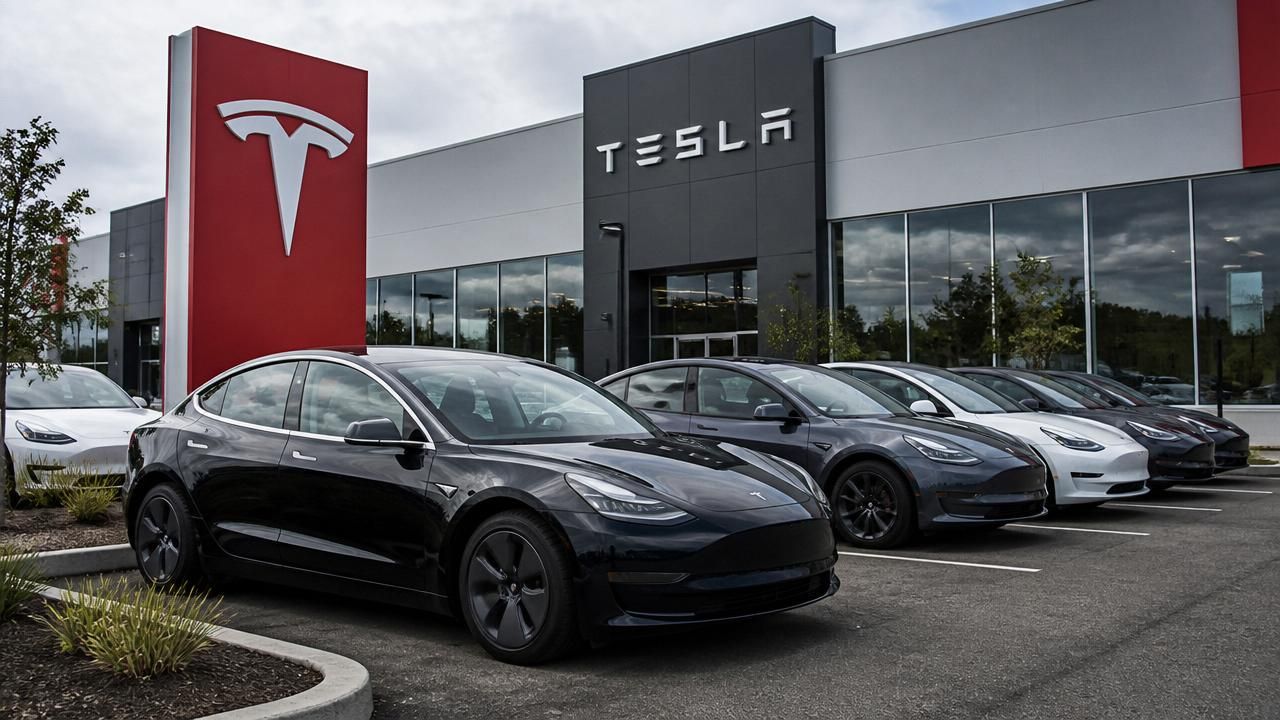
Tesla's road to recovery continued in the second quarter of 2026, with the company reporting a 25% increase in vehicle deliveries and a return to revenue growth. However, profits remained under pressure, missing Wall Street estimates and highlighting the ongoing challenges facing Elon Musk's electric vehicle (EV) company.
The earnings report, released on July 22, 2026, showed that Tesla delivered 480,126 vehicles in Q2, a significant improvement from the dismal performance of the past two years. Revenue bounced back to pre-slump levels, but net income fell short of analyst expectations, causing a mixed reaction in the stock market.
Delivery Surge Masks Profit Weakness
According to The Verge, Tesla's delivery numbers represent a roughly 25% increase compared to the same period in 2025, signaling a rebound in demand. However, the company's profit margins continue to erode due to price cuts and increased spending on AI and robotics initiatives. Investing.com reported a 15% earnings surprise that was quickly overshadowed by a weak outlook for the remainder of 2026.
Investopedia noted that while Tesla's sales struggles are improving, the pace of recovery is slower than Wall Street had hoped. The stock initially dropped after the earnings release but rebounded as investors looked past the weak profit figures, focusing instead on the company's long-term prospects in AI and autonomous driving.
Brand Damage and Political Fallout
Elon Musk's political activities have taken a toll on Tesla's brand, particularly in Europe. Investopedia reported that Tesla's EU sales fell 42% in July 2026 amid rising competition from Chinese EV maker BYD. The company's association with Musk's controversial statements has alienated some consumers, especially in progressive markets.
Despite this, Tesla's U.S. sales have stabilized, supported by price cuts and the introduction of a more affordable Model 2. The company is also aggressively promoting its Full Self-Driving (FSD) software, which Musk has tied to his compensation package. According to Investopedia, FSD sales are becoming an increasingly important revenue stream.
Analyst Perspectives and Stock Volatility
Analysts remain divided on Tesla's outlook. Some, like those at Seeking Alpha, argue that the stock could go much higher if Musk delivers on his AI and robotics vision. Others are more cautious, citing tariff risks and intensifying competition. Investopedia reported that analysts have trimmed target prices for Tesla stock, citing tariffs on the auto industry and the company's vulnerability to economic cycles.
The stock has experienced significant volatility, erasing post-election gains and falling more than 15% on some days. However, it has also shown resilience, bouncing back after earnings as investors bet on a recovery. TradingNews highlighted that Tesla's stock is at a critical juncture, with key price levels being tested.
Competitive Landscape and Industry Context
Tesla is not alone in facing challenges. Rival Rivian reported weak production guidance, while XPeng cut losses but missed revenue forecasts. The broader EV market is becoming increasingly crowded, with legacy automakers like Ford and GM ramping up their electric offerings. BYD continues to dominate in China, capturing market share from Tesla and other foreign brands.
In the tech sector, other companies are also grappling with headwinds. Apple's China slump deepened, and Super Micro Computer posted a strong AI quarter but faces margin pressure. These dynamics underscore the broader economic uncertainty that is affecting consumer spending and corporate profits.
Outlook and Implications
Tesla's Q2 earnings paint a picture of a company in transition. While the delivery rebound is encouraging, the persistent profit weakness suggests that the road to full recovery remains long. Musk's focus on AI and robotics could open new growth avenues, but it also requires substantial investment that may pressure margins in the near term.
Investors will be watching closely for signs that Tesla can sustain its momentum in the second half of 2026. Key factors include the success of the Model 2, the adoption of FSD, and the resolution of brand perception issues. As one analyst put it, "It's a vulnerable time for Tesla stock."