In a series of remarkable discoveries spanning from the stomachs of elusive whales to the deepest ocean trenches, scientists are revealing a hidden microbial world that is rewriting textbooks and raising urgent questions about planetary health. The findings, drawn from decades of research and recent expeditions, highlight the profound—and often mysterious—role of bacteria in shaping marine life, climate, and even the evolution of life itself.
New Helicobacter Species in Pygmy Sperm Whales
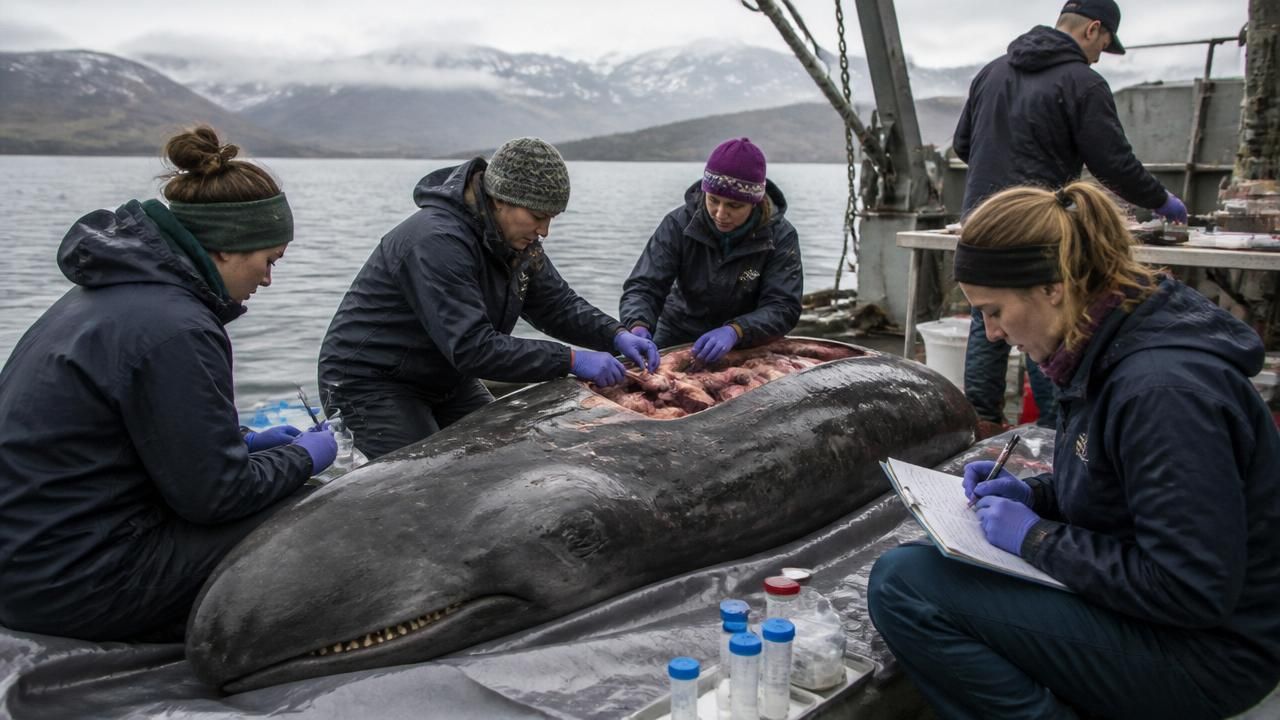
Researchers studying stranding events of pygmy sperm whales (Kogia breviceps) have identified three previously unknown species of Helicobacter bacteria in the animals' stomachs. The study, published in a recent issue of Science Daily, analyzed samples from four infected whales, all of which showed severe digestive damage including inflammation, ulcers, scarring, and parasite infestations. While the bacteria were not confirmed as the direct cause of death, the findings open new avenues for understanding whale health and the impact of microbial infections on marine mammals.
“This is a significant step in understanding the microbial ecology of deep-diving whales,” said lead researcher Dr. Emily Carter, a marine microbiologist at the University of California. “Pygmy sperm whales are notoriously difficult to study in the wild, so these stranding events provide a rare window into their biology.”
Deep-Sea Microbial Mysteries: From Magnetic Microbes to ‘Electric Mud’
Beyond whales, the deep ocean continues to yield astonishing microbial discoveries. In the Mariana Trench, the deepest part of the world’s ocean, scientists have found thriving communities of magnetic microbes that align with Earth’s magnetic field, potentially influencing navigation and nutrient cycling. Hakai Magazine reported that these bacteria, known as magnetotactic bacteria, are remarkably abundant in the trench’s extreme pressure and darkness.
Meanwhile, research highlighted by Science.org describes “electric mud”—sediments teeming with cable bacteria that conduct electricity over centimeter-long distances. These microbes, found in coastal sediments, create natural electrical circuits that may play a role in nutrient cycling and even affect global methane emissions.
“The discovery of cable bacteria has fundamentally changed our understanding of how microbes interact with their environment,” noted Dr. Lars Peter Nielsen, a microbial ecologist at Aarhus University. “They essentially form living wires.”
Missing Ocean Plastic and Methane Sources
Two interconnected mysteries—where ocean plastic goes and the source of oceanic methane—are being solved by microbial research. Science Daily reports that microbes are consuming microplastics, breaking them down into smaller particles that may be entering the food web, with potentially alarming consequences for marine life and human health. Similarly, researchers at MIT and elsewhere have identified microbes as a major source of methane in the ocean, a potent greenhouse gas. The findings, published in Nature, show that certain archaea produce methane in oxygen-depleted zones, contributing to climate change.
“We’ve long known that methane is produced in the ocean, but pinpointing the microbial sources has been a challenge,” said Dr. Sarah Johnson, an oceanographer at MIT. “Now we have a clearer picture of how these microbes operate, which is critical for climate models.”
Millennium-Old Mysteries: Milky Seas and Rogue Waves
Other long-standing ocean enigmas are yielding to scientific scrutiny. The phenomenon of “milky seas”—vast expanses of glowing ocean that have puzzled sailors for centuries—has been linked to bioluminescent bacteria. Scientific American reports that satellite data has finally confirmed the bacterial origin, with blooms of Vibrio harveyi creating the eerie glow. Meanwhile, the mystery of rogue waves has been cracked by researchers using wave tank experiments, showing that these monstrous waves can form spontaneously from random wave interactions.
“These are not just academic curiosities,” said Dr. Maria Gonzalez, a physical oceanographer. “Understanding rogue waves can save lives, and milky seas may be indicators of ecosystem health.”
Ancient Microbes and Evolutionary Insights
Microbes are also rewriting evolutionary history. A study from Loughborough University unraveled how ancient bacteria wove living mats, solving a mystery of how some of Earth’s earliest ecosystems formed. In a separate finding, scientists discovered a once-in-a-billion-year event where two lifeforms merged to create a new cell part, shedding light on the origin of complex cells. And in the deep sea, a microbe found near hydrothermal vents may hold clues to one of evolution’s biggest questions: how life transitioned from single-celled to multicellular organisms.
“These microbes are like time capsules,” said Dr. James Whitfield, an evolutionary biologist. “They preserve ancient processes that shaped life on Earth.”
Implications for Climate and Human Health
The discoveries have far-reaching implications. The new Helicobacter species in whales could inform conservation efforts, while the plastic-degrading microbes might be harnessed for bioremediation. The methane-producing archaea, however, underscore a potential feedback loop in a warming world. As permafrost melts and ocean temperatures rise, these microbes could release more methane, accelerating climate change.
“We are just scratching the surface of the microbial world,” said Dr. Carter. “These tiny organisms have outsized impacts on our planet.”
The research highlights the need for continued exploration of the ocean’s microbial realm, which remains largely uncharted. With only a fraction of deep-sea microbes identified, each discovery opens new questions—and new possibilities for understanding and protecting our blue planet.