Spain's women's national football team returned home to a hero's welcome on Monday, with an estimated nearly 2 million fans flooding the streets of Madrid to celebrate their FIFA Women's World Cup victory. The team, affectionately known as La Roja, defeated England 1-0 in the final on Sunday in Sydney, Australia, securing Spain's first Women's World Cup title.
A Day of Celebration and Royal Honors
The day began with a private audience at Zarzuela Palace, where the team met with King Felipe VI, Queen Letizia, and the Spanish royal family. The players and coaching staff were greeted warmly, with the King congratulating them on their historic achievement. Later, the squad was hosted by Prime Minister Pedro Sánchez at the Moncloa Palace, where he praised the team's dedication and skill.
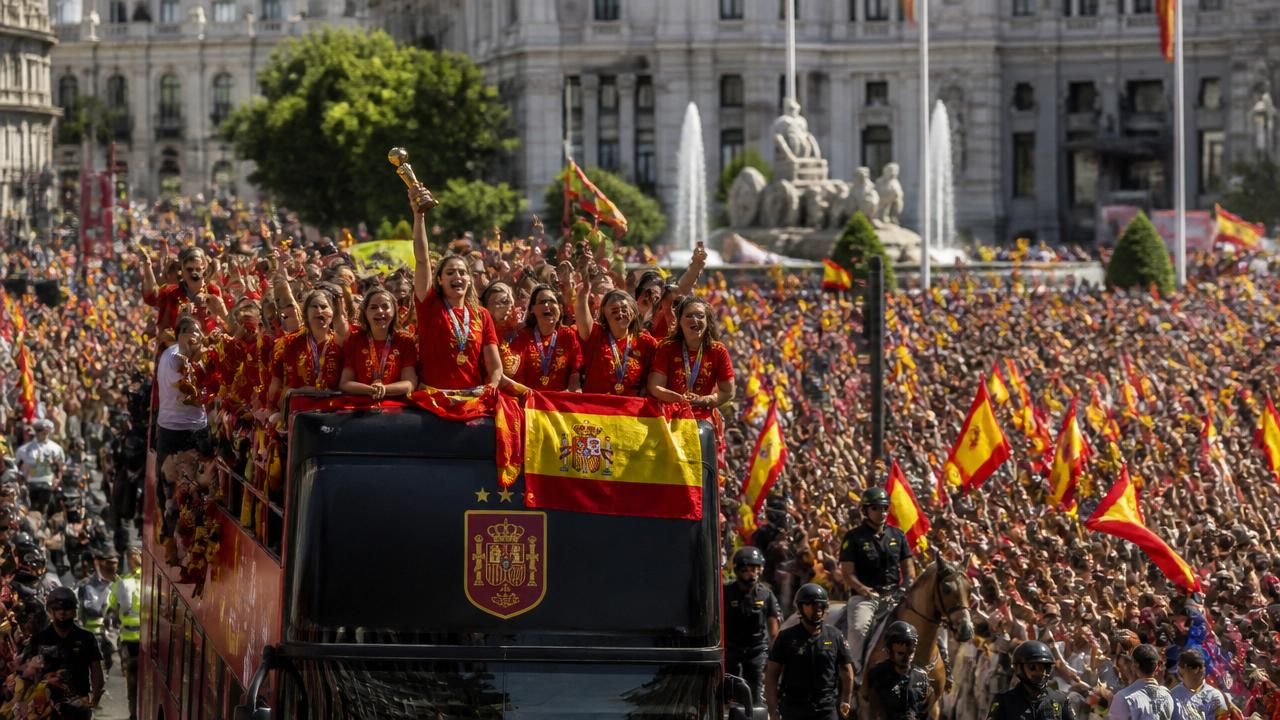
Following the royal and governmental receptions, the team embarked on an open-top bus parade through the streets of Madrid. The route, lined with cheering fans waving Spanish flags, culminated at the Plaza de Cibeles, a traditional site for sporting celebrations. According to multiple sources, including NPR and France 24, an estimated 2 million people—roughly half of Madrid's population—turned out to greet the champions.
Massive Turnout Reflects National Pride
The scale of the celebration was unprecedented for a women's sports event in Spain. Times Now reported that 'half of Madrid took to the streets,' while Newswav noted that 'more than a million fans filled the streets.' The Associated Press, via the Boston Herald, described the scene as a 'sea of red and yellow' as fans chanted 'Campeonas, campeonas' and held banners supporting the team.
Many fans had camped out overnight to secure prime viewing spots. 'This is the greatest day of my life,' said Maria Lopez, a 24-year-old fan from Madrid, speaking to local media. 'They have made history, and we are here to show our gratitude.'
Tactical Evolution: The Key to Victory
Sportstar's analysis highlighted the tactical evolution of the Spanish team under coach Jorge Vilda. The article noted that Spain's 'tiki-taka' style, traditionally associated with the men's team, was adapted with 'control, serenity, and a crown' to dominate possession and dictate the pace of play. This approach proved decisive in the final, where midfielder Aitana Bonmatí was named Player of the Match for her commanding performance.
Despite some initial skepticism about the team's youth and inexperience, the squad's composure under pressure was evident throughout the tournament. Defensively, Spain conceded only three goals in seven matches, while scoring 18. The final saw Olga Carmona score the only goal in the 29th minute, a strike that will be remembered as one of the most significant in Spanish football history.
Differing Perspectives and Broader Implications
While the celebration was universally praised, some outlets focused on the team's journey and the challenges they overcame. The Hindu's Sportstar piece delved into the technical aspects of Spain's play, while Yahoo News and MSN highlighted the royal welcome. In contrast, other sources like the Sentinel & Enterprise and Orange County Register covered related World Cup stories, such as the US team's soundtrack and the Netherlands-Morocco match, indicating the breadth of interest in the tournament.
The victory also has implications for women's football in Spain. The Spanish Football Federation has pledged increased investment in the women's game, and the team's success is expected to inspire a new generation of players. 'This is just the beginning,' said captain Ivana Andrés in an interview. 'We want to show that women's football can be just as exciting and successful as men's.'
Looking Ahead
As the celebrations wind down, the team will soon turn their attention to future challenges, including qualifying for the next European Championship and the 2027 World Cup. But for now, Spain is basking in the glory of its first Women's World Cup title—a triumph that united the nation and showcased the power of teamwork, determination, and skill.
With nearly 2 million fans in attendance and millions more watching at home, the message was clear: Spain's women's football team has arrived on the global stage, and they are here to stay.