The news doesn't arrive in tidy themes. On any given cycle, governing bodies and grieving families, record-breakers and reflective elders, airline cabins and supermarket aisles all compete for the same shrinking attention span. What follows is a survey of one such cycle — four dispatches from the wire services and one roundup of headlines that most readers nearly missed — read together for what they reveal about institutions under pressure.
Football's Rules Problem
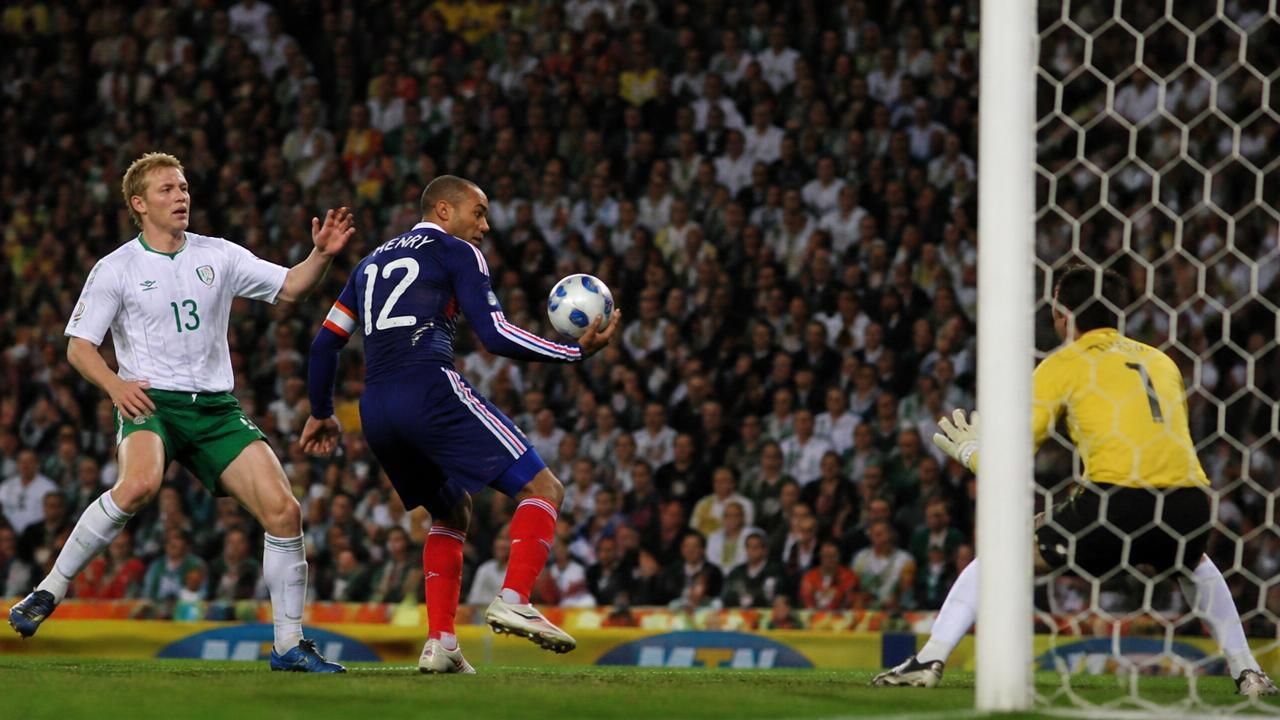
FIFA moved toward procedural changes in the wake of the Thierry Henry handball affair, the incident in which the France striker controlled the ball with his hand before setting up the goal that eliminated Ireland from qualifying for the 2010 World Cup. The controversy, replayed endlessly across Europe, turned a refereeing error into a governance crisis: how does a sport with billions of dollars at stake handle decisions its officials cannot see?
The governing body's answer, in the seasons that followed, was incremental. Additional assistant referees were stationed behind each goal at the 2010 tournament; goal-line technology arrived two years later after a second, even more infamous non-goal in South Africa. Video review for penalty and red-card decisions came later still. Each step was resisted by traditionalists who argued that the sport's rhythm depended on human error being part of the drama — an argument that loses its charm the moment a national team's tournament is decided by a handball nobody officiated.
Reform in football has never come from philosophy. It has come from embarrassment, one incident at a time.
Disaster in the Pacific
Far from any stadium, a Chilean military aircraft went down in the Juan Fernández Archipelago, a scattering of volcanic islands some 600 kilometres off the South American coast. Reports indicated no survivors. The plane, a twin-engine transport, had been approaching the island's short runway in difficult conditions when contact was lost.
The human cost was immediate and public. Among those aboard were television personalities and officials tied to a reconstruction programme for the islands, which had been devastated by a tsunami the previous year. Chile's president declared national mourning. The crash also reopened a harder conversation about small-island aviation: remote communities depend on routes that offer little margin for error, served by airframes and runways that wealthy mainland carriers would never accept.
A Champion at the Top of Her Game
On the other side of the world, the golfer Yani Tseng captured the Women's British Open, a victory reported as a record fifth major championship. Tseng's rise was unusually fast — a Taiwanese player who arrived on the LPGA Tour as a teenager and quickly became its dominant figure, winning on links courses and parkland layouts alike.
Her achievement carries a commercial subtext that belongs in any account of modern sport. Tseng's success arrived as women's golf was pushing for prize parity and broader broadcast exposure, particularly in Asia, where the tour's growth markets lay. Individual brilliance is often the most effective lobbying tool an emerging sport has.
Talese and the State of the Craft
Meanwhile, the writer Gay Talese — the man who gave American journalism “Frank Sinatra Has a Cold” and helped define the New Journalism — offered his assessment of the profession he has worked in for more than six decades, touching on the Iraq war, the collapse of newsroom economics and his own long career.
Talese's critique has always been stylistic as much as structural. He has argued that reporters surrender too much authority to sources and to speed, and that the granular observation of ordinary people is what survives a news cycle. Iraq, in his telling, was a story covered heavily and understood poorly — saturation without intimacy.
His lament lands in a brutal decade for the industry: shrinking newsrooms, collapsing advertising, and a reading public that consumes headlines without the reporting beneath them. That the same week's wire file included a fatal aviation disaster, a governance scandal and a major championship is not irony. It is the point. Someone has to cover all of it, and fewer people are being paid to.
The Quiet Economics of Everyday Life
Finally, the headlines many readers did miss — and where the financial subtext is sharpest. Among them: a growing debate over voice and video calls on airplanes, as airlines weigh connectivity revenue against cabin civility; premium California wines quietly selling under supermarket private labels at steep discounts, a reminder that the wine industry's famous glut has migrated from cellar to store brand; a fresh rivalry among New York diners built on singing waiters; and the rising popularity of elaborate tuna carving ceremonies at high-end sushi counters.
Each is a small study in value perception. The private-label bottle and the theatrical tuna breakdown both sell an experience rather than a commodity. The airplane call debate is fundamentally about who owns shared space in an economy where every seat is a revenue unit.
- Governance: FIFA's reforms came after visible failures, not before them.
- Safety: The Juan Fernández crash highlighted the fragility of remote-island air links.
- Sport: Tseng's major title boosted a tour chasing parity and Asian growth.
- Media: Talese's critique of journalism arrives as the industry's economics worsen.
- Markets: Discount wine and premium experiences reflect a consumer trading down and up at once.
Read together, the cycle describes a world of institutions responding late to failures they could see coming — a football federation that needed a handball, an aviation system that needed a crash, a news business that needed a generation of readers to notice it was disappearing. The records and the rituals will outlast the scandals. The question is who will still be around to report on them.