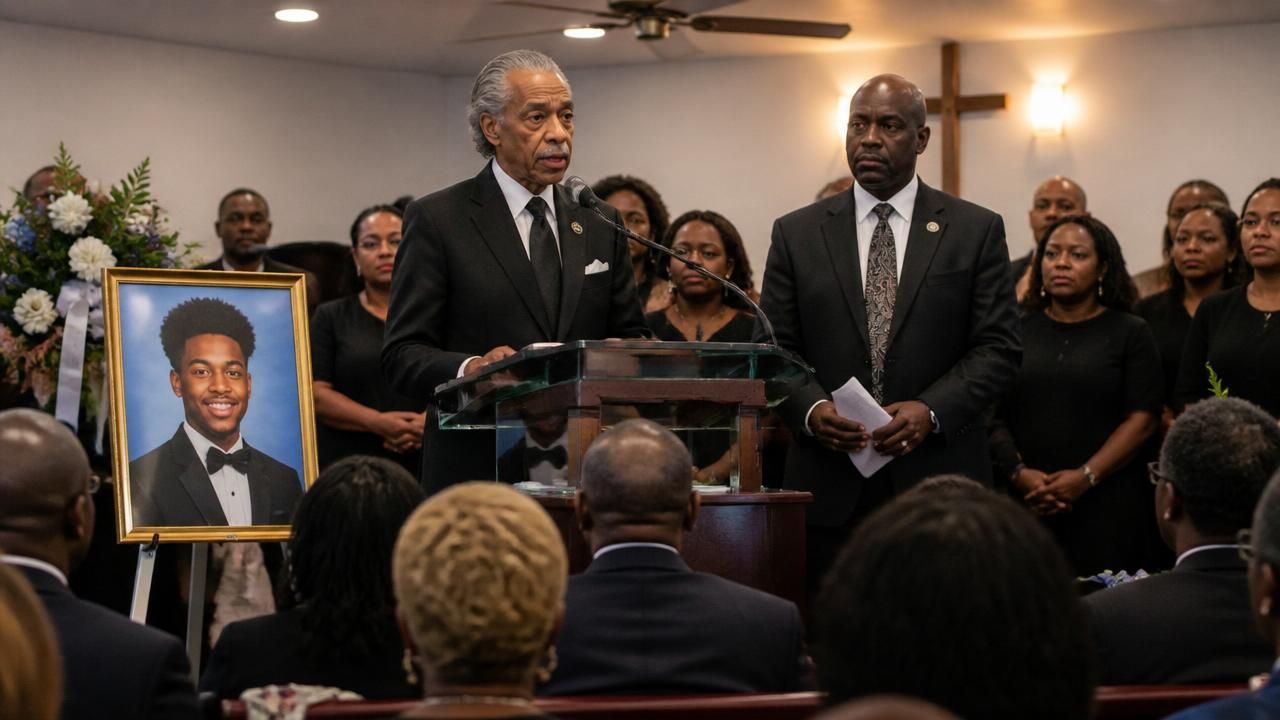
GULFPORT, Miss. — The funeral of 18-year-old Nolan Wells on Monday became a powerful call for justice as civil rights leaders, including the Rev. Al Sharpton and attorney Ben Crump, joined his family in demanding answers about his mysterious death. Wells, a Black teenager from Mississippi, was found dead on Horn Island after a July 4 boat trip with friends. His family, who have faced hate mail during their grief, are pressing for a transparent investigation into what they believe may have been a racially motivated crime.
A Life Cut Short
Nolan Wells was described by loved ones as a vibrant young man with a bright future. He had been celebrating Independence Day with friends when he failed to return home. His body was discovered days later on Horn Island, part of the Gulf Islands National Seashore. The circumstances surrounding his death remain unclear, with authorities yet to release a definitive cause. The family has expressed frustration over the pace and transparency of the investigation, leading them to seek help from national civil rights figures.
Civil Rights Leaders Step In
At the funeral, held at a church in Gulfport, the Rev. Al Sharpton delivered a eulogy that mixed grief with a fiery demand for justice. “We are here not just to bury Nolan, but to demand that the truth be unearthed,” Sharpton said, according to reports from NPR and other outlets. Attorney Ben Crump, who has represented families in high-profile racial justice cases, also addressed the congregation, vowing to ensure that Wells’ case does not go cold. The presence of these leaders underscores the national attention the case has attracted, echoing other incidents where Black teens have died under suspicious circumstances.
“We are here not just to bury Nolan, but to demand that the truth be unearthed.” — Rev. Al Sharpton
Multiple sources, including TMZ and MSN, noted that the funeral drew a large crowd of family, friends, and community members. The service was a mix of sorrow and resolve, with speakers calling for unity and action. The family’s attorney, Ben Crump, emphasized that the investigation must be thorough and independent, hinting at potential racial overtones given the hate mail the family has received.
Hate Mail and Harassment
In a disturbing development, MSN reported that Wells’ family has been targeted with hate mail since his death. The content of the messages has not been publicly detailed, but the family has described them as racially charged and threatening. This harassment has added to the family’s trauma and raised concerns about the climate of racial hostility in the area. Civil rights leaders have condemned the messages and called for a federal investigation into the hate mail as part of the broader case.
Investigation Under Scrutiny
The official investigation, led by local authorities and the National Park Service, has been slow to release details. Sources like the Clarion Ledger and GPB report that the family is pushing for more transparency, including the release of autopsy results and witness statements. Some media outlets have framed the story as a potential case of racial violence, while others caution against jumping to conclusions without evidence. The differing perspectives highlight the tension between the need for justice and the risk of speculation.
At a press conference held before the funeral, family members and their legal team laid out their concerns. Ebony.com reported that the press conference provided some clarity, but many questions remain. “We want to know what happened to our son,” his mother said, her voice breaking. “We want the truth, and we want accountability.” The family has also called for anyone with information to come forward, offering a reward for tips.
Historical Context and Implications
The case of Nolan Wells is the latest in a long line of incidents where Black teenagers have died under mysterious circumstances, often in the South. From Emmett Till to Trayvon Martin, these cases have galvanized civil rights movements and exposed systemic issues in law enforcement and racial justice. The involvement of Sharpton and Crump signals that this case may become a national rallying point for activists demanding change.
Local leaders have urged patience, insisting that the investigation is ongoing and thorough. But the family’s anguish, compounded by hate mail, has made patience difficult. The funeral served as both a farewell and a call to action, with mourners vowing to keep Nolan’s memory alive until justice is served.
What Happens Next?
As the investigation continues, the family and their legal team are preparing for a long fight. They have called for federal oversight, citing potential civil rights violations. The hate mail has prompted discussions about broadening the investigation to include charges of harassment and intimidation. Meanwhile, the community remains on edge, hoping that this tragedy will not be forgotten.
Nolan Wells’ funeral was not just a goodbye; it was a declaration that his death will not be in vain. As the Rev. Al Sharpton put it, “We will not rest until we get justice for Nolan.” The eyes of the nation are now on Mississippi, awaiting answers that could bring closure—or further outrage.