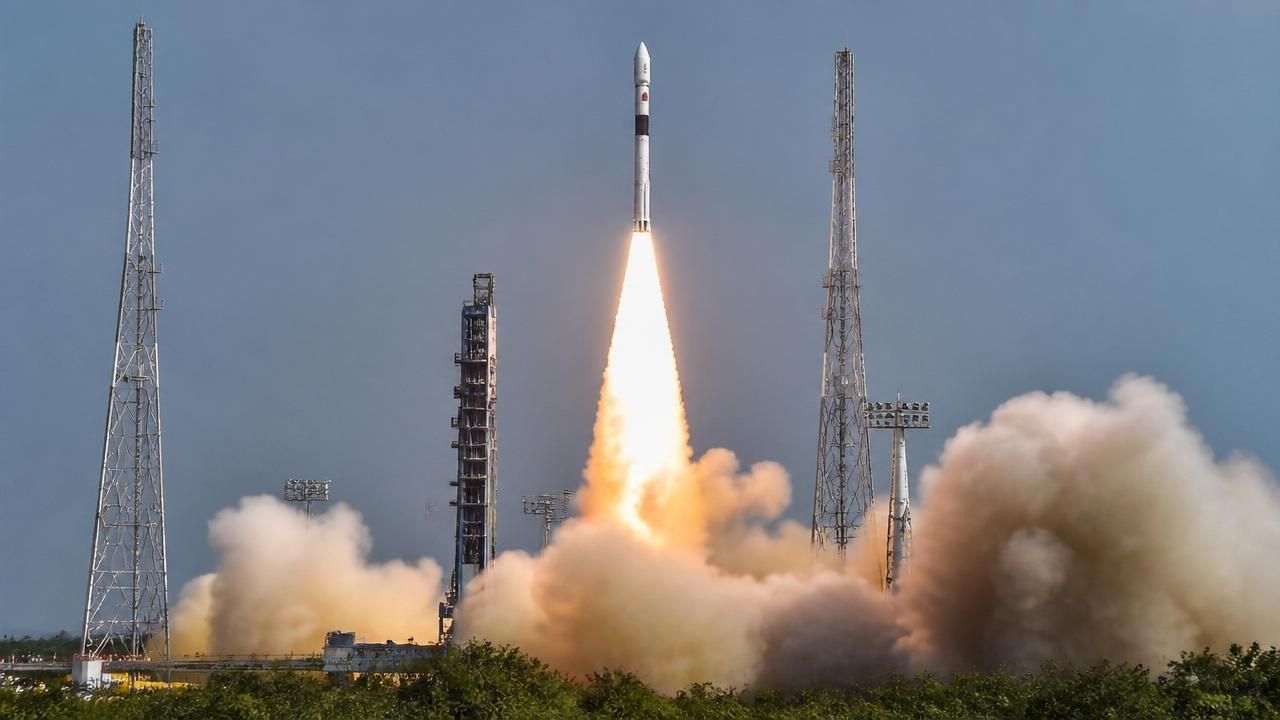
India's space ambitions reached a new milestone Saturday as Skyroot Aerospace's Vikram-1 rocket, the country's first fully privately developed orbital launch vehicle, successfully placed a payload into low-Earth orbit. The launch, described by officials as a 'grand success,' opens a new chapter in India's space story, transitioning from a government-dominated program to a vibrant commercial sector.
Liftoff and Mission Details
The Vikram-1 lifted off from India's primary spaceport on Sriharikota Island in the Bay of Bengal at 1:35 am EDT (06:35 UTC) Saturday, local midday at the launch base. The countdown was halted for more than half an hour to resolve a last-minute technical glitch, but the issue was cleared and the rocket ignited its solid-fueled first stage booster, climbing into a clear sky. The rocket reached an orbit approximately 280 miles (450 kilometers) high, according to Indian space officials.
Skyroot Aerospace, the Hyderabad-based startup behind the mission, had earlier targeted a July launch, as reported by Bloomberg, but the mission ultimately flew in August. The company's CEO, Pawan Kumar Chandana, called the flight 'the dawn of a new space era' for India, echoing the sentiment of many in the industry.
A New Competitor in Small Satellite Launch
Vikram-1 is a modest rocket compared to India's workhorse Polar Satellite Launch Vehicle (PSLV), but it fills a crucial niche. Standing about 72 feet (22 meters) tall, it can deliver payloads of up to 770 pounds (350 kilograms) to low-Earth orbit. This makes it slightly larger than Rocket Lab's Electron rocket, the current leader in dedicated small satellite launches. Ars Technica noted that Vikram-1's debut positions Skyroot to compete for a slice of the growing small satellite market, which demands frequent, affordable, and dedicated launches.
The rocket is named after Dr. Vikram Sarabhai, the father of India's space program, symbolizing a bridge between the country's pioneering past and its entrepreneurial future.
Context and Historical Significance
India's space program has long been dominated by the Indian Space Research Organisation (ISRO), which achieved global acclaim for its low-cost Mars orbiter and record-breaking satellite launches. However, in recent years, the government has opened the doors to private players, seeking to boost innovation and economic growth. Skyroot's successful launch is the first tangible result of that policy shift.
Multiple sources, including MSN and Yahoo News, highlighted that this mission marks the first time a privately built and operated rocket has reached orbit from Indian soil. Previously, only ISRO rockets and a few suborbital private flights had paved the way. The achievement is expected to inspire a wave of investment and startups in India's space ecosystem.
Differing Perspectives
While the overall tone across sources was celebratory, some outlets framed the story differently. Ars Technica provided a technical deep dive, emphasizing the rocket's specifications and comparison to international competitors. Bloomberg, in an earlier report, focused on the business angle, noting Skyroot's plans and the potential for commercial launches. Yahoo News and MSN carried more general news coverage, highlighting the 'historic' nature of the event. Phys.org, though its article was blocked, had previously covered the buildup, underscoring the significance for the startup sector.
'This is a proud moment for India. Our private sector has proven it can compete on the global stage,' said an ISRO official, speaking on condition of anonymity.
However, some experts caution that one successful flight does not guarantee a sustainable business. 'The small satellite launch market is crowded and price-sensitive,' noted Dr. Rajeswari Pillai Rajagopalan, a space policy analyst at the Observer Research Foundation. 'Skyroot will need to demonstrate reliability and cost-effectiveness to win customers.'
Looking Ahead
Skyroot plans to follow up with more Vikram-1 launches and is already developing a larger rocket, Vikram-2, with increased payload capacity. The company has secured funding from investors including Singapore's GIC and India's HDFC Bank, as reported by Bloomberg. The Indian government, meanwhile, is working on a new space policy to further enable private sector participation, including allowing private companies to use ISRO's facilities and infrastructure.
The successful launch also has geopolitical implications. India joins a select group of nations—the United States, Russia, China, and Europe—that have indigenous private orbital launch capabilities. This could enhance India's standing in the global space community and open doors for international collaborations.
As the Vikram-1's upper stage circles Earth, the message is clear: India's private space era has truly begun.