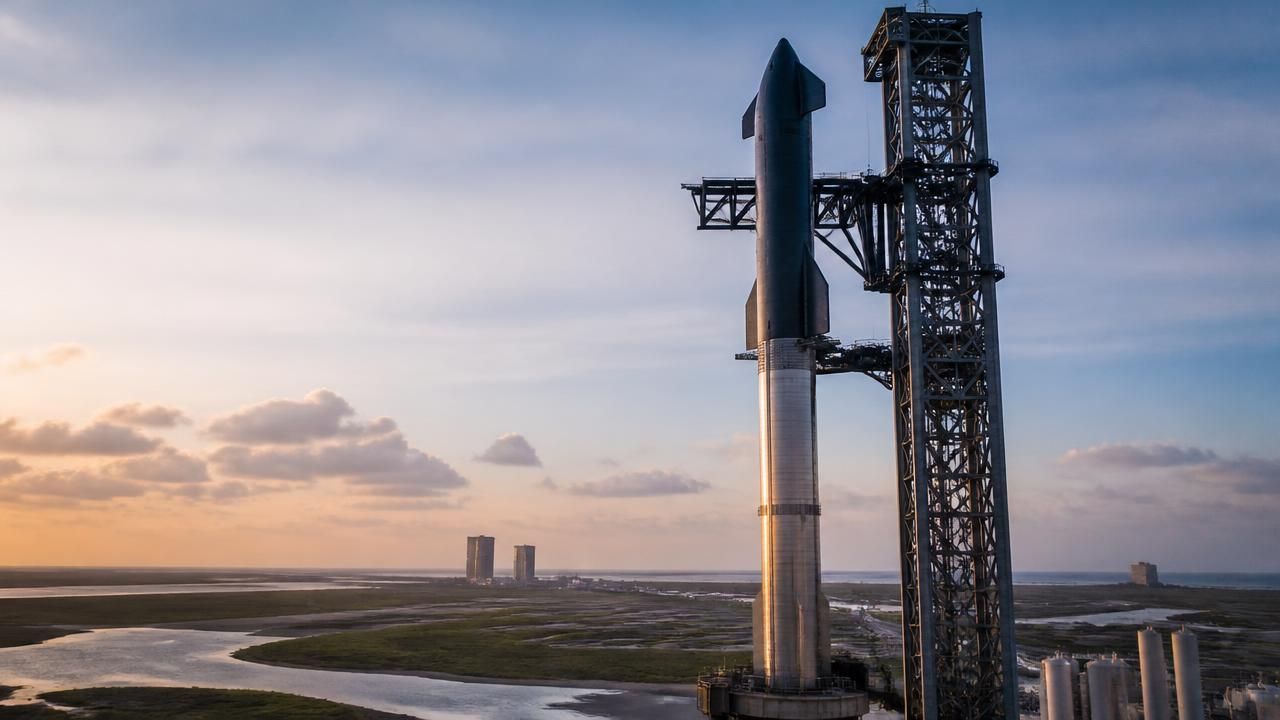
SpaceX is preparing to attempt something it has never done before: catching both stages of its Starship rocket out of the air on a single flight. According to company founder Elon Musk, the next integrated test flight — the vehicle's 15th — will see the Super Heavy booster and the Starship upper stage each return to the launch tower at Starbase, Texas, and be snagged by the facility's giant mechanical arms, known as "chopsticks."
The announcement, which Musk teased on social media and which The Verge and Yahoo both reported, marks a significant escalation in the company's test campaign. SpaceX has successfully caught the Super Heavy booster multiple times since first attempting the maneuver in October 2024, but the upper stage — the portion of the vehicle designed to reach orbit and eventually carry payloads and people — has so far only performed controlled splashdowns at sea.
What the next flight will attempt
Details of the mission profile are still emerging, but the flight appears designed to push several envelopes at once. Mashable reported that the vehicle is slated for a roughly 10-hour spaceflight that would see Starship loop around the Earth as many as six times before reentry — a far longer duration than previous tests, which have typically completed a partial or single orbit before splashing down.
Rolling Out framed the flight around the same question: whether the vehicle reaches a stable orbital trajectory, a milestone that determines whether Starship can begin deploying real payloads, including the company's next-generation Starlink satellites. The answer will hinge on the ship's ability to relight its Raptor engines in space and survive the punishing thermal environment of reentry.
The catch attempt itself is the headline act. Ars Technica noted that SpaceX's 13th flight ended on an "auspicious" note, clearing the way for tower operations to be attempted with the ship. Catching a returning upper stage is considerably harder than catching a booster: the ship approaches from orbital velocity, must survive peak heating on its belly, and then execute a precise flip-and-burn maneuver to align itself with the tower's arms.
"We will attempt to catch both the booster and the ship," Musk said, according to reports — a statement that, if successful, would put SpaceX on a path toward the kind of rapid reuse the company has promised for a decade.
Why cadence matters more than ever
The catch attempt is not merely a technical stunt. During a recent earnings call, Musk and SpaceX president and COO Gwynne Shotwell spent much of their time discussing something that would have seemed alien at the company a few years ago: artificial intelligence compute. Ars Technica reported that SpaceX officials outlined plans to roll out as much as 10 gigawatts of ground-based compute capacity by 2027, positioning the company as, in effect, a data company.
Gone, the report noted, is the aspirational talk of settling Mars that once defined SpaceX's public messaging. In its place is a hard-nosed focus on AI infrastructure — and on the orbital data services that would extend it beyond Earth. The company's Starlink internet constellation is the first piece of that vision; a proposed successor, referred to as the "Starmind" data center constellation, is the second.
Both depend on Starship flying frequently and cheaply. Forbes reported that AI-related revenue has now surpassed Starlink revenue at SpaceX — a striking milestone that reframes the rocket as a means to a very different end than the one Musk sold to investors in the 2010s.
The economics of a reusable ship
Analysts are already modeling what full reusability would mean for costs. According to MSN, an industry insider projects that Starlink capacity could become as much as 16 times cheaper by 2028, a function of larger satellites launched on Starship and the falling cost per kilogram to orbit. Shares of SPCX rose ahead of the orbital attempt, suggesting investors are pricing in some probability of success.
- Booster catches: Demonstrated repeatedly since October 2024.
- Ship catches: Never attempted; first opportunity expected on Flight 15.
- Flight duration: Potentially up to 10 hours and multiple Earth loops, per Mashable.
- AI compute target: Up to 10 GW on the ground by 2027, per Ars Technica.
- Cost trajectory: Up to 16x cheaper Starlink capacity by 2028, per an industry estimate cited by MSN.
The risks and the open questions
A ship catch carries substantial risk — both to the vehicle and to the tower. A misjudged approach could damage ground infrastructure and set back the schedule SpaceX is counting on to launch its next-generation Starlink satellites and satisfy AI-driven demand for bandwidth. The company has historically been willing to accept hardware losses in exchange for data, and a failed catch would likely be framed internally as another learning opportunity rather than a programmatic setback.
Much also remains unconfirmed. Several of the reports aggregating the news carried limited detail — some source pages were inaccessible, and several outlets relied on Musk's public statements rather than company documentation. SpaceX has not published a formal mission press kit outlining the exact flight profile, and the timing of Flight 15 has not been definitively announced.
What is clear is that the stakes have changed. A year ago, a Starship catch would have been read primarily as a step toward Mars. Today, it reads as a step toward the data economy — a rocket company betting its future on artificial intelligence, and a launch tower in South Texas serving as the proving ground for both.