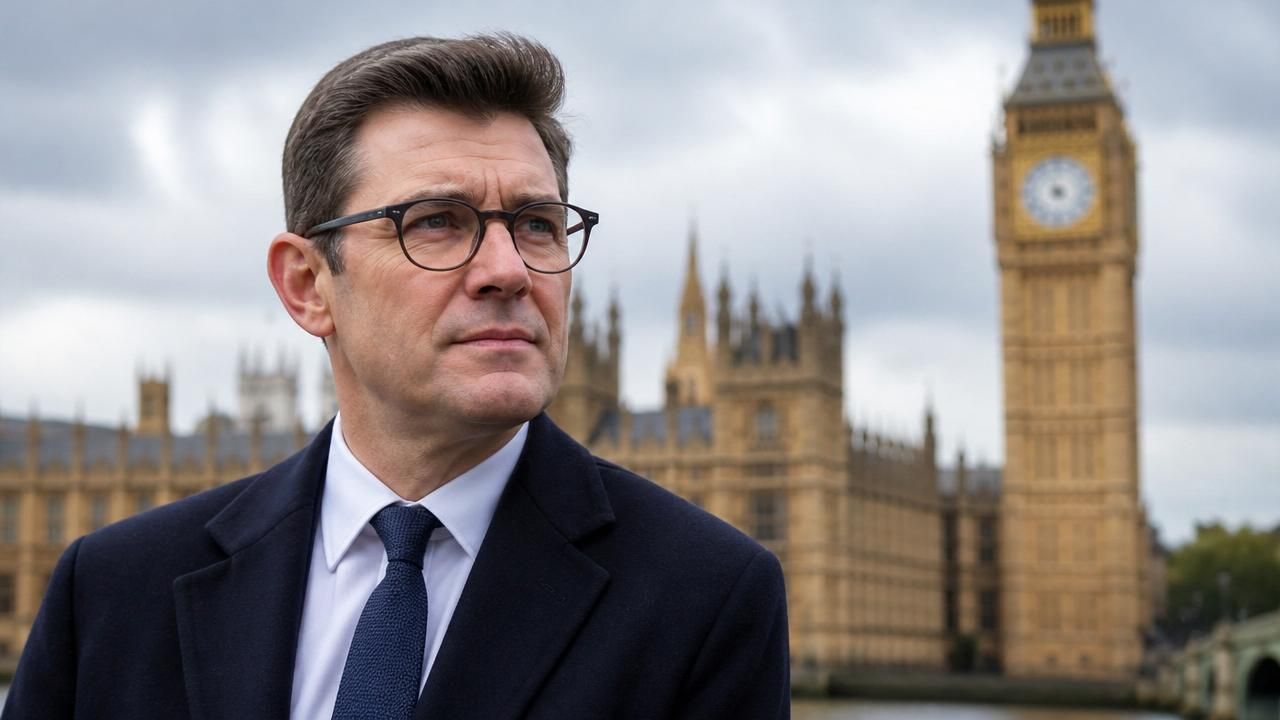
Andy Burnham, the former mayor of Manchester, is set to become the United Kingdom's next prime minister on Monday, succeeding Keir Starmer after a swift ascent that has captivated British politics. Burnham's rise from a northern English city hall to 10 Downing Street marks a significant shift in Labour's leadership, with the new leader promising a departure from recent infighting and a renewed focus on the cost-of-living crisis and social justice.
Who Is Andy Burnham?
Burnham, 55, has long been a figure in British politics, serving as an MP for Leigh and later Manchester before becoming the city's mayor in 2017. His political identity has been shaped by England's north-south divide, as highlighted by NPR, and he has often positioned himself as a champion of the working class. The New York Times describes him as the 'King of the North,' a moniker earned through his advocacy for northern England's interests, particularly in transport and healthcare.
His path to the premiership was not straightforward. After losing the Labour leadership contest to Jeremy Corbyn in 2015, Burnham rebuilt his career as mayor, winning re-election by large margins. His pragmatic, centrist approach has drawn both praise and criticism. The Guardian's John Harris, who has followed Burnham for two decades, notes that his blend of 'emotional intelligence and political savvy' offers hope for British politics.
From Mayor to Prime Minister
Burnham's transition from mayor to prime minister was triggered by Starmer's resignation following a series of cabinet resignations and electoral defeats, as reported by Wikinews. The Labour Party swiftly nominated Burnham as leader, a move confirmed by multiple sources including Reuters and NBC News. In his acceptance speech, Burnham promised to end Labour infighting and unite the party, according to The Guardian.
His first speech as prime minister is expected to emphasize 'stable and responsible politics,' as previewed by Sky News. Burnham will pledge to give Britons 'more breathing room,' a phrase reported by BBC and MSN, signaling a focus on easing the cost-of-living pressures that have dominated public concern.
Policy Priorities and Controversies
Burnham's early policy moves have already generated headlines. He has decided to drop a controversial digital ID scheme, a decision confirmed by Reuters, MSN, and WTVB. Allies say the move is to prioritize cost-of-living issues over what they view as a low-priority project. This decision has been welcomed by civil liberties groups but criticized by those who see digital IDs as a security necessity.
On energy, there is conflicting information. Donald Trump claimed that Burnham would 'open the North Sea' for drilling, as reported by MSN and the Washington Times. However, the Financial Times reports that Burnham plans to maintain a ban on new North Sea exploration licences, aligning with Labour's climate commitments. The BBC has questioned whether Burnham is promising a new dawn for North Sea oil and gas, noting ambiguity in his statements. This tension reflects the broader challenge of balancing climate goals with energy security and economic growth.
Burnham has also announced plans to increase state pensions by £2,100, according to MSN, and is reportedly considering new rules for pubs. These populist measures are seen as part of his effort to connect with working-class voters.
Challenges Ahead
The new prime minister faces formidable challenges. The BBC lists five headaches: a sluggish economy, a divided party, strained public services, Brexit fallout, and the cost-of-living crisis. The New York Times highlights the economic growth problem, noting that Britain has struggled with low productivity and investment.
Conservative leader Kemi Badenoch has warned that Burnham is in for a 'rude awakening,' as reported by the BBC, suggesting that his promises may be difficult to deliver. Meanwhile, Burnham's deputy, Lucy Powell, told the BBC that the new government will be 'bolder but stick to the manifesto,' indicating a cautious but ambitious approach.
International Reactions and Comparisons
International media have taken note of Burnham's rise. CNN asks whether he can buck the trend of short-lived UK leaders, noting he will be the seventh prime minister in a decade. Bloomberg echoes this sentiment, highlighting the instability of British politics. In the US, Fox News and The Hill have covered his ascent, while Le Monde emphasizes his focus on social justice.
Trump's comments on North Sea drilling have added a layer of international intrigue, with the former US president seemingly endorsing Burnham's energy policy. However, Burnham's team has not confirmed any shift towards increased drilling.
What's Next?
Burnham will address the nation for the first time as prime minister on Monday, with a speech expected to strike a tone of unity and realism. The Guardian reports he will say the UK must be 'honest about its challenges.' His first week will involve cabinet appointments and meetings with key allies, including his 'bezzie mate' Steve Rotheram, the mayor of Liverpool, as noted by The Guardian.
As Burnham prepares to enter Number 10, the country watches with a mix of hope and skepticism. His ability to deliver on his promises while navigating a complex political landscape will determine whether he can provide the 'breathing room' he has promised.