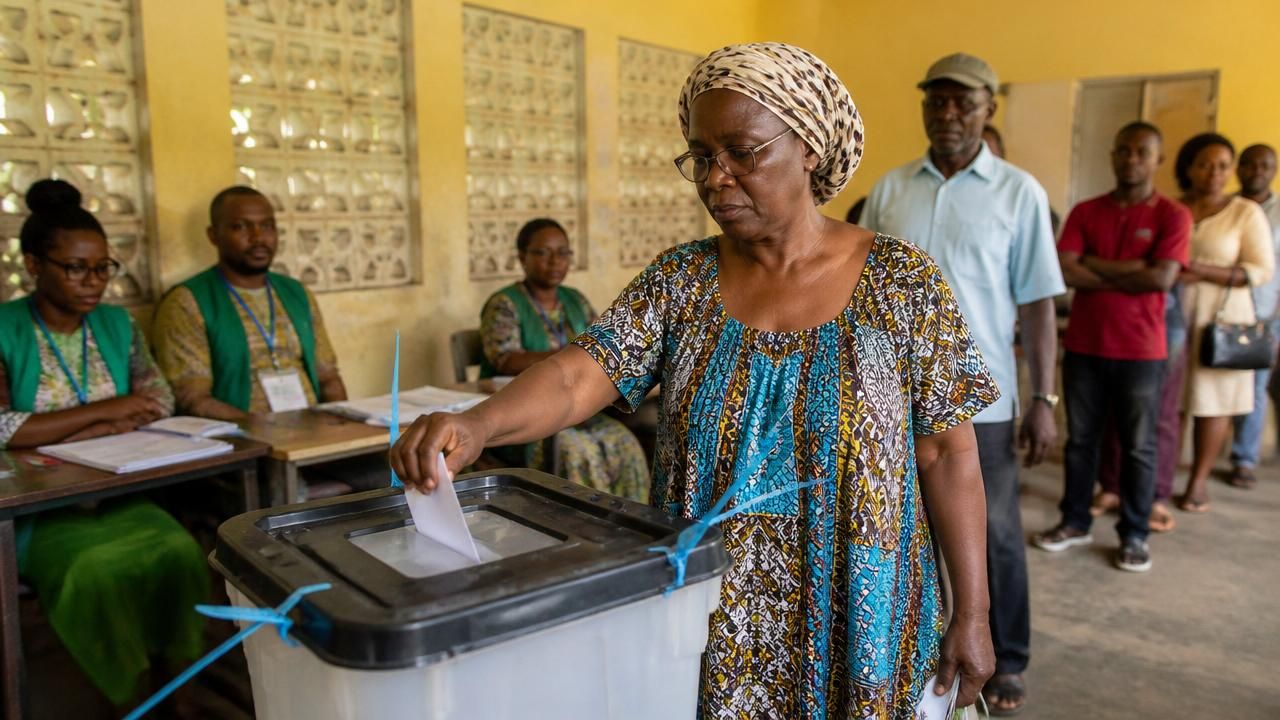
Voters in São Tomé and Príncipe headed to the polls on Sunday for a tense presidential election, with incumbent Carlos Vila Nova seeking to secure a second term as an independent candidate against his former party rival. The election in one of Africa’s least populous countries is being closely watched as a test of the island nation’s democratic credentials and its delicate balancing act between global powers.
Key Details of the Election
According to the National Election Commission, about 142,000 people are registered to vote, approximately 15% of whom live in the diaspora. The tiny archipelago, with a population of around 220,000, has a history of peaceful transitions of power since adopting multiparty democracy in 1990. This election is particularly significant as Vila Nova, who previously served as a member of the Independent Democratic Action (ADI) party, now runs as an independent after falling out with his former colleagues.
The Candidates and Their Platforms
President Carlos Vila Nova, 65, is seeking a second five-year term. He was first elected in 2021 with the support of ADI but later left the party amid internal disputes. His main challenger is Elsa Pinto, a former ADI member and current legislator, who represents the party. The race has been marked by sharp personal attacks and policy disagreements, particularly over economic management and foreign relations.
Vila Nova has campaigned on a platform of stability and continuity, emphasizing his experience in navigating the country through the COVID-19 pandemic and economic challenges. Pinto, meanwhile, has criticized the incumbent's handling of corruption and promised greater transparency and social spending.
The Global Power Balancing Act
Beyond domestic issues, the election has drawn international attention due to São Tomé and Príncipe's strategic location in the Gulf of Guinea. The country has increasingly become a focal point for competition between global powers, including the United States, China, and Russia. The island nation has sought to maintain a neutral stance, leveraging its position to attract investment and aid from multiple partners.
"São Tomé and Príncipe is a small country, but it has big ambitions. It wants to be a friend to all and a satellite to none," said a local political analyst, speaking on condition of anonymity.
China has invested heavily in infrastructure projects, including a deep-water port and a fiber-optic cable, while the United States has provided security assistance and training. Russia has also increased its diplomatic presence. The election outcome could influence the country's foreign policy direction, with both candidates pledging to maintain a balanced approach but differing on emphasis.
Historical Context and Democratic Credentials
Since gaining independence from Portugal in 1975, São Tomé and Príncipe has experienced a mix of single-party rule and democratic governance. The 1990 constitution introduced multiparty elections, and the country has since held peaceful transfers of power, most recently in 2016. However, political tensions have risen in recent years, with allegations of corruption and electoral irregularities.
The current election has been marred by logistical challenges, including a shortage of ballot papers in some areas and reports of voter intimidation. International observers from the African Union and the Community of Portuguese Language Countries are monitoring the process. The National Election Commission has urged calm and assured the public that all votes will be counted fairly.
What’s at Stake?
The election is seen as a crucial test for the country's democratic institutions. A credible and peaceful vote would reinforce São Tomé and Príncipe's reputation as a stable democracy in a region often plagued by coups and unrest. Conversely, a disputed result could trigger political instability and undermine investor confidence.
Economically, the country faces significant challenges, including high unemployment, a reliance on cocoa exports, and vulnerability to climate change. Both candidates have promised to diversify the economy, improve infrastructure, and boost tourism, but have offered few concrete proposals.
Differing Perspectives from Sources
The Guardian emphasized the democratic significance of the election, highlighting the country's history of peaceful transitions and the high stakes for its political future. MSN's coverage focused on the geopolitical dimension, noting São Tomé and Príncipe's careful balancing act between major powers. Other outlets provided more granular details on the candidates and the electoral process, including the diaspora vote.
As voting continues and results are tallied, the world watches to see whether this small island nation can once again serve as a beacon of democracy in Africa.