In a groundbreaking discovery, NASA scientists have determined that the near-Earth object previously classified as asteroid 1998 SH2 is actually a comet. The finding, published in Nature Astronomy, emerged after the object passed within 2 million miles of Earth on August 28, 2025. Researchers at NASA’s Jet Propulsion Laboratory (JPL) used the Deep Space Network’s planetary radar system and other observatories to track its motion, revealing an irregular orbit characteristic of cometary activity.
A Dual Identity Unveiled
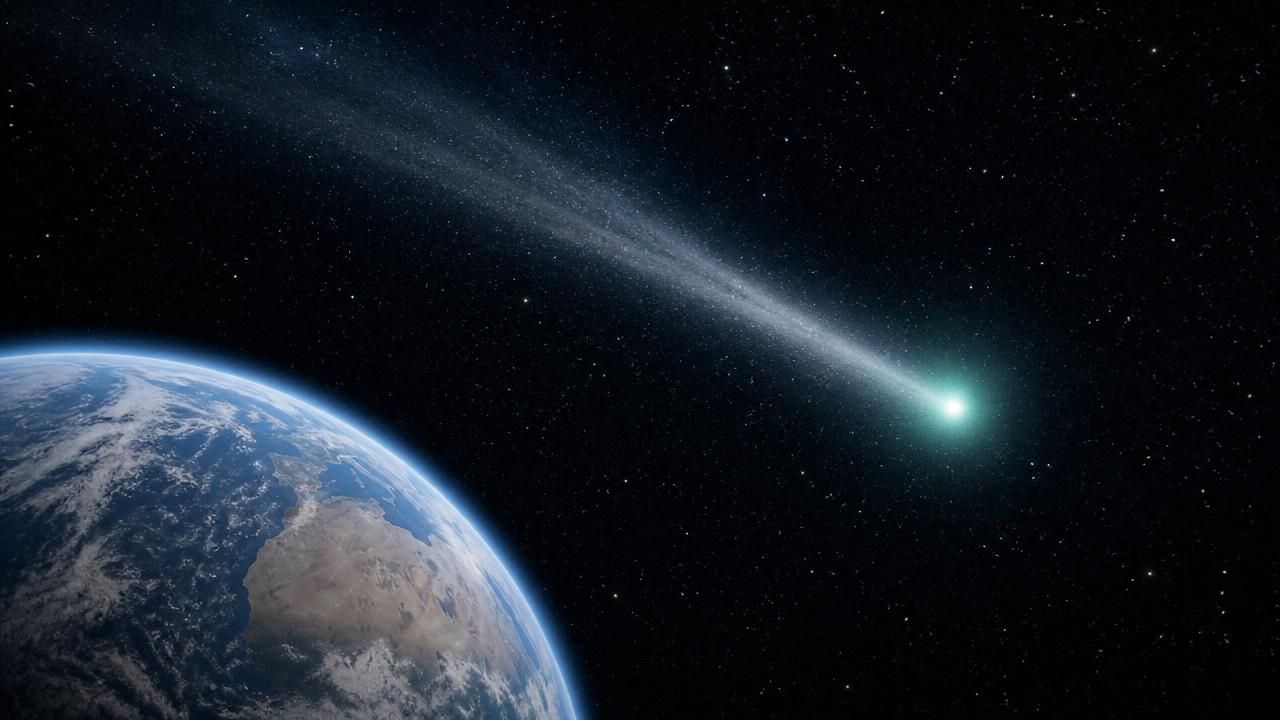
1998 SH2, which orbits the Sun every 4½ years, had long been considered an asteroid due to the absence of obvious comet-like features in earlier images. However, precise tracking showed perturbations in its path that could not be explained solely by gravitational forces from the Sun and planets. This anomaly led scientists to re-examine the object, uncovering a faint tail and coma—the gas and dust envelope typical of comets.
“This object has a dual personality,” said a JPL scientist involved in the study. “Past images didn’t reveal obvious comet-like activity, but its motion recently proved to be irregular like that of a comet.”
The discovery adds 1998 SH2 to a growing list of “dark comets”—objects that appear asteroidal but exhibit cometary behavior. Unlike traditional comets, which are easily spotted by their bright tails, dark comets are faint and often go unnoticed until their orbits betray them.
Implications for Planetary Science
This reclassification has significant implications for understanding the solar system’s composition and the origins of Earth’s water. Comets are thought to have delivered water to early Earth, and studying objects like 1998 SH2 provides clues about this process. Moreover, the irregular orbit of such objects poses challenges for planetary defense, as their unpredictable paths make them harder to track.
Context and History
1998 SH2 was first discovered over two decades ago, but its true nature remained hidden until now. The object’s close approach in 2025 provided a rare opportunity for detailed observation. NASA’s next-generation Near-Earth Object Surveyor, currently under development, aims to detect more such objects, enhancing our ability to monitor potential threats.
This discovery comes amid a series of NASA studies on near-Earth objects, including the successful DART mission that altered an asteroid’s orbit, and ongoing research into dark comets. The agency’s efforts underscore the importance of understanding these celestial wanderers, both for scientific knowledge and planetary safety.
What’s Next?
The research team plans to continue monitoring 1998 SH2 during its next apparition. Future observations using the James Webb Space Telescope could provide deeper insights into its composition. Meanwhile, the discovery highlights the need for advanced detection systems to catch such dual-nature objects before they surprise us.
As one NASA expert put it, “Every near-Earth object has a story to tell. Sometimes, they’re not what they seem.”