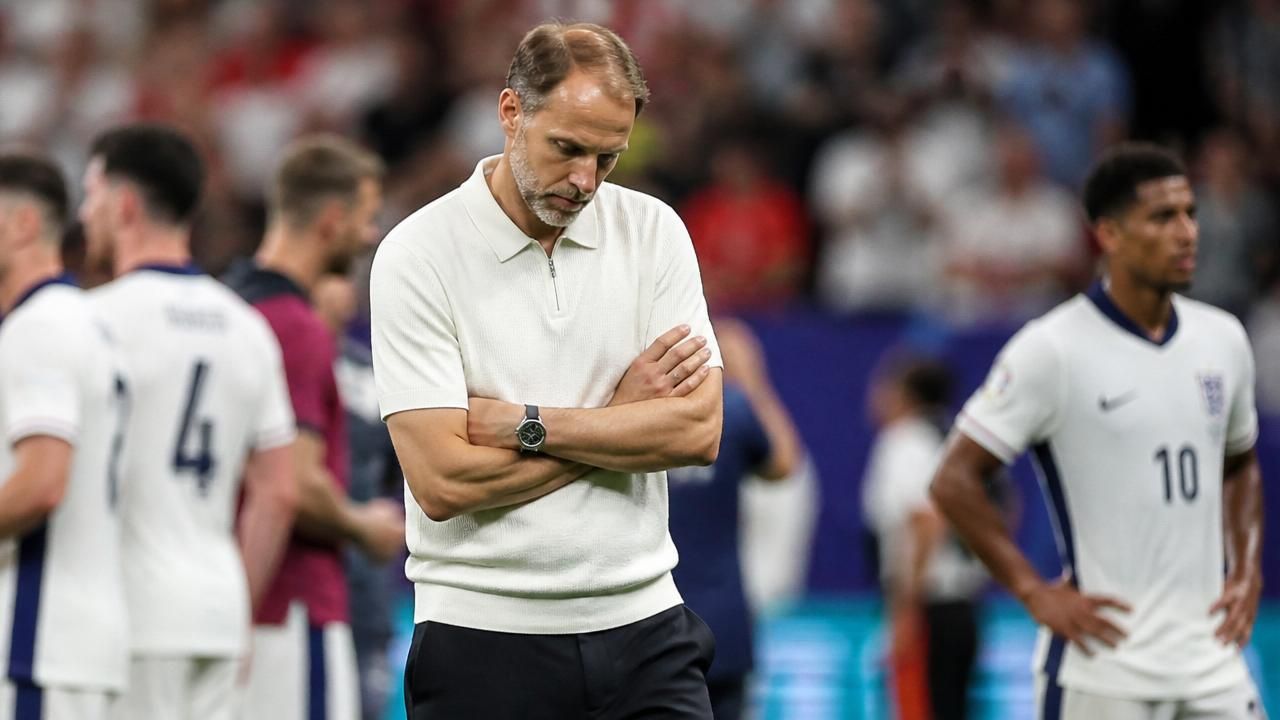
Thomas Tuchel was appointed England manager with a clear mandate: to shed the cautious, pragmatic style of his predecessor Gareth Southgate and instill a swagger that would finally deliver a major trophy. Yet after a heartbreaking World Cup semi-final defeat to Argentina, a chorus of critics—including former players and pundits—are asking a pointed question: has anything really changed?
The 2-1 loss in the 2026 World Cup semi-final bore striking similarities to England's exits under Southgate. Tuchel's decision to introduce defensive substitutions with the score level, particularly the introduction of Ezri Konsa, drew sharp rebukes. Former England goalkeeper Joe Hart was among the most vocal, telling The Sun that Tuchel 'doesn't believe in the team' and that 'Southgate will be sitting at home watching this thinking, I know that feeling.' Hart, a Shrewsbury native, added, 'It’s the same old story—fear takes over.'
A Familiar Pattern of Caution
The match against Argentina followed a script England fans know all too well. After taking an early lead through Jude Bellingham, England retreated, allowing Argentina to equalise before half-time. In the second half, Tuchel replaced an attacking midfielder with defender Ezri Konsa, a move that invited pressure and ultimately led to the winning goal.
Wayne Rooney, writing for The Times, slammed the substitution as 'a sign of fear' and argued that 'the players would have lost belief.' Rooney, England's all-time leading scorer, said, 'When you’re playing against a top team, you cannot show weakness. Tuchel’s changes told Argentina we were scared.'
BBC Sport's chief football writer Phil McNulty called the defeat 'the most painful since 1966,' noting that 'the pattern of a promising tournament ending in a whimper has become a grim tradition.' MSN Sports ran a comparison of 'defensive subs in England exits,' highlighting that Tuchel's moves mirrored Southgate's infamous decision to bring on defensive players in the Euro 2020 final.
Tuchel's Defenders Point to Progress
Not everyone is ready to write off Tuchel's project. Earlier in the tournament, England had been 'fun to watch against Croatia,' according to BBC Sport, and the manager had successfully integrated young talents while restoring confidence after Southgate's resignation following Euro 2024. Tuchel himself had promised a more attacking philosophy, stating he wanted the team to play with 'swagger.'
In the group stages, England showed flashes of that ambition. A 3-0 win over Senegal was hailed as 'a statement performance,' and Tuchel's tactical tweaks—such as pushing full-backs higher and encouraging more direct passing—were praised. 'He's made England fun again,' wrote Yahoo Sports, contrasting Tuchel's approach with Southgate's 'bleeding-heart advocacy' and cautious game management.
But the semi-final exposed lingering vulnerabilities. Sky Sports' analysis noted how 'England unravelled after the Konsa substitution,' with the team losing shape and failing to retain possession. 'Familiar failings robbed the Three Lions of a World Cup final place,' the report concluded.
Mixed Messages from the Camp
Reports from within the England camp suggest tension. News.com.au detailed 'change room revelations' of players questioning Tuchel's tactics, while Football365 claimed the manager may be 'starting to regret' his earlier criticism of Southgate's style. Tuchel had publicly contrasted his approach with Southgate's, saying he wanted a more proactive team. After the loss, he expressed 'no regrets' about his decisions, per Athlon Sports, a stance that has only fueled the backlash.
Former England striker Gary Lineker described Tuchel's tactics as 'astonishing,' while The Sun declared that 'Tuchel wasn't appointed to be a better version of Southgate—now England stars know the German is no messiah.'
Historical Context and the Road Ahead
England's wait for a major men's trophy since 1966 continues. Southgate's tenure, which ended after Euro 2024, was defined by near-misses: a World Cup semi-final in 2018, a European Championship final in 2021, and a quarter-final exit in 2022. Tuchel was brought in to break the cycle, but the Argentina defeat has raised uncomfortable questions.
Phil McNulty wrote that 'the loss to Argentina is the most painful since 1966,' not just because of the result, but because of the manner—a familiar retreat into defensive shell. 'It’s as if the players are conditioned to fear the big moment,' he added.
Yet there are reasons for optimism. The squad is young, with Bellingham, Cole Palmer, and Phil Foden all under 25. Tuchel has shown a willingness to make bold selections, dropping underperforming stars and giving chances to emerging talents. The question is whether he can learn from this failure and adjust his approach for the next challenge—the 2028 European Championship.
Conclusion: Evolution or Stagnation?
The debate over Tuchel vs. Southgate may be premature. One tournament defeat does not define a manager, and England's performances earlier in the World Cup suggested genuine progress. But the semi-final collapse has reignited a painful national conversation about the team's mentality under pressure.
'Southgate will be watching this and thinking, I know that feeling,' said Joe Hart. 'Nothing has changed.'
Perhaps the most damning verdict came from Minute Mirror, which asked simply: 'From Southgate to Tuchel, has anything really changed for England?' The answer, for now, remains uncertain. What is clear is that the next two years will be crucial for Tuchel to prove he is not just a continuation of the past, but a genuine departure—and a winning one.