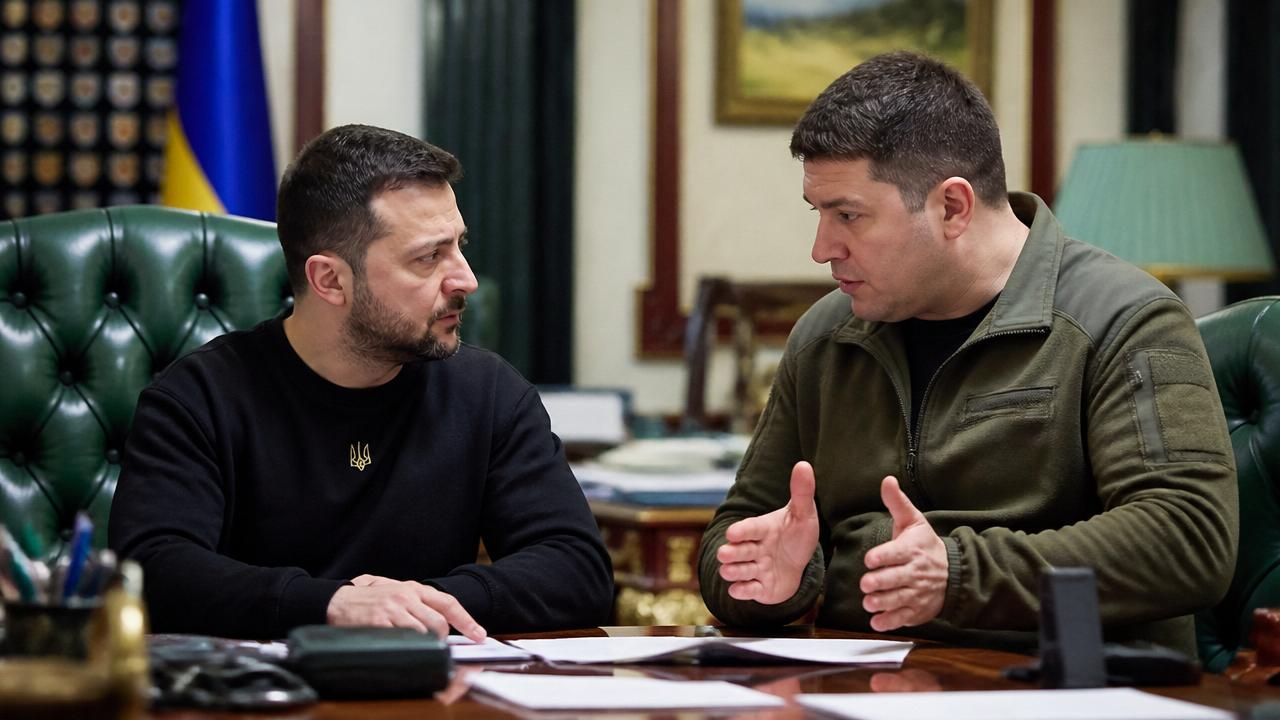
In a dramatic move that has sent shockwaves through Ukraine and beyond, President Volodymyr Zelenskyy has dismissed Defense Minister Oleksii Fedorov, a popular figure credited with revolutionizing the battlefield through the use of drones and other technology. The firing, part of a broader government reshuffle described by some as a 'big reboot,' has sparked rare public protests in Kyiv, with demonstrators decrying the loss of what many consider the country's most successful defense minister.
Who, What, When, Where, Why?
The dismissal was announced on [date], with Zelenskyy citing the need for 'new approaches' and a 'fresh start' as Ukraine continues to defend itself against Russia's invasion. Fedorov, who had served as defense minister since [year], was widely praised for his tech-savvy leadership, which included the rapid deployment of drones, electronic warfare systems, and digital innovations that helped Ukraine gain an edge on the battlefield. His ouster comes as part of a larger government shake-up that has seen several other top officials replaced, including the head of the Security Service and the prosecutor general.
According to sources familiar with the decision, Zelenskyy aims to bolster his negotiation team and streamline the energy sector, but critics argue the reshuffle weakens the defense establishment at a critical time. The president's office has framed the move as necessary to combat corruption and improve efficiency, but many Ukrainians see it as a political maneuver that undermines wartime unity.
Protests Erupt in Kyiv
Within hours of the announcement, hundreds of protesters gathered outside the presidential administration building in Kyiv, waving signs and chanting slogans in support of Fedorov. Reports from the scene describe a tense but largely peaceful demonstration, with some protesters holding banners that read 'Save Our Defense' and 'No to Political Games.'
'He was the best minister we've had. He understood modern warfare and made our army stronger. Why would they fire him now?' asked one protester, a 34-year-old IT specialist who wished to remain anonymous.
The protests, while not massive by Ukrainian standards, are significant given the wartime restrictions on public gatherings and the general deference to the government during the conflict. Analysts suggest the outpouring of support for Fedorov reflects deep public anxiety about the direction of the war and the government's handling of the defense portfolio.
A Tech-Savvy Leader
Fedorov, a former tech entrepreneur with no prior military experience, was appointed defense minister in [year] with a mandate to modernize Ukraine's armed forces. He quickly made a name for himself by championing the use of drones for reconnaissance and strike missions, as well as investing in cyber defenses and digital communications. Under his leadership, Ukraine's drone fleet expanded dramatically, and the country became a global leader in drone warfare, often turning the tables on Russia's larger and more traditional military.
His approach was not without controversy. Some traditionalists in the military hierarchy resisted the rapid adoption of new technologies, and there were occasional reports of friction with the general staff. However, Fedorov enjoyed broad support from Western allies and from Ukraine's vibrant tech sector, which saw him as a symbol of the country's innovative spirit. 'He brought a Silicon Valley mindset to the battlefield,' said [expert name], a defense analyst at [think tank]. 'His firing is a loss for Ukraine's war effort.'
The 'Big Reboot'
The dismissal of Fedorov is part of what Ukrainian media has dubbed Zelenskyy's 'big reboot' — the largest wartime reshuffle since the invasion began. In addition to the defense minister, several other key officials have been replaced, including the heads of the Security Service (SBU) and the State Investigation Bureau. The changes are reportedly aimed at rooting out corruption and improving coordination among security agencies, but they have also raised concerns about political infighting and the concentration of power.
According to Euromaidan Press, the reshuffle is designed to 'bolster the negotiation team and energy sector,' suggesting that Zelenskyy may be preparing for a new phase in the conflict, possibly including peace talks. However, critics argue that firing a popular and effective defense minister sends the wrong signal to both the military and international partners. 'This is a risky move,' said [expert name], a political analyst at [university]. 'It could undermine morale and create uncertainty in the chain of command.'
Differing Perspectives
Western media outlets have offered varying interpretations of the events. NPR and Bloomberg emphasized Fedorov's role in drone innovation and the protests that followed his dismissal, while The Economist and Euractiv focused on the broader political context and the challenges facing Zelenskyy's government. Some sources, like Michael McFaul's Substack, framed the reshuffle as a sign of Ukraine's strength and adaptability, arguing that 'Ukraine is winning' and that the changes are a normal part of wartime governance. Others, such as AOL and Iowa Public Radio, highlighted the public backlash and the sense of loss among Ukrainians.
The protests themselves have been a focal point for many outlets, with Bloomberg running a separate story on the demonstrations and Euromaidan Press providing detailed analysis of the reshuffle's implications. The varying tones reflect broader debates about the wisdom of Zelenskyy's decision and the state of Ukraine's war effort.
Historical Context and Implications
This is not the first time Zelenskyy has carried out a major government reshuffle during wartime. In [previous year], he dismissed several senior officials amid corruption scandals, but the current changes are more sweeping and come at a critical juncture in the conflict. Ukraine is facing renewed Russian offensives in the east and south, and there are growing concerns about the sustainability of Western military aid. The reshuffle could be seen as an attempt to reinvigorate the government and address these challenges, but it also risks creating instability.
For Fedorov, the future is uncertain. He has not commented publicly on his dismissal, but sources say he may return to the private sector or take on a role in Ukraine's tech industry. His legacy, however, is secure: he is widely credited with transforming Ukraine's military into a modern, tech-enabled force that has defied expectations and held its own against a much larger adversary.
As Ukraine enters what could be a decisive phase of the war, the firing of its most innovative defense minister raises questions about the country's strategic direction. Will the reshuffle strengthen Zelenskyy's hand, or will it prove to be a misstep that undermines the war effort? Only time will tell, but for now, the streets of Kyiv bear witness to a nation grappling with change in the midst of conflict.
Key Takeaways
- President Zelenskyy fired Defense Minister Oleksii Fedorov, known for drone innovation and tech modernization.
- The dismissal is part of a larger government reshuffle, dubbed the 'big reboot,' affecting multiple top officials.
- Protests erupted in Kyiv, with demonstrators expressing support for Fedorov and criticizing the timing of the move.
- Fedorov's leadership was credited with turning the tide in the war through the use of drones and digital warfare.
- The reshuffle aims to combat corruption and prepare for potential peace talks, but critics warn it could harm morale and military effectiveness.