For decades, humans have been labeled the planet's 'super-predator'—a species whose hunting prowess and ecological impact dwarf those of any other. But a sweeping new analysis of three decades of research, reported by Science Daily and echoed by outlets like Discover Wildlife and BBC Science Focus, reveals a more nuanced reality: wild animals do not fear all humans equally. The study, which synthesized data from dozens of field experiments, found that animals become significantly more alert and reduce feeding time when confronted by hunters or fishers—lethal threats—but show far weaker, less predictable reactions to tourists, researchers, and other non-lethal humans.
The Science of Fear: How Prey Assess Risk
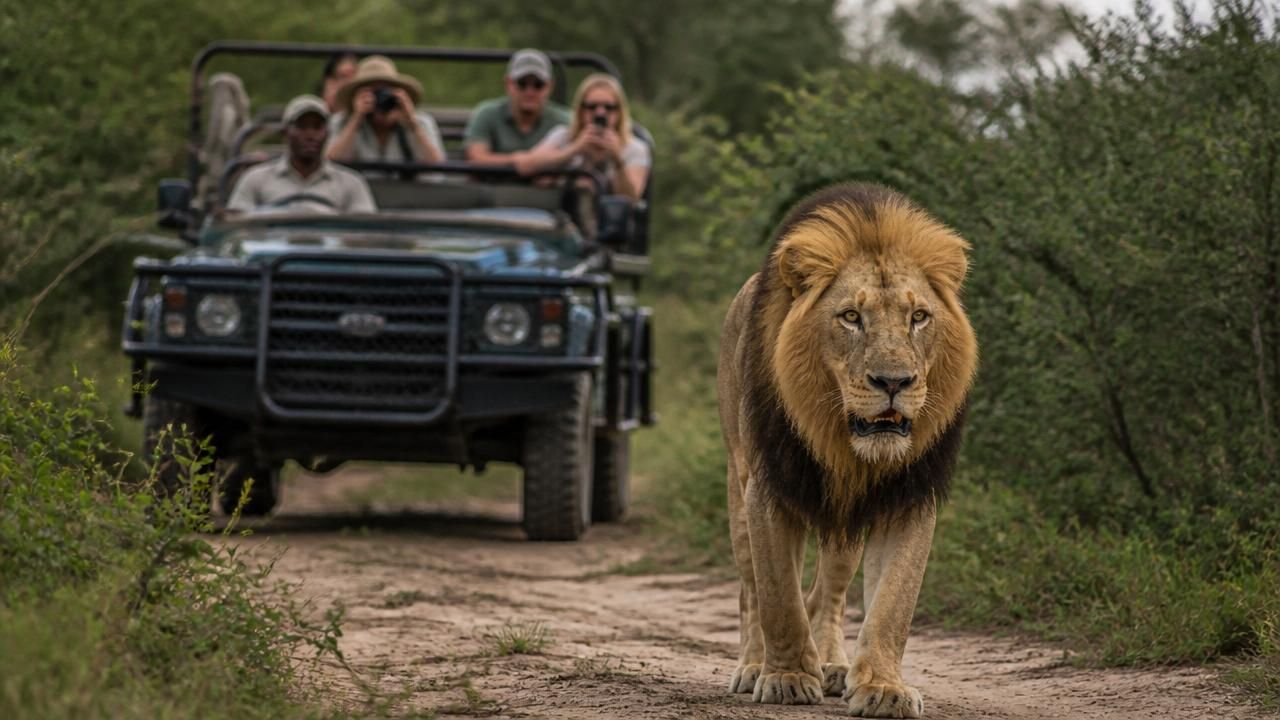
The research, highlighted by etvbharat.com and Treehugger, underscores that prey species have evolved to distinguish between different human behaviors. 'Animals are remarkably adept at reading human intent,' the lead author told Science Daily. 'A person with a fishing rod or a rifle triggers a flight response that is orders of magnitude stronger than a person with a camera or a clipboard.' This selective fear has profound implications for conservation, ecotourism, and our understanding of human-wildlife conflict. The study challenges the monolithic 'super-predator' narrative, suggesting that humans are not a single, uniform threat but a spectrum of risks that animals navigate daily.
Historical Context: From Megalodon to Modern Hunters
The term 'super-predator' has long been applied to extinct giants like the megalodon—a prehistoric shark that, according to News UCR and New Scientist, was 'nothing like a giant great white shark' but a sleeker, more formidable apex predator. Discover Wildlife and The Wire Science have covered how megalodon's true form, with its elongated body and powerful jaws, made it a terror of ancient seas. Similarly, New Scientist reported on a fossil of an 'ultimate predator' unearthed in the Arctic, and a sabre-toothed 'bear' that terrorised early humans. These ancient predators, with their crushing bites and ruthless hunting strategies, set a high bar for lethality. Yet, modern humans have surpassed them all in ecological impact, as noted by UNSW and The New York Times, which explored the ethical dimensions of our meat consumption and our role as 'super predators.'
Differing Perspectives: The 'Super-Predator' Debate
Not all sources agree on the label. While Discover Wildlife provides 'Proof that wildlife fear 'super predator' humans more than lions,' citing experiments where animals fled from human voices faster than lion growls, Medium and Ancient Origins take a darker view, arguing that humans are indeed the ultimate super-predator, responsible for megafaunal extinctions and ongoing biodiversity loss. Science Focus lists humans among the world's most dangerous animals, while A-Z Animals counters with a list of 'most friendly wild animals,' reminding us that not all wildlife sees us as a threat. The new study bridges these views: yes, humans are uniquely dangerous, but our impact varies dramatically based on context. A hiker in a national park is not the same as a poacher in the bush.
Implications for Conservation and Ecotourism
The findings have immediate practical applications. Conservationists can use this knowledge to design wildlife reserves that minimize human disturbance, while ecotourism operators can reduce stress on animals by emphasizing non-threatening behaviors. 'If we want animals to thrive, we need to understand how they perceive us,' the study's co-author told BBC.com. 'The same species might ignore a birdwatcher but panic at the sight of a hunter.' This selective fear also explains why some animals in heavily hunted areas become more wary, while those in protected zones habituate to human presence—a phenomenon documented by Inside Climate News in the context of climate change and extreme weather events affecting wildlife behavior.
Beyond Fear: The Broader Ecological Role of Humans
The study also touches on the concept of 'landscapes of fear,' a term used by ecologists to describe how predator presence alters prey behavior. Humans, as Treehugger and Discover Wildlife note, are apex predators that can trigger cascading effects throughout ecosystems. But unlike lions or sharks, our impact is mediated by culture, technology, and intent. UNSW and The New York Times delve into the ethical choices we make about hunting and eating meat, questioning whether we truly have a choice in our role as predators. Meanwhile, Hollywood Reporter and Bleeding Cool offer a pop-culture lens, reviewing the 'Predator' film franchise and a comic series titled 'Predator: Bloodshed #3,' which play on our fascination with the ultimate hunter.
The Verdict: A New Understanding of Human Predation
So, are humans the ultimate super-predator? The answer, according to this comprehensive synthesis, is both yes and no. Yes, in that we possess an unmatched ability to kill and alter ecosystems; no, in that animals do not perceive all humans as equally dangerous. The study, covered by Science Daily, etvbharat.com, and msn.com, marks a shift from a blanket label to a more nuanced understanding of human-wildlife dynamics. As Discover Wildlife aptly puts it, 'Wildlife fear humans, but they fear us selectively.' This insight not only reshapes our self-image but also offers a path forward for coexistence. By recognizing that our actions—not just our species—determine how animals react, we can mitigate our impact and foster a world where both humans and wildlife thrive.
Conclusion: Rethinking the Super-Predator
The 'super-predator' moniker has been a useful shorthand, but it oversimplifies a complex relationship. As this new research shows, humans are not a monolithic force of nature but a diverse array of actors, each with a different effect on the animal kingdom. From the sabre-toothed bears of prehistory to the hunters and hikers of today, the story of predation is one of adaptation and perception. The next time you step into the wild, remember: the animals are watching, and they are deciding just how much to fear you.