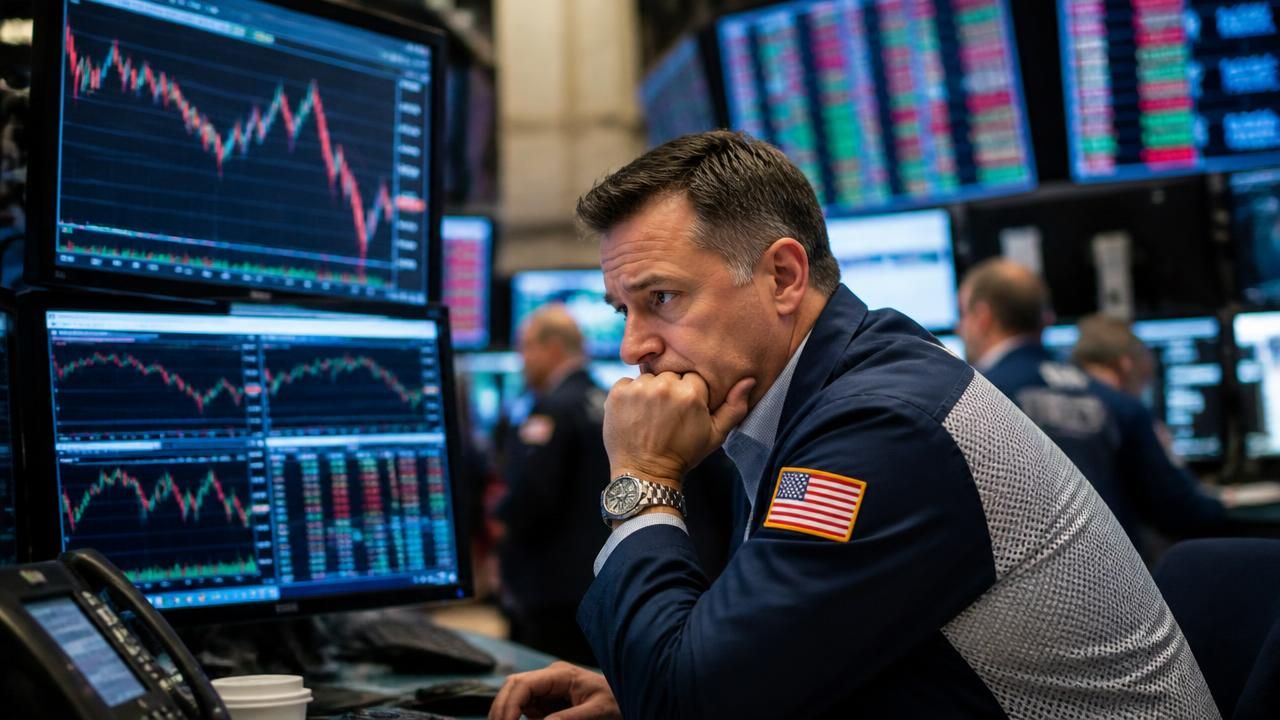
The carry trade—one of global markets' most reliable profit engines when volatility is low—is back under scrutiny. After a strong run earlier this year, investors who borrow in low-yielding currencies such as the yen, euro and dollar to buy higher-yielding assets are finding the strategy harder to navigate, according to Bloomberg Markets. The problem is not that carry has stopped working. It is that the market conditions that make it work—calm volatility, stable rate differentials and predictable risk appetite—are becoming less dependable.
That shift is visible across several fronts. A NewsBytes headline warns that Wall Street carry trade risk is growing amid AI volatility. A Seeking Alpha analysis examines SVOL, the Simplify Volatility Premium ETF, as a kind of carry trade of volatility that few investors understand. And in a CNBC interview cited by Seeking Alpha, strategist Michael Gayed argues that an oil shock could trigger a yen carry trade unwind and spark broader volatility. Meanwhile, MSN frames the yen unwind with a pointed caveat: 'The Yen Carry Trade Is Unwinding - But This Isn't 2008.'
How carry works—and why volatility bites
In its classic form, the carry trade exploits interest-rate differentials. An investor borrows in a currency with low funding costs—typically the Japanese yen, but also the euro or dollar—and invests in assets with higher yields, such as emerging-market debt, higher-yielding currencies, credit or equities. The trade earns the spread, or carry, as long as exchange rates and funding markets remain stable. Leverage can magnify returns, but it also magnifies losses when volatility rises.
Bloomberg's Garfield Reynolds notes that the strategy delivered strong returns earlier in the year but is now becoming harder to navigate. The reason is mechanical: carry trades are short volatility by design. A sudden jump in market turbulence can force investors to cut positions, repay funding currencies and reduce risk. That, in turn, can push funding currencies higher—especially the yen—creating a feedback loop that hurts remaining carry positions. Thin spreads that looked attractive in calm markets can disappear in a single session.
The yen unwind: contained, not irrelevant
The yen carry trade is the most closely watched version of the strategy because Japan's long period of low rates made the yen a global funding currency. When Japanese yields rise or the yen strengthens, the trade becomes less profitable and more dangerous. MSN's framing—that the yen carry trade is unwinding but this is not 2008—captures the central debate. On one side, an unwind can be self-reinforcing: leveraged positions are liquidated, volatility spikes, and risk assets sell off. On the other, today's unwind is taking place against a different backdrop from the global financial crisis, with different levels of bank leverage, more central-bank communication and, so far, less evidence of systemic funding stress.
That does not make it harmless. Crowded trades can amplify moves even without a banking crisis. If enough investors are funding in yen and holding similar risk assets, the exit can be disorderly. The key question is whether the unwind remains an orderly repricing or turns into a broader deleveraging event.
AI volatility and the new risk channel
NewsBytes' warning about AI volatility adds a contemporary twist. AI-related stocks have become a dominant force in global equity markets, and sharp swings in their valuations can transmit quickly into index-level volatility. For carry traders, that matters because equity volatility is often correlated with currency volatility and risk appetite. A selloff in AI leaders can raise margin calls, reduce risk budgets and force funds to unwind carry positions unrelated to technology.
The AI angle also shows how the carry trade has evolved. It is no longer just about borrowing yen to buy Mexican pesos or Australian dollars. It is embedded in multi-asset portfolios, volatility strategies and retail-accessible products. That makes the trade more transparent in some ways, but also more interconnected.
The volatility carry trade few see
Seeking Alpha's examination of SVOL highlights a less obvious form of carry: selling volatility to harvest a premium. The strategy can look attractive when markets are calm because it earns income from investors willing to pay for protection. But it is effectively a carry trade on volatility itself—collecting small premiums while exposed to rare, large losses when volatility spikes. If AI-driven equity swings or an oil shock lift the VIX sharply, volatility carry strategies can suffer quickly.
This is the hidden link between the headlines. Yen carry, volatility carry and broader risk carry all depend on stable markets. When one unwinds, it can raise volatility for the others. That is why a strategy that looks diversified on paper can behave like a single crowded trade under stress.
Oil shock as a catalyst
Gayed's warning, as reported by Seeking Alpha, puts oil at the center of the next potential unwind. An oil shock could feed inflation, complicate central-bank policy and force investors to reduce risk. In that environment, funding currencies such as the yen could strengthen as positions are closed, while volatility-sensitive carry strategies lose money. Oil is not the only possible catalyst—a surprise central-bank move, an AI earnings shock or a credit event could do the same—but it is a reminder that carry trades are exposed to macro shocks, not just currency moves.
What to watch
- Yen direction and Japanese rate expectations, which determine the cost of the world's most important funding currency.
- Oil prices and inflation expectations, which could force a risk-off shift.
- AI-linked equity volatility and its spillover into index-level VIX.
- Credit spreads and funding markets, the clearest signs that an unwind is becoming systemic.
- Flows into volatility-selling products such as SVOL, where retail and institutional risk can build quietly.
The consensus across these sources is not that carry is dead. It is that the trade has become more fragile. Bloomberg's focus is on navigation; NewsBytes' focus is on AI-era risk; Seeking Alpha's focus is on products and catalysts; MSN's focus is on historical proportion. Together they describe a market where carry still pays—but only for investors who respect how quickly volatility can turn a quiet spread into a crowded exit.