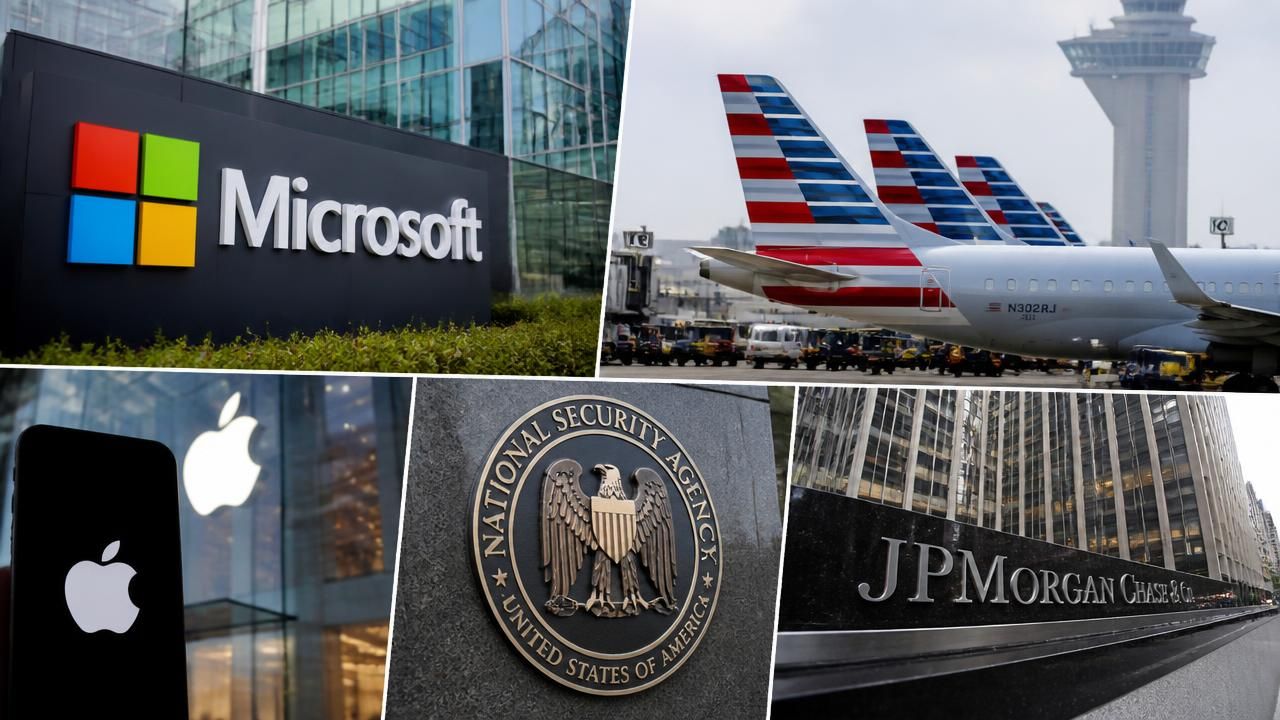
A cluster of high-profile technology failures struck some of the most critical institutions in the United States within a matter of days, affecting Microsoft, major airlines, the National Security Agency, JPMorgan and Apple. The incidents, reported across multiple outlets including Bloomberg, CNN (via El Caribe), MSN and Diario Bitcoin, have raised fresh questions about the fragility of the digital infrastructure that underpins everything from air travel to global banking.
The immediate question — whether the failures are connected — appears, for now, to have a cautious answer: probably not. But the timing has turned a routine run of IT headaches into something closer to a systemic warning.
What Happened
According to Bloomberg Markets, the span of incidents touched an unusually broad slice of the U.S. economy in a short window: a software giant, commercial aviation, the country's premier signals-intelligence agency, the largest bank by assets, and the world's most valuable consumer-technology company.
Separately, CNN reported a disruption to the internal network of a U.S. security agency — coverage echoed by El Caribe — pointing to an outage inside government systems rather than in the private sector. Meanwhile, MSN framed the episode around the most visible symptoms for ordinary consumers: banks, flights and services all faltering at once, with no immediately obvious explanation.
Diario Bitcoin added a distinct angle, reporting that banks may be pointing the finger at software patches — the security updates pushed out to close vulnerabilities — as the trigger for the failures.
The Common Thread: AI Outpaces the Patch Cycle
The most consequential thread running through the coverage comes from Bloomberg, which notes that while no evidence links the incidents, the episode carries a clear alert: artificial intelligence is now discovering software errors far faster than organizations are able to correct them.
"There is no evidence that they are connected, but there is a warning: AI discovers errors much faster than they can be corrected." — Bloomberg
That dynamic is reshaping the economics of cybersecurity. For years, the defender's advantage rested on the fact that finding a vulnerability was expensive and slow. Frontier AI models have collapsed that cost. Automated code analysis, fuzzing and model-driven bug hunting can now surface thousands of potential flaws in days — a volume that human review, quality assurance and change-management processes were never designed to absorb.
The result is a squeeze: patch faster, and the risk of a botched deployment rises (the concern Diario Bitcoin attributes to banks); patch slower, and unpatched vulnerabilities sit exposed for longer.
Why Banks Might Blame the Patches
Financial institutions sit at the sharp end of this trade-off. Regulated heavily and audited constantly, banks are compelled to remediate known vulnerabilities quickly — but every emergency update pushed into a sprawling estate of legacy mainframes, middleware and third-party vendors carries its own operational risk. When several critical services wobble at once, the patch pipeline is an obvious suspect. Diario Bitcoin's reporting suggests that is precisely where some in the sector are looking.
How Different Outlets Frame the Story
- Bloomberg treats the events as a systemic-technology story, downplaying any single culprit and emphasizing the AI-versus-patching asymmetry.
- CNN / El Caribe focus on the government dimension, reporting an internal network disruption at a U.S. security agency — a reminder that national-security infrastructure is not immune.
- MSN frames the story through consumer impact: failed payments, delayed flights and disrupted services.
- Diario Bitcoin foregrounds accountability, reporting that banks are blaming patching for the failures.
Read together, the accounts describe the same phenomenon from four vantage points: the vulnerability, the victim, the visible symptom and the accused cause.
Context: A Pattern, Not a Coincidence
The U.S. has been here before. The July 2024 CrowdStrike update that crashed millions of Windows machines and grounded flights worldwide demonstrated how a single faulty patch can cascade through airlines, hospitals and retailers in hours. More recently, regulators have pushed for faster disclosure of material cyber incidents, compressing the time companies have to investigate before they must speak publicly — often before root causes are known.
What makes this episode different is the underlying supply-and-demand shift in vulnerability discovery. If AI-generated bug reports are arriving faster than engineering teams can triage, test and deploy fixes, then the bottleneck has moved from finding flaws to managing them. Concentration risk compounds the problem: when a handful of cloud providers, security vendors and core banking platforms serve most of the market, a single bad update reaches millions of endpoints simultaneously.
What to Watch
Investigators have not attributed the incidents to malicious activity, and the absence of a proven link is itself significant — it suggests the danger may be structural rather than adversarial. Still, several questions remain open:
- Whether any of the failures share a common vendor, cloud region or update channel.
- Whether the NSA disruption involved classified or unclassified systems.
- How banks' patch-management practices will be scrutinized by regulators.
- Whether enterprises accelerate investment in AI-assisted remediation to match AI-assisted discovery.
The likeliest takeaway is uncomfortable: modern digital infrastructure may no longer need an attacker to fail. A cluster of unrelated bugs, patches and configuration changes — each individually survivable — can produce the appearance of a coordinated crisis. As Bloomberg's framing suggests, the question is no longer whether AI can find the next flaw, but whether anyone can fix it in time.