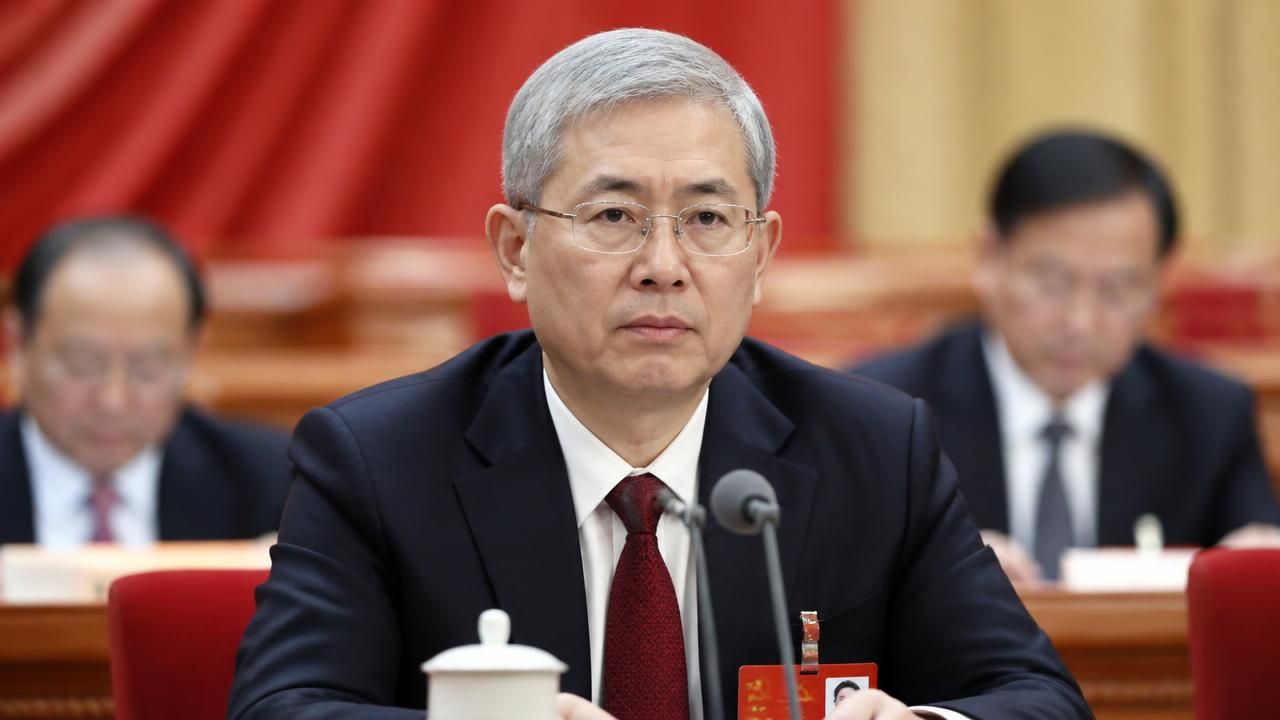
Chinese authorities have placed Chen Jining, the Communist Party secretary of Shanghai and a sitting member of the 24-person Politburo, under investigation, according to state-linked disclosures confirmed across multiple outlets. The move makes Chen — until now one of the country's most prominent regional leaders and the man overseeing its financial capital — the fourth Politburo-level figure to be targeted since 2025, a pace unmatched in recent memory.
NPR described the development as the latest senior official swept up in President Xi Jinping's long-running anti-corruption campaign, "which has shown no signs of letting up in scope or depth." Caixin Global, the Chinese financial news outlet, reported the probe under the restrained headline "Shanghai Party Chief Chen Jining Under Investigation," while international broadcasters including NTD framed it far more starkly: "Shanghai Party Chief Falls in Sweeping Political Purge."
Who Is Chen Jining?
Chen's profile makes the investigation especially consequential. A trained environmental engineer, he built an academic career at Tsinghua University — one of China's most elite institutions — before serving as its president. He moved into politics as a technocrat, rising to mayor of Beijing in 2017 and then to Shanghai's top party post in October 2022, arriving in the city just as it was emerging from a punishing two-month COVID-19 lockdown.
His elevation to the Politburo placed him among the party's roughly two dozen most powerful figures. For a Shanghai party secretary to be investigated is rare and symbolically loaded: the role has historically been a springboard to the Standing Committee, the apex of Chinese political power.
What We Know — and What We Don't
Details remain thin. Multiple outlets, including News.az, the Daily Times and MSN's aggregation of wire reporting, confirmed the existence of an investigation but disclosed no specifics on the allegations, the timeline, or whether Chen has been formally detained or merely placed under disciplinary review.
In China's system, such probes are conducted first by the Central Commission for Discipline Inspection, the party's internal anti-graft body, and only later move to the judicial system. Officials are typically placed under "disciplinary review and supervisory investigation" — a designation that can precede expulsion from the party, prosecution, or, in some cases, a quiet rehabilitation.
The Pattern: A Purge That Keeps Expanding
Several outlets emphasized the arithmetic. MSN's headline noted Chen is "the fourth Politburo member to fall since 2025," a framing echoed by AroundPrague, which called the probe evidence that "Shanghai Party Chief Chen Jining Is Fourth Politburo Member Targeted Since 2025." The Print and Firstpost cast the news explicitly as an extension of Xi's purge, with Firstpost publishing an explainer on "the significance" of the case.
"The Politburo member is the latest senior official targeted in President Xi Jinping's long-running anti-corruption campaign, which has shown no signs of letting up in scope or depth." — NPR News
The campaign dates to 2012, when Xi took office promising that officials would be disciplined for corruption at every level. Over more than a decade it has ensnared hundreds of thousands of cadres, from village administrators to former Politburo Standing Committee member Zhou Yongkang, once the country's top security official, who was sentenced to life in prison in 2015.
What is notable about the current phase is its seniority and its pace. Targeting four Politburo members within roughly a year suggests the campaign's focus has shifted upward — toward figures with independent power bases, technocratic credibility, or ties to rival factions.
Why Shanghai Matters
Shanghai is not a peripheral posting. It is China's commercial heart, home to the country's largest stock exchange and the headquarters of much of its foreign investment. Political instability at the top of the city's party apparatus carries economic weight, and analysts will be watching for jitters in mainland and Hong Kong markets and for signs of policy drift in the city's leadership.
The probe also undercuts a core message Beijing has sought to project: that China offers a predictable, technocratically-managed environment for investors. The removal or sidelining of a respected, internationally-known figure like Chen complicates that narrative.
Framing the Story, Differently
How the news is covered depends heavily on where the story is told. Caixin's coverage, like that of state media, uses the neutral language of disciplinary procedure. Western outlets — NPR, NTD, The Print, Firstpost — emphasize the political dimension, using words like "purge" and noting that no successor has been announced. Aggregators such as MSN and News.az have amplified the same wire copy to a global audience, ensuring the story travels far beyond Beijing's preferred framing.
Chinese officials have not publicly commented on the specific allegations, and it remains unclear when more details will emerge. What is clear is that the campaign — once presented as a temporary cleanup — has become a permanent feature of Chinese political life, and that no rank, however senior, appears to be off limits.