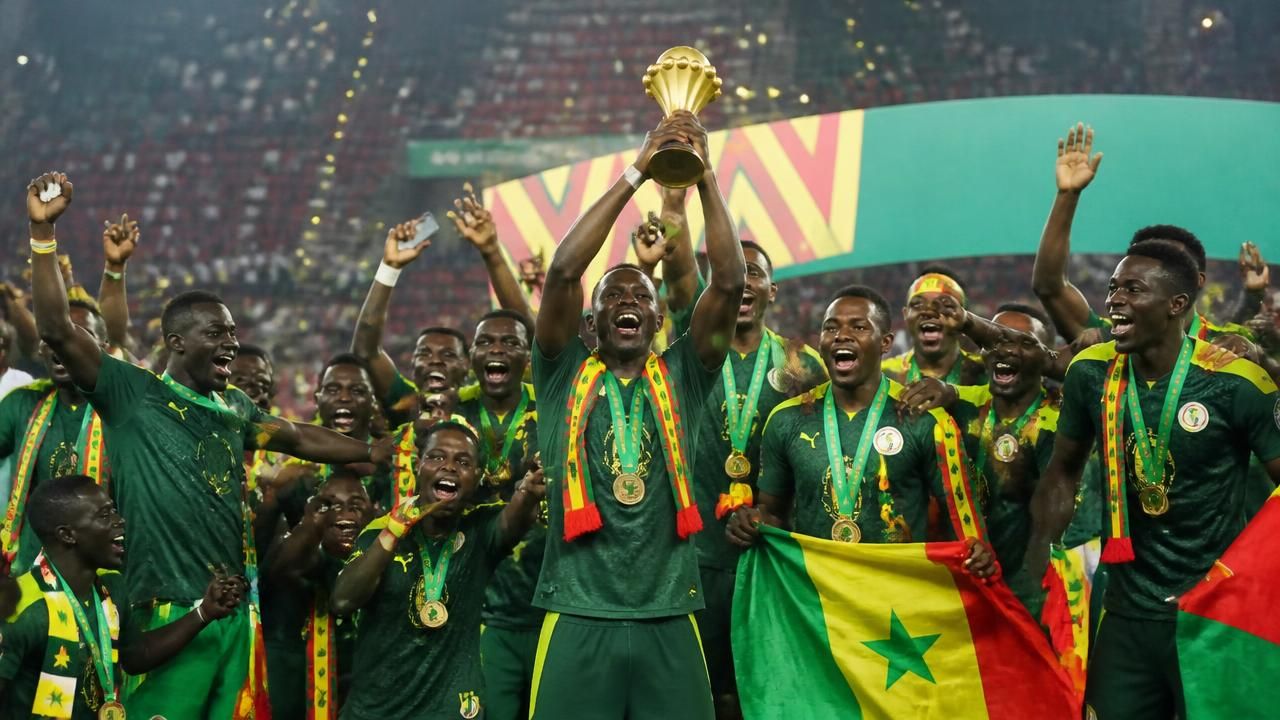
Senegal is once again Africa Cup of Nations champion — for the second time in five months, and this time with a court's blessing. The Court of Arbitration for Sport (CAS) ruled Tuesday in favor of the Senegalese football federation, overturning the decision that had stripped the Teranga Lions of the 2025 continental title and awarded the trophy to hosts Morocco.
The ruling closes, at least provisionally, one of the strangest chapters in the history of African football: a final won on the pitch in January, lost in a hearing room in March, and restored by arbitration in a decision that news organizations across three continents scrambled to explain to readers on Tuesday.
How the title changed hands — twice
Senegal beat Morocco on the field in the January final, a result celebrated across Dakar and mourned in Rabat. The match, however, ended in chaos: Senegalese players walked off the pitch in second-half stoppage time in protest, and the referee's handling of the ensuing abandonment became the foundation of a protracted legal fight.
In March, a disciplinary ruling went against Senegal, treating the walk-off as a forfeit and awarding the trophy to Morocco. That decision transformed a sporting result into a legal one, and it turned the confederation's disciplinary machinery into the central actor of the story. Senegal appealed to CAS, sport's highest tribunal, sitting in Lausanne, Switzerland.
Reuters reported ahead of the verdict that CAS would issue its decision on Tuesday, and that the case had drawn the attention of leading sports lawyers — a signal of how seriously the arbitration panel treated the question of whether a disciplinary sanction can rewrite the outcome of a completed final.
The ruling and its reasoning
CAS sided with Senegal, finding that the walk-off did not justify transferring the title to Morocco. The panel's decision restores Senegal as the official 2025 Africa Cup of Nations champion and reverses the forfeit result.
The case turned on a distinction that has become increasingly important in global sport: the difference between punishing conduct and reallocating honors. Disciplinary codes routinely provide for fines, suspensions, and match forfeits, but applying those provisions to a completed final — and to the distribution of a continental trophy — raises questions of proportionality that arbitrators are often more willing to scrutinize than a referee's on-field judgment.
Malay Mail described the outcome as a "landmark CAS ruling" — a characterization that captures how the decision is being read beyond the two federations involved, as a precedent about the limits of disciplinary power over sporting outcomes.
Reaction: relief in Dakar, defiance in Rabat
In Senegal, the decision was met with vindication. Sadio Mané, the country's most celebrated player and the emotional center of the squad, publicly hailed the ruling, framing it as confirmation of what the players believed all along: that the title was won on the field and should never have been taken away in a hearing.
The reaction underscored the peculiar double punishment Senegal felt it had endured — first the chaos and the abandonment of a final it was winning, then the loss of the trophy itself months later.
Morocco, by contrast, did not accept the verdict quietly. The Moroccan federation vowed to contest the ruling, according to Malay Mail, setting up the possibility of further legal maneuvering even as CAS presents its decision as final. Under Swiss law, CAS awards can in narrow circumstances be challenged before the Swiss Federal Tribunal, though such appeals succeed rarely and only on procedural grounds.
How outlets framed a story without a pitch
The coverage itself illustrated how differently the same decision can be told. Wire services and financial outlets — Reuters, Bloomberg — treated the ruling as a governance and legal event, emphasizing the arbitration process and the institutional stakes for the Confederation of African Football. Francophone and African outlets, including France 24 and NPR, foregrounded the return of the trophy to Senegal and the emotional arc of a squad that had been, in their telling, penalized twice for one night of protest.
European tabloids leaned into the drama of a title "given back," while explainer-driven outlets, including The New York Times, framed the news around the question of what comes next for Morocco — a host nation that had built a tournament around a trophy it briefly possessed.
What it means for African football
- Precedent: CAS has signaled that disciplinary sanctions should not casually rewrite the outcomes of completed competitions, a boundary that will shape future disputes across confederations.
- Governance pressure: CAF's disciplinary and appeals processes face renewed scrutiny over how a single abandonment decision escalated into a continental crisis.
- Morocco's standing: The federation's vow to keep fighting preserves a dispute that could shadow its hosting legacy and its relations within African football.
- Senegal's squad: A golden generation now has a title confirmed by arbitration as well as by the scoreline — though the celebrations will inevitably carry an asterisk in some quarters.
For now, the trophy belongs to Senegal — again. But a case that has already overturned a result once, been litigated across two continents, and prompted a federation to promise further resistance is unlikely to fade quietly. The next move belongs to Morocco, and to whatever room international sport's legal system has left for a second reversal.