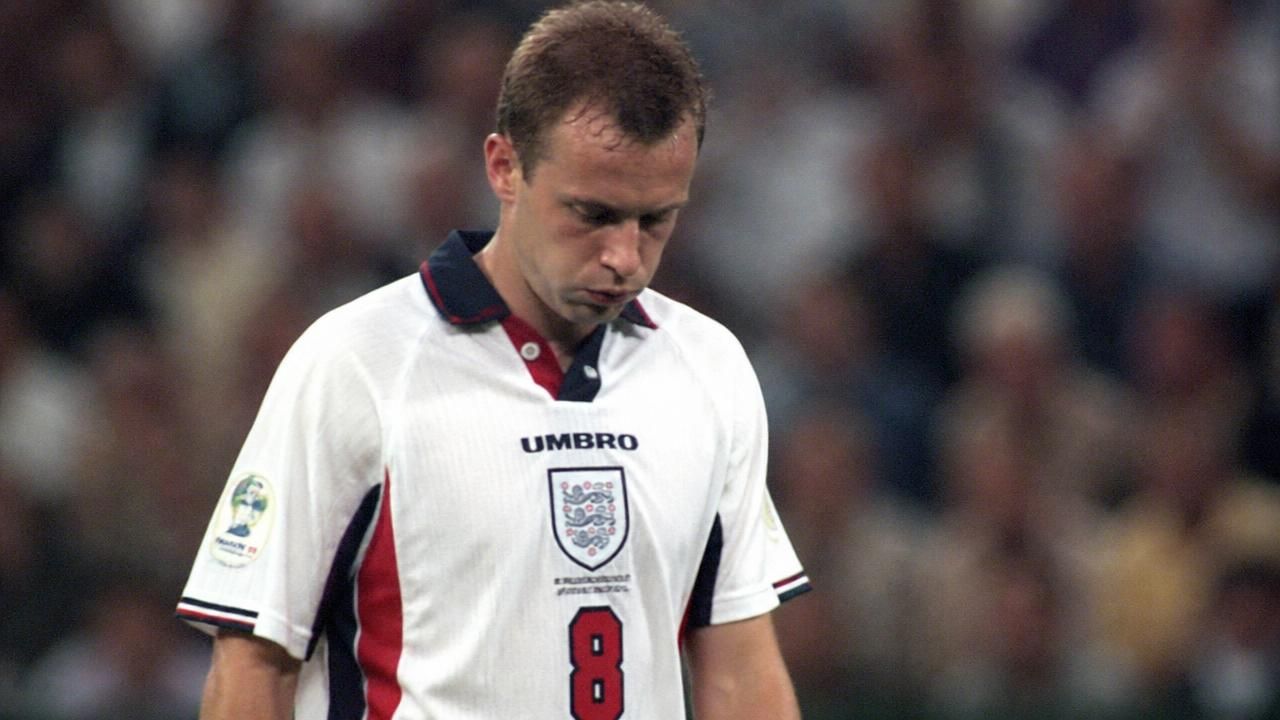
In the annals of English football history, few moments are as searing as the penalty shootout defeat to Argentina in the 1998 World Cup. For David Batty, the man whose spot-kick was saved by Carlos Roa, that moment could have defined a career. Yet, as BBC Sport explores in a recent retrospective, Batty's story is one of quiet resilience and a refusal to be consumed by a single miss.
The Weight of a Nation
On June 30, 1998, in Saint-Étienne, England faced Argentina in a tense Round of 16 match. After a 2-2 draw, the game went to penalties. Batty, a tenacious midfielder known for his work rate rather than his finishing, stepped up to take England's fourth penalty. Roa saved it, and Argentina advanced. The miss haunted English football for years, but Batty himself took a remarkably stoic view.
“I missed it, it happens. You move on. It's not the end of the world.” — David Batty, in a rare interview reflecting on the miss.
Batty's ability to shake off the disappointment quickly became part of his legend. He continued his club career with Leeds United, Newcastle United, and later returned to Leeds, amassing over 500 league appearances. His penalty miss, while memorable, did not define him.
Life After Football
Since retiring, Batty has largely stayed out of the limelight. Unlike many former England stars, he has not pursued punditry or coaching. Instead, he has focused on family and private life. The BBC article notes that Batty's low profile is a deliberate choice, a contrast to the media-saturated world of modern football.
Interestingly, the same BBC feature also touches on other unrelated BBC content—from wildlife guides to quizzes and local news—reflecting the breadth of the BBC's output. But the core story remains Batty's journey from penalty villain to a man at peace with his past.
Broader Context: England vs. Argentina
The rivalry between England and Argentina in football is storied, with the 1998 match being one of its most dramatic chapters. The two nations are set to meet again in the knockout stage of the 2026 World Cup, prompting renewed interest in the 1998 encounter. Batty's miss is often revisited, but so is the resilience he showed in the aftermath.
Other BBC articles from the same period cover a wide range of topics—power cuts, fake £20 notes, DVLA scams, and even a zonkey (a donkey-zebra cross) named Zippy. While these are unrelated, they illustrate the diverse news landscape in which the Batty story sits.
Expert Views on Coping with High-Pressure Moments
Sports psychologists often point to Batty as an example of how athletes can compartmentalize failure. Dr. Mark Williams, a sports psychologist at the University of Utah, says, “The ability to separate a single event from one's overall identity is crucial. Batty's response—acknowledging the miss but not letting it define him—is a model of psychological resilience.”
Batty's approach contrasts with that of other players who have been haunted by similar moments. For instance, Roberto Baggio's penalty miss in the 1994 World Cup final lingered for years. Batty's story offers a different narrative: one of acceptance and moving forward.
Implications for Modern Football
As England prepares for future World Cup campaigns, the lessons from Batty's experience remain relevant. The pressure on players today is immense, with social media amplifying every mistake. Batty's quiet dignity serves as a reminder that a single moment does not define a career.
In the end, David Batty is not just the man who missed a penalty. He is a testament to the fact that even in the glare of the world stage, one can find peace and purpose beyond the game.