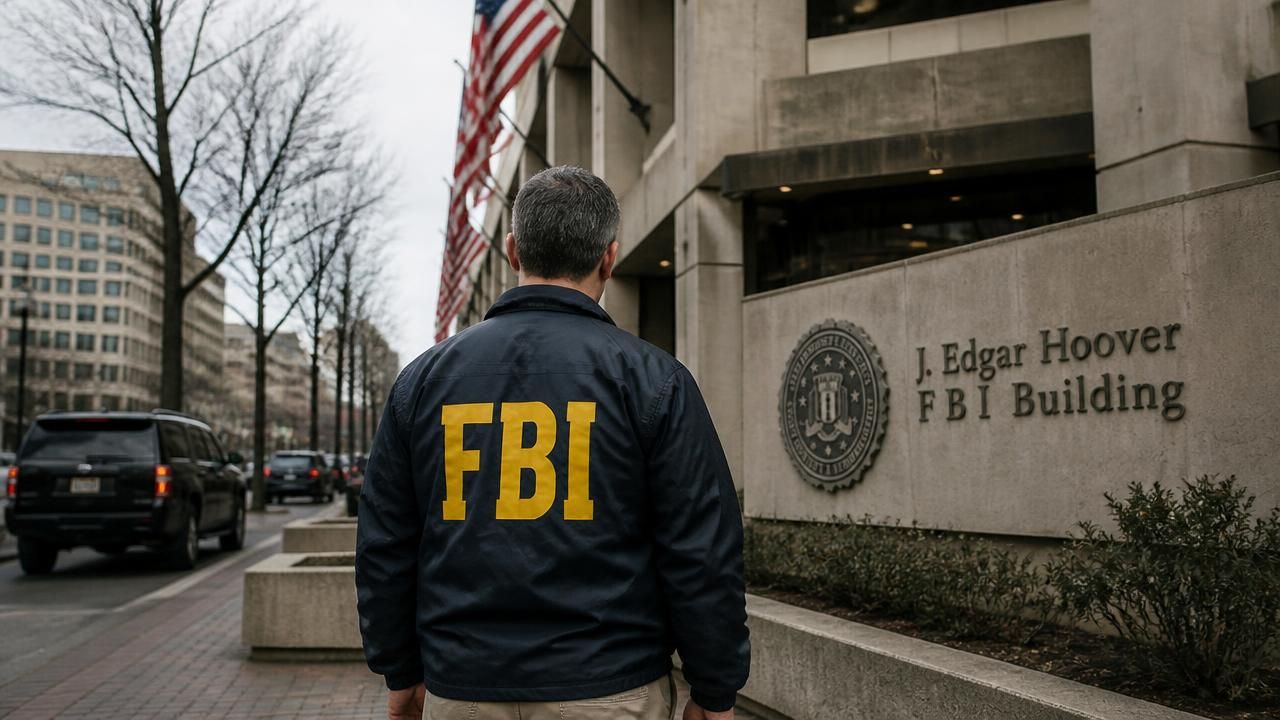
Federal investigators are scrambling to assess the scope of two separate intrusions into US government systems after reports emerged Friday that hackers breached the FBI's National Crime Information Center (NCIC) and the Department of Agriculture, according to multiple US media outlets. The disclosures, first reported by CNN and NBC News and rapidly picked up by The Guardian, ABC News, Bleeping Computer and international outlets including Korea's SBS and Pakistan's Samaa, mark the second reported cyberattack against the FBI in a matter of months and cap a week of widespread technology outages across federal agencies.
President Donald Trump confirmed the breach in an interview with Fox News, a detail flagged by The Verge and later amplified by outlets such as Times Now, which framed the story around the president's reaction rather than the technical damage. According to those reports, Trump used the moment to speculate about what the intrusion might reveal, asking whether “maybe we'll learn about Russia hoax.” The remark underscored how quickly a national security incident was absorbed into the ongoing political fight over the FBI's conduct and its investigations into Russian election interference.
What was actually breached
The most sensitive target appears to be NCIC, a decades-old database that functions as the connective tissue of American law enforcement. Federal, state, local and tribal agencies use it to share information in real time, including active warrants, missing persons reports, stolen vehicle records and criminal history data. A compromise there raises immediate questions about the integrity of records that police officers rely on during traffic stops, investigations and emergency responses.
- NCIC: A shared law enforcement data hub used nationwide for warrants, missing persons and stolen property records.
- USDA: A payments database identified as the known extent of the intrusion so far, according to Reuters, which cited former officials warning the breach could be broader than currently understood.
- Context: Both disclosures arrived during a week of significant federal technology outages, a framing The Guardian placed at the center of its coverage.
Details remained sparse and at times contradictory. The FBI did not publicly confirm the NCIC breach, and reporting attributed the information to unnamed sources. MSN's coverage described the bureau as “investigating an apparent hack” and, in a separate item, characterized it as a probe into the “second cyberattack in months.” The Verge noted that CNN's reporting described the earlier incident as well, suggesting a pattern of repeated targeting rather than an isolated event.
How outlets framed the story
The same set of facts produced markedly different emphases. The Guardian led with the broader wave of technical failures, positioning the breaches as part of a systemic fragility story. The Verge and Bleeping Computer, writing for technically literate audiences, focused on the specific target, noting that the attack on a nationwide police database carries different implications than a breach of an administrative system. International broadcasters such as ABC Australia and SBS treated it as a straightforward US national security story, while Times Now centered the president's comments, converting a security incident into a political narrative.
That divergence matters. A breach of the USDA's payments system raises questions about financial fraud and the integrity of subsidy disbursements. A breach of NCIC raises questions about officer safety, wrongful arrests and the reliability of evidence in court. Treating the two as a single headline event risks flattening very different categories of harm.
“While the payments database is the known extent of the intrusion so far, the former officials warned that…” — Reuters, as quoted by The Verge, describing concerns that the USDA breach may be wider than acknowledged.
A familiar and worsening pattern
Washington has been here before. The 2015 breach of the Office of Personnel Management exposed the records of roughly 22 million people and remains a benchmark for how badly federal systems can fail. The 2020 SolarWinds campaign, attributed to Russian intelligence, compromised networks across multiple agencies. The 2021 Colonial Pipeline ransomware attack demonstrated how quickly a single intrusion can cascade into physical disruption.
What distinguishes this week's reports is the combination: two agencies hit in rapid succession, credible reporting of a repeat attack on the FBI, and simultaneous outages that have not been definitively linked to malicious activity. Security researchers caution that outages and intrusions are often conflated during the first 48 hours of an incident, when agencies are still isolating systems and verifying logs.
Why the timing is politically charged
The FBI occupies a singular place in American political discourse. Trump's invocation of the “Russia hoax” in response to the breach signals that the incident will be contested not only as a security failure but as a political data point. Whether the intrusion yielded any information relevant to ongoing disputes is, at this stage, entirely unknown — and the president did not present evidence.
Former officials quoted by Reuters said they could not rule out deeper penetration at USDA, but cautioned that attribution and scope assessments typically take weeks. Independent analysts make a similar point: the first public account of a breach is almost never the final one.
What happens next
Expect the FBI to publish a narrow statement confirming an investigation without confirming the breach, a standard practice in active incidents. Congress will likely seek classified briefings; the House and Senate homeland security committees have historically demanded details after major federal compromises. The USDA's inspector general may open a parallel review of the payments system.
The more consequential question is structural. NCIC was designed for interoperability, not for modern threat models, and the agencies that query it range from large federal bureaus to small rural police departments with limited security capacity. As long as that architecture persists, a single compromised credential can expose records used across thousands of jurisdictions.
For now, the public record rests on leaked accounts, a presidential aside and a set of agencies still piecing together what happened. The known extent may well grow.