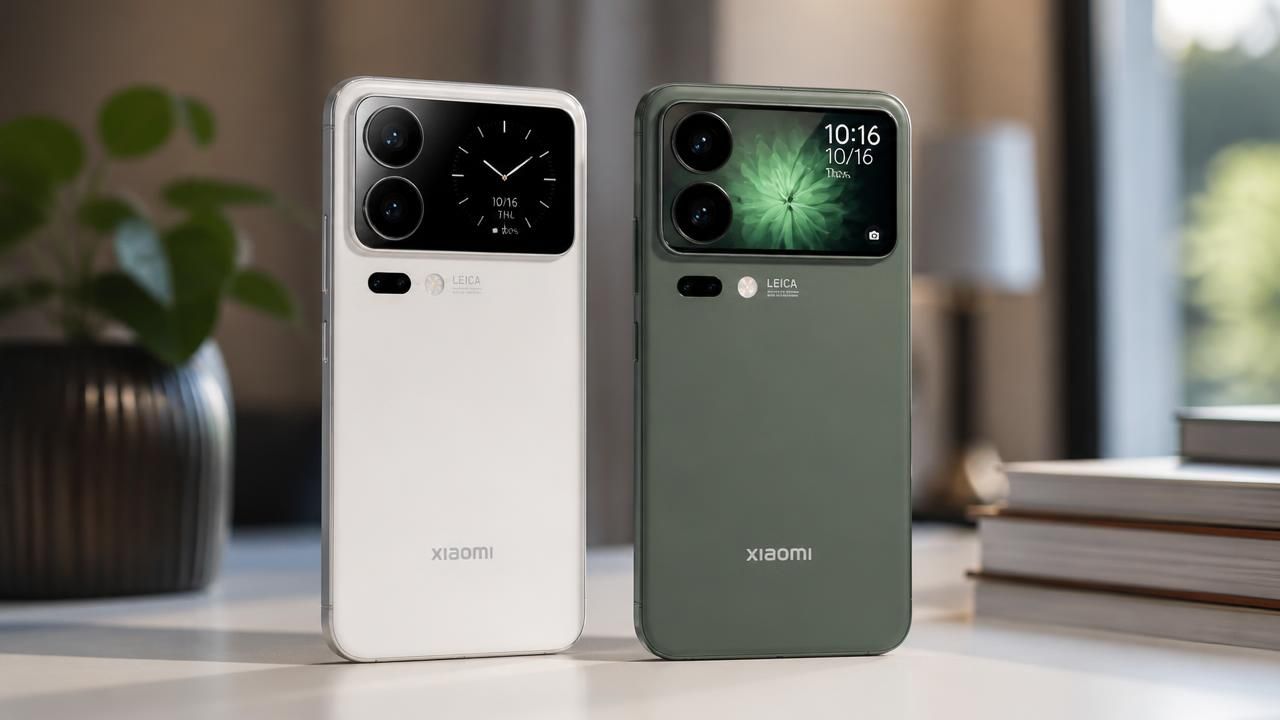
Xiaomi has never been shy about experimenting with flagship hardware, but its latest pair of premium phones represents something rarer for the company: a genuine global push. The Xiaomi 18 Pro and Xiaomi 18 Pro Max, the company's newest top-tier devices, are the first of Xiaomi's rear-display Pros to be sold outside China — last year's 17 Pro models with a second screen stayed home — making this the widest audience yet for a design idea Xiaomi has been circling for years.
That idea is simple to describe and harder to justify: a second, functional display on the back of the phone. Xiaomi first experimented with the concept on 2021's Mi 11 Ultra, and competitors including Nubia and Vivo have taken their own swings at it. On the 18 Pro and 18 Pro Max, the rear panel is used for selfies, notifications, and a growing roster of AI-driven apps.
A Flagship Spec Sheet Built for Attention
Underneath the unusual exterior, both phones are conventional flagships in the best sense. According to Android Authority, the pair pairs Qualcomm's latest Snapdragon chips with not one but two distinct displays — the standard front panel plus the rear screen. Android Headlines was even more direct in its review headline, calling the Pro Max "the fastest Android phone," with a screen on the back.
Battery capacity may be the more consequential number. The Gadgeteer notes that the Xiaomi 18 Pro Max packs an 8,500mAh battery alongside its rear display — a figure that would have seemed implausible in a flagship phone just a few years ago, and one that positions Xiaomi well ahead of most Western rivals on endurance. Buyers weighing the two models have a familiar set of trade-offs to consider; MSN's comparison highlights a bigger screen on the Max plus five other key differences between the Pro and Pro Max.
The Rear Screen: Killer Feature or Gimmick?
The reception to the second display is where the coverage diverges sharply. The Verge, after spending a week or two with both Pro models, came away unconvinced that two screens are better than one:
"The rear display has a single, obvious use case — it's helped me take some of the best selfies I've ever managed — but it isn't very useful otherwise."
That verdict captures the central tension. Using the main, far-superior camera sensors for selfies is a real, tangible benefit, and the rear panel makes framing those shots practical. Beyond that, the value proposition thins out: notifications on the back of a phone compete with an always-on display on the front, and AI apps built for the rear screen are still finding their footing.
Other outlets were warmer. Digital Trends framed the pair as playing "a different flagship game" entirely, suggesting Xiaomi is competing on distinctiveness rather than spec-sheet parity. MSN's review went further, with a headline declaring surprise at liking Xiaomi's "bizarre dual-screen phone" as much as the reviewer did — an acknowledgment that the concept, however odd on paper, has a way of winning people over in hand.
A Premium Play With Global Ambition
The hardware story is only half the narrative. Forbes frames the Xiaomi 18 Pro Max as a premium phone that is explicitly part of the company's global strategy — a signal that Xiaomi intends to contest the high end outside China, not merely defend its home market. That ambition puts the 18 series directly in the path of established premium players, and the comparison coverage reflects it: TechRepublic has already published head-to-heads pitting the Xiaomi 18 Pro Max against both the OPPO Find X10 Pro Max and Samsung's Galaxy S26 Ultra.
Those matchups matter because Xiaomi's historical weakness has not been hardware but perception. A phone that costs as much as a Galaxy S Ultra needs to justify itself on software support, camera consistency, resale value, and carrier relationships — areas where Samsung and Apple have years of institutional advantage. The rear display is, in effect, Xiaomi's attempt to change the terms of the comparison.
The Verdict So Far
Reviewers largely agree on the fundamentals: these are fast, well-built, long-lasting flagships with unusual character. GSMArena's global review and the broader wave of hands-on coverage point to a device that competes credibly on performance and battery life.
- What works: selfies shot on the main camera system, standout battery capacity on the Pro Max, top-tier Snapdragon performance.
- What's unclear: whether the rear screen's notification and AI functions become habit or novelty.
- What's at stake: Xiaomi's credibility as a global premium brand, not just a value leader.
The honest answer is that the second screen is not yet the reason to buy an 18 Pro. But it may be the reason to look — and in a market where Xiaomi is trying to be seen as a peer to Samsung rather than an alternative to it, being looked at is not nothing. The 18 Pro and Pro Max are, at minimum, proof that Xiaomi is willing to take design risks its rivals won't. Whether that translates into market share outside China is the question the next year will answer.