NASA's return to the Moon has long been a story about a rocket, a capsule and a very long wait. This week it became something else: a story about launch cadence, orbital refueling, a $10 billion industrial base — and a rival that is moving fast.
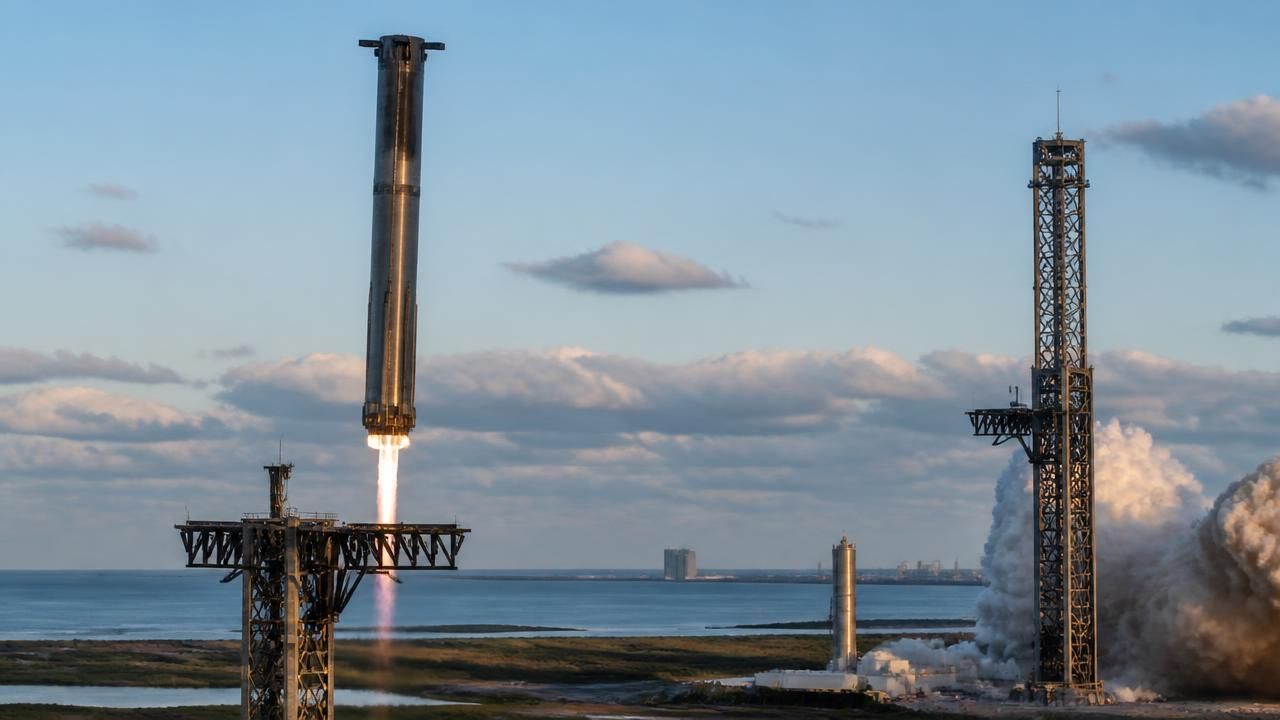
The catalytic event was SpaceX's successful recovery of a Starship booster in mid-air last weekend, a milestone Ars Technica described as clearing "a major hurdle on NASA's path to the Moon." For SpaceX, the catch is a step toward rapid reuse. For NASA, it is a prerequisite for the higher flight rates the agency believes it needs before it can entrust astronauts to a lunar version of the vehicle.
A catch that changed the calculus
Starship is central to NASA's Artemis architecture: the agency has contracted SpaceX to adapt the vehicle into a human lander for the first crewed surface missions. But before that can happen, two things must be proven — that Starship can fly often, and that it can be refueled in orbit.
The second is the harder problem. SpaceX plans an all-important, long-delayed orbital propellant-transfer demonstration next year, in which one Starship transfers cryogenic fuel to another in space. Without it, a lunar lander cannot carry enough propellant to leave Earth orbit, descend to the surface and return.
SpaceX is also building out the infrastructure to make high cadence real. Early next year the company plans to bring online a second Starship launch site at Kennedy Space Center in Florida, and a second Starship factory is under construction there alongside the existing production line at Starbase, Texas. Two pads and two factories, Ars notes, are the pieces required to take "the next leap."
Higher launch cadence leads to faster learning — the logic NASA is now betting its lunar landing schedule on.
A leaner plan, a 2028 target
That bet sits inside a redesigned Artemis program. As Mashable reported, NASA has settled on a faster, leaner approach that targets a crewed lunar landing in 2028. The framing matters: the phrase "faster" describes the execution and the architecture, not necessarily the calendar, which has slipped repeatedly amid funding constraints, hardware delays and the slow maturation of the lander and spacesuit elements of the mission.
The leaner architecture leans harder on commercial partners and on a higher tempo of uncrewed test flights — an approach that mirrors how NASA has run commercial cargo and crew in low Earth orbit, and one that shifts risk and cost onto industry while giving the agency more frequent opportunities to learn.
The China factor
Mashable's coverage framed the shift bluntly: "China is coming for the moon." Beijing has assembled its own human lunar program, built around a new heavy-lift rocket, a crew spacecraft and a lander, with the stated goal of putting taikonauts on the surface before 2030. Mashable's comparison noted that China's plan broadly mirrors NASA's — an expendable architecture launching crew and lander separately, then docking in lunar orbit — with one significant difference in how the two programs sequence and fund their landers. China's approach is centrally directed and less dependent on private capital; NASA's depends on companies like SpaceX delivering on time.
The geopolitical dimension has reshaped domestic politics around Artemis. A program once sold as a science and exploration endeavor is now routinely framed in Washington as a strategic race, which has helped protect its budget even as individual elements slip.
Eight companies, $10 billion, 20-plus landings
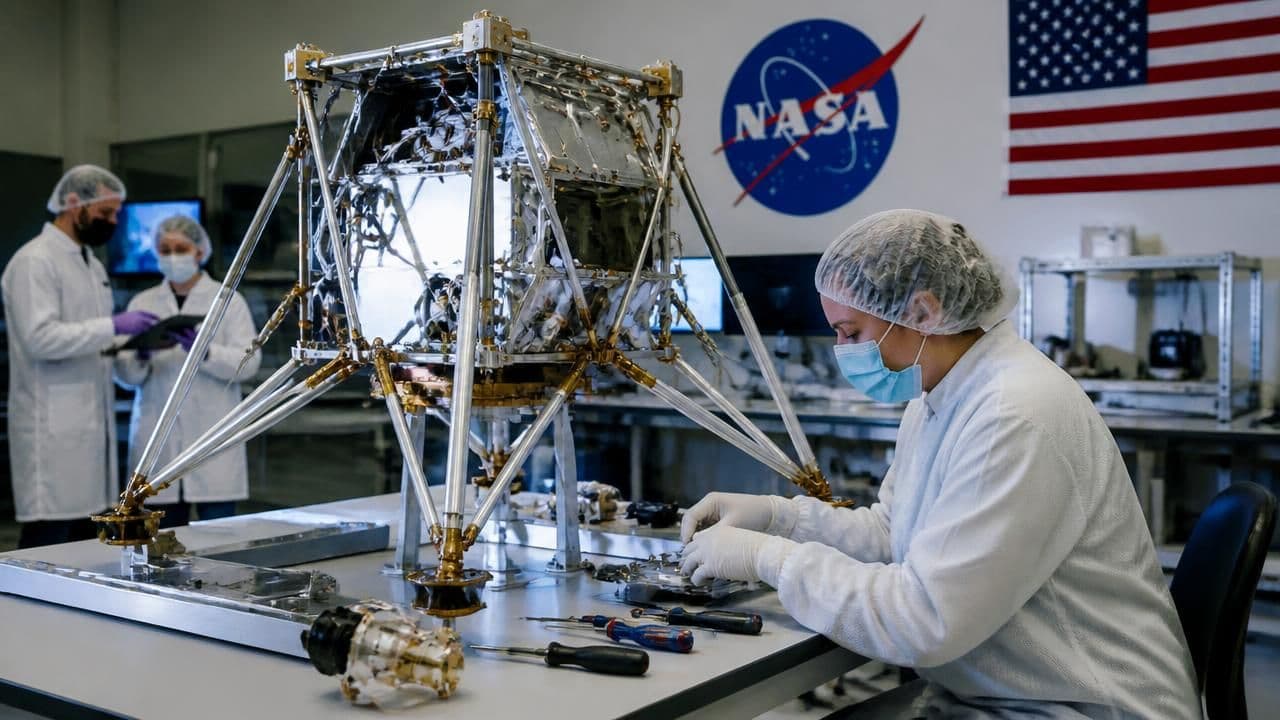
Underneath the headline dates is an industrial effort of enormous scale. As reported by MSN, NASA's lunar surface plans amount to roughly a $10 billion undertaking, with eight companies competing for a share of the work. ScienceDaily put the operational ambition in sharper terms: more than 20 lunar landings are planned as part of building out a sustained surface presence — a cadence that would dwarf the six Apollo landings between 1969 and 1972.
Those landings are not all crewed. The plan calls for a phased build-out: robotic precursor missions to scout terrain and deliver cargo, followed by increasingly capable landers and, eventually, crewed sorties. Local Florida coverage noted that the shape of NASA's lunar base concept could begin to emerge clearly by the end of 2026, once early surface deliveries and site selection work are further along.
The roster of contractors matters politically as much as technically. A $10 billion program spread across eight companies creates constituencies in multiple states and congressional districts — a durable source of support, but also a source of pressure to keep flying even when schedules bend.
What remains unresolved
- Orbital refueling: The propellant-transfer demo is the single biggest technical unknown in the critical path, and it has already slipped once.
- Cadence: Two pads and two factories are planned, but neither is yet operational, and Starship has not flown the kind of sustained campaign NASA's schedule assumes.
- Budget: A leaner plan is cheaper per mission but not cheap overall, and appropriations cycles remain unpredictable.
- China: Beijing's progress — or the perception of it — will drive Washington's urgency more than any hardware test.
- Architecture: NASA has not finalized how surface habitats, power and mobility elements fit together, leaving the base concept genuinely open.
The bottom line
Read together, the coverage tells one story from several angles. Ars Technica sees a hardware problem finally yielding. Mashable sees a geopolitical contest sharpening. MSN sees a multi-billion-dollar industrial base forming. ScienceDaily sees an unprecedented operational tempo. What all of them agree on is that the Moon has shifted from a symbolic destination to an engineering and logistics problem that must be solved repeatedly — and that the next 24 months of Starship flights, refueling tests and lander awards will decide whether the 2028 date holds or slips again.