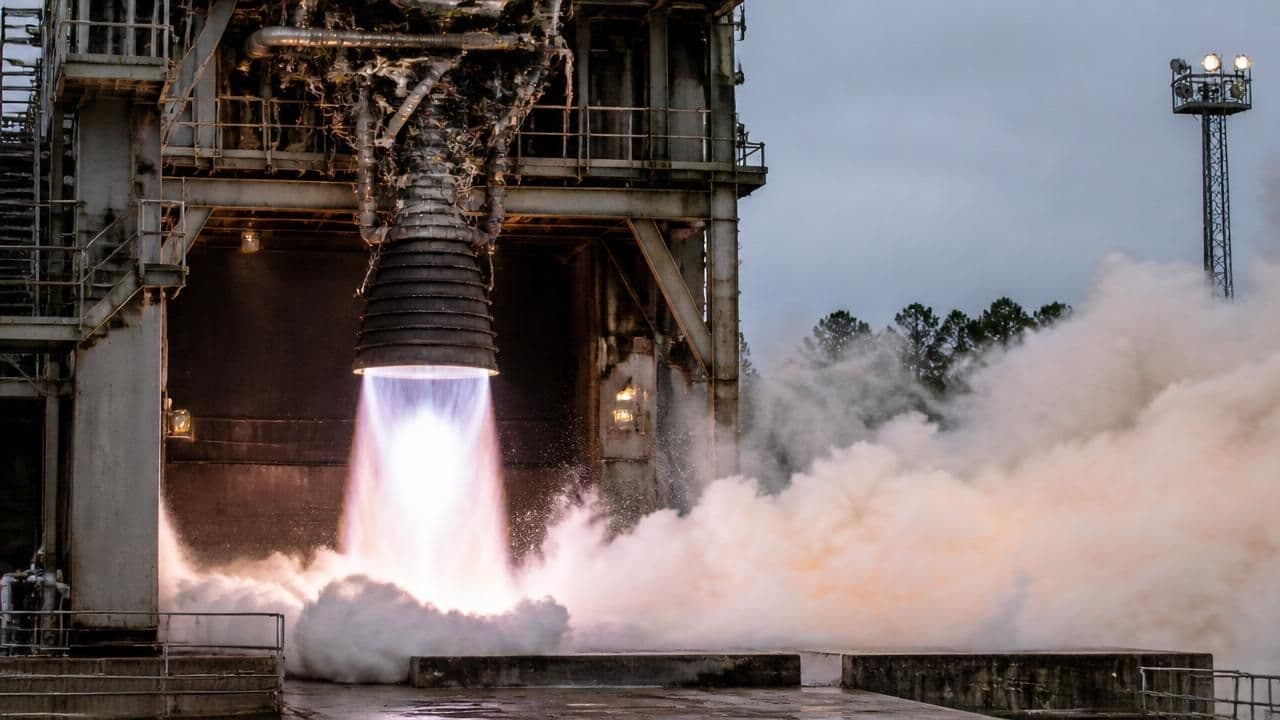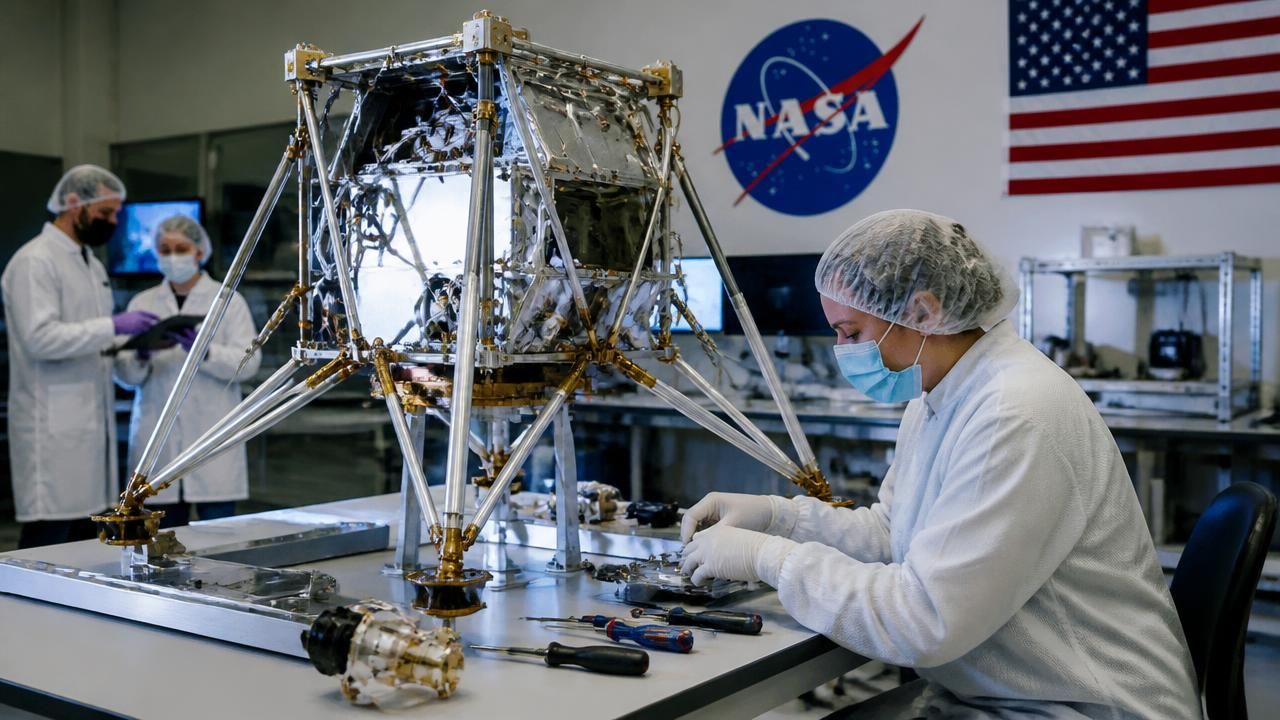
NASA is expanding its bet on small businesses as engines of space innovation, selecting 302 projects for its Small Business Innovation Research and Small Business Technology Transfer programs and committing up to $171 million in seed funding. The awards, announced by the agency, are aimed at some of NASA’s most pressing exploration needs—from batteries that can survive the lunar night to robotic sensing systems and tools for building infrastructure such as lunar landing pads.
The latest round reflects NASA’s dual mandate of advancing its own missions and nurturing a commercial space economy. The selected projects are early-stage research and development efforts, many tied to Artemis, the agency’s campaign to return astronauts to the Moon and eventually establish a U.S. Moon Base. The awards also support technologies that could be used on Mars, where extreme temperatures, dust and communications delays present even tougher engineering challenges.
Awards to small businesses around the country are addressing some of NASA’s most crucial technology needs for exploration of the Moon and Mars while fueling the U.S. space economy.
Seed funding for high-risk technology
NASA’s SBIR/STTR program is designed to help entrepreneurs, startups and small companies mature technologies that might be too risky for private investors to fund alone. The latest awards involved two phases of the program. New Phase I contracts will receive up to $225,000 each to establish the merit and feasibility of their proposed innovations, while a portion of the projects selected are STTR awards, which require small businesses to partner with research institutions.
The topics show how far the agency’s needs extend beyond rockets and spacecraft. NASA highlighted next-generation battery solutions, robotic systems with sensing capabilities for the extreme lunar environment, and tools to prepare for construction of critical infrastructure such as lunar landing pads. One illustrated example came from Elementium Materials Inc., which is working on an ultra-cold-tolerant battery module that could power future lunar vehicles. Such a battery would need to operate through the Moon’s frigid night, when temperatures can plunge far below what conventional lithium-ion systems tolerate.
The emphasis on lunar infrastructure is notable. NASA’s Artemis architecture is not just about landing astronauts; it also requires power systems, mobility, communications, construction and resource extraction. Small businesses are being asked to fill gaps that larger contractors may not address quickly or cheaply. For NASA, the SBIR/STTR model offers a way to test multiple approaches before committing to expensive full-scale development.
Gravitics and the commercial sample-return push
Among the awardees is Gravitics, which was selected for a NASA SBIR award to develop a commercial sample-return hangar, according to Yahoo Finance. The project points to a growing interest in commercial infrastructure that can support the handling, storage and transfer of samples returned from space. While NASA has long managed sample-return missions directly, the agency is increasingly looking to commercial partners for capabilities that can serve both government and private customers.
A sample-return hangar could become part of a broader ecosystem of commercial space stations and logistics services. Gravitics has been developing modular space infrastructure, and an SBIR award gives it early NASA funding to prove the concept. The project also illustrates how SBIR awards can seed technologies that are not purely scientific instruments but commercial facilities—hardware that could eventually be sold or leased to multiple customers.
Oversight and the National Academies review
The expansion of NASA’s small-business programs is also drawing scrutiny. The National Academies of Sciences, Engineering, and Medicine has published a review of the SBIR and STTR programs at NASA. Such reviews typically examine whether the programs are meeting their statutory goals, how effectively awards are commercialized, and whether NASA is managing the portfolio in a way that balances risk and mission relevance.
The review’s existence signals that the program’s growth is being watched closely. NASA’s SBIR/STTR portfolio is large and diverse, and not every award will lead to a product or a mission. Supporters argue that the program’s decentralized, competitive structure is precisely what allows it to surface unorthodox ideas. Critics and oversight bodies often ask whether Phase I awards are translating into Phase II work, whether small companies can cross the so-called valley of death between research and commercialization, and whether NASA is measuring outcomes consistently.
Those questions matter more as NASA’s exploration goals become more ambitious. The agency is trying to build a lunar economy with limited budgets, and small businesses are expected to play a larger role in the supply chain. A review that identifies administrative burdens or commercialization gaps could shape future award sizes, evaluation criteria and outreach efforts.
A new capital layer: NASA and SBA’s SBIC initiative
Beyond grants, NASA and the Small Business Administration have launched an SBIC initiative to fund the space industrial base. The SBIC program—Small Business Investment Companies—licenses private investment funds that can use government-guaranteed leverage to invest in small businesses. The NASA-SBA initiative is intended to direct more private capital toward space companies, including those working on infrastructure, manufacturing and services.
The move complements SBIR/STTR seed funding. SBIR awards are small by design, meant to prove feasibility rather than scale a company. SBIC-backed funds can provide later-stage equity or debt, helping companies move from prototype to production. For NASA, the initiative is a way to leverage its convening power and technical expertise without bearing the full cost of industrial expansion. For the SBA, it is a chance to apply a proven small-business investment model to a fast-growing sector.
Together, the announcements describe a three-layer strategy: seed grants for early research, commercial awards for specific capabilities such as Gravitics’ sample-return hangar, and private investment through SBIC funds. Each layer addresses a different part of the capital stack. The risk is that the layers may not connect smoothly—companies can still fall through the gaps between a Phase I award and a bankable commercial product. The opportunity is that NASA is using multiple tools to build a more resilient space industrial base.
What comes next
For the 302 selected projects, the immediate task is to demonstrate feasibility. Phase I winners will produce prototypes, studies and test results within their contracts. Some will graduate to Phase II, where funding and technical requirements grow. A smaller number may be infused into NASA missions or commercialized independently.
The broader test is whether these awards help NASA meet its Artemis timeline and whether they create companies that can survive without government seed money. The National Academies review and the SBIC initiative suggest that policymakers are thinking about both mission impact and financial sustainability. As NASA pushes toward a lunar base and eventually Mars, the small-business program will remain a key instrument—one that is now being asked to deliver not just ideas, but infrastructure, jobs and a durable space economy.