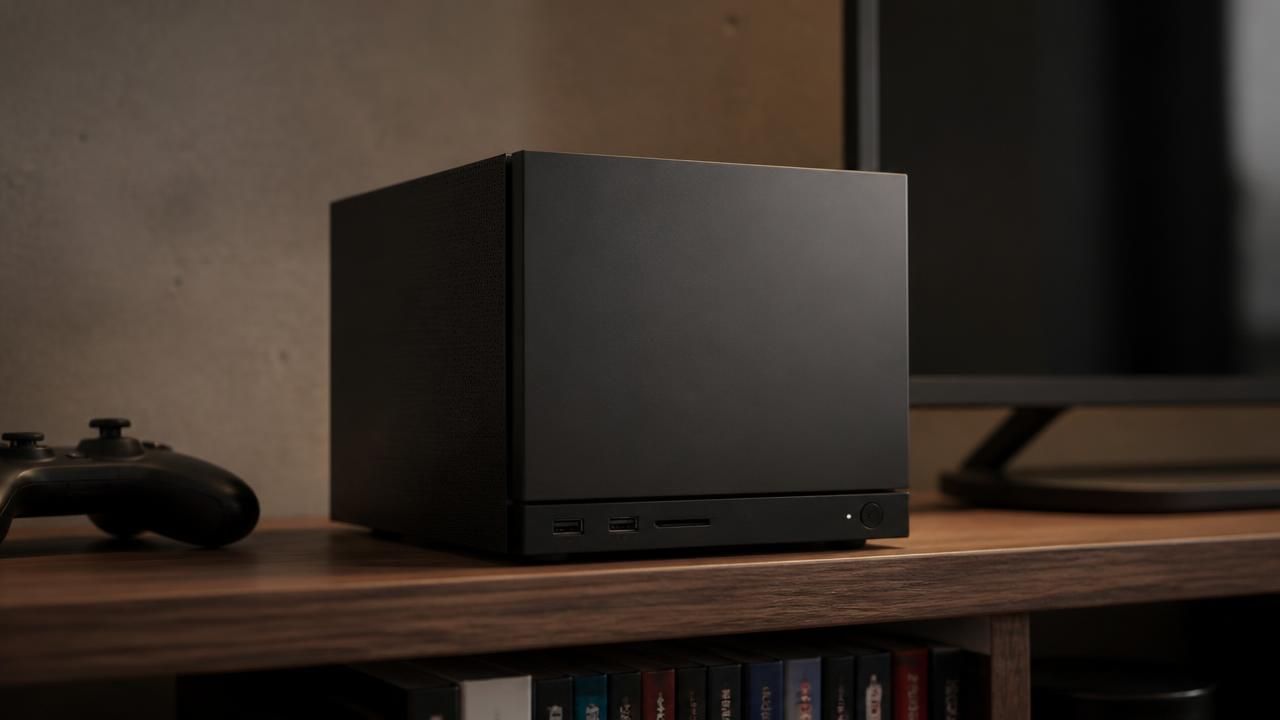
Valve has confirmed what PC hardware watchers have suspected for months: the Steam Machine's pricing and availability are being held hostage by the global memory and storage market. In a blog post published Thursday, the company said soaring component costs could force it to raise the price of its living-room gaming PC once again — and that it cannot yet say how many units it will be able to build.
"We are continuing to build more Steam Machine units, but memory and storage costs continue to increase at unprecedented levels," Valve wrote. "As a result we don't yet know the number we are able to make, and at what price we'll be able to offer them. The 2TB model in particular will be especially constrained."
A Rocky Launch From the Start
The Steam Machine first began shipping in June, and the warning signs were present from day one. Valve acknowledged at the time that it was producing fewer units than originally planned, at a higher price, because it could not secure supplies of scarce RAM and storage components at a reasonable cost. What the company framed then as a temporary squeeze now appears to be a longer-term condition.
This week's update arrives as the last of the initial batch of Steam Machine reservations are finally being fulfilled — a milestone that would normally signal a product moving into smoother waters. Instead, it comes with a split message for buyers.
The 512GB Opens Up, the 2TB Closes Down
The most concrete development is that the $1,049 512GB Steam Machine can now be purchased without a waitlist, while supplies last. That marks the first time the entry-level configuration has been freely orderable since launch. At the same time, Valve has closed the waitlist for the $1,349 2TB model to new signups, effectively telling prospective buyers that the higher-capacity machine is not something they can currently queue for.
The contrast is telling. The 2TB model carries more NAND flash storage, the exact component category where prices have climbed most sharply. By opening the 512GB queue while shutting the 2TB one, Valve is prioritizing the configuration it can still build at a viable cost — and openly signaling that the premium tier is the weakest link in its supply chain.
Not Just Valve's Problem
Valve is far from alone in this. All three major console manufacturers instituted historically atypical price increases in 2025, breaking with decades of industry practice in which hardware prices fall as manufacturing matures and components get cheaper. Additional price hikes have already landed this year across the console landscape.
The culprit is a broad, sustained surge in memory pricing driven by demand from data center and AI infrastructure buildouts, which has consumed DRAM and NAND supply and pushed contract prices upward across the board. Consumer electronics makers — from gaming hardware to smartphones to laptops — are all competing for the same constrained pool of components, and the smaller the buyer, the less leverage it has.
"As a result we don't yet know the number we are able to make, and at what price we'll be able to offer them." — Valve
How Outlets Framed the Story
Coverage across the tech press converged on the same core facts but emphasized different angles. Ars Technica framed the announcement around the possibility of a second price increase, situating Valve's dilemma within the broader 2025 console price-hike trend. PCMag led with the memory-cost warning and the unresolved question of future pricing. TechSpot and TweakTown focused on Valve's admission that it simply does not know how many units it can produce.
Meanwhile, outlets such as MakeTechEraser, Niche Gamer and GamingBolt zeroed in on the practical customer-facing change: the 512GB model is now orderable without a waitlist, while the 2TB waitlist has been closed to new signups. The split in emphasis reflects the dual nature of the news — it is simultaneously a small win for buyers at the low end and a warning sign for the platform's premium tier.
What It Means for Buyers
- Act now on 512GB, or pay more later. Valve is explicitly refusing to rule out a price increase, and history suggests that when a company says it doesn't know what price it can offer, the next number is usually higher.
- The 2TB is effectively unavailable. With the waitlist closed to new signups, the premium configuration is off the table for anyone not already in line.
- The broader market is the real story. Console price increases in 2025 and 2026 signal that the long-standing assumption of falling hardware prices has, at least temporarily, inverted.
The Road Ahead
Valve has committed to continuing production, but the language of the blog post is notably hedged. There is no timeline for when 2TB orders might reopen, no commitment to holding current prices, and no estimate of how many units will ship in the coming months. For a company that has spent the past decade building goodwill through aggressive pricing on Steam and the Steam Deck, the situation is an uncomfortable one.
The larger question is whether the memory crunch is a cyclical spike or a structural shift. If AI-driven demand keeps memory prices elevated through 2027, the Steam Machine could become a case study in how the artificial intelligence boom reshaped pricing far beyond the data center — reaching all the way into the living room.